

Galaxy Tab S9 Ultra (14.6", 2023) Vs iPad Air 7 (2025, M3 series)

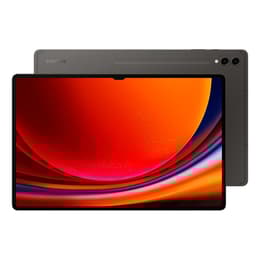
Galaxy Tab S9 Ultra (14.6", 2023)
Starting at

Refurbished price:754.00

Versus €1,800.00 new

See options
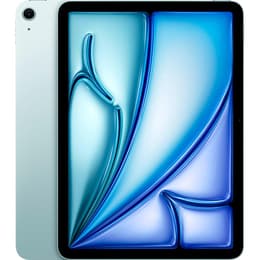
iPad Air 7 (2025, M3 series)
Starting at

Refurbished price:438.00

Versus €729.00 new

See options

Ratings

The Samsung Galaxy Tab S9 Ultra, released in August 2023, and the Apple iPad Air (M3 series), launched in March 2025, represent distinct approaches to high-performance tablets. While both devices offer robust capabilities for productivity and entertainment, they differ significantly in their operating systems, display technologies, and overall design philosophies. The Galaxy Tab S9 Ultra runs on Android with Samsung's One UI, emphasizing a large, expansive display, whereas the iPad Air operates on iPadOS, focusing on a balance of power and portability within Apple's ecosystem.

Scores

Durability

When considering the longevity of these tablets, both offer substantial software support, though with differing timelines and approaches.

  • Release Timeline: The Galaxy Tab S9 Ultra was released in August 2023, making it a slightly older device compared to the iPad Air (M3 series), which launched in March 2025. This difference in release dates impacts their respective software support cycles.
  • OS Support Duration: Samsung promises four major Android OS updates and five years of security updates for the Galaxy Tab S9 Ultra, starting from Android 13. This means it is expected to receive updates up to Android 17 and security patches until 2028. The iPad Air (M3) ships with iPadOS 18 and is expected to receive software updates for a longer period, typically around 5-6 years or more, aligning with Apple's historical support for its devices.
  • Repairability: The Galaxy Tab S9 Ultra has a moderate repairability score, with some components like the battery being accessible, but the screen removal process is delicate due to adhesive use. In contrast, iPads, including the Air series, generally receive low repairability scores, often around 2 out of 10, due to extensive use of adhesive and integrated components that make disassembly challenging.

Year of Release

2023

2025

Compatible with latest Update

Yes

Yes

OS

Android

iPadOS

Performance

Both tablets deliver strong performance, but their underlying architectures and real-world usage experiences present some distinctions.

  • Processor Capabilities: The Galaxy Tab S9 Ultra is equipped with a powerful current-generation processor, enabling it to handle demanding applications and multitasking smoothly. The iPad Air (M3 series) features Apple's M3 chip, which offers significant performance improvements over previous generations, providing a responsive experience for intensive tasks like video editing, 3D rendering, and graphics-heavy gaming.
  • Multitasking and Responsiveness: The Galaxy Tab S9 Ultra excels in multitasking, allowing users to run and switch between multiple applications efficiently, especially with its large screen real estate and Samsung DeX mode. The iPad Air (M3) also offers a fluid multitasking experience within iPadOS, with users reporting snappy performance for professional-level apps.
  • Battery Behavior: The Galaxy Tab S9 Ultra features a large 11,200 mAh battery, providing extended usage, with some users reporting several days of lighter use or around 7-10 hours of screen-on time with regular use. The iPad Air (M3) is rated for approximately 10 hours of mixed use, though some user reports indicate variability in real-world battery life, with some experiencing faster drain during moderate usage.

Memory (GB)

12 GB

8 GB

Screen quality

The visual experience on both tablets is a key differentiator, with distinct display technologies and sizes.

  • Display Technology and Size: The Galaxy Tab S9 Ultra features a large 14.6-inch Dynamic AMOLED 2X display, offering deep blacks, vibrant colors, and a 120Hz refresh rate. The iPad Air (M3 series) comes in 11-inch and 13-inch variants, both utilizing a Liquid Retina IPS display with P3 wide color and True Tone technology.
  • Resolution and Clarity: The Tab S9 Ultra's display has a resolution of 2960 x 1848 pixels, resulting in a pixel density of approximately 239 ppi. The 11-inch iPad Air (M3) has a resolution of 2360 x 1640 pixels at 264 ppi, while the 13-inch model has a 2732 x 2048 pixel resolution at 264 ppi, providing sharp visuals.
  • Brightness and Refresh Rate: The Galaxy Tab S9 Ultra offers a peak brightness of 930 nits and an adaptive 120Hz refresh rate, contributing to smooth scrolling and good visibility indoors, though outdoor use in direct sunlight can be challenging due to reflections. The iPad Air (M3) features a typical brightness of 500-600 nits and maintains a standard 60Hz refresh rate, which some users note as a limitation compared to higher refresh rate displays.

Resolution

1848 x 2960

2360 x 1640

Screen type

Dynamic AMOLED 2X

Liquid Retina display

Pixel density

240ppp

264ppp

Audiovisual

While tablets are not primarily known for their camera capabilities, both devices offer camera systems suitable for video calls, document scanning, and casual photography.

  • Camera System: The Galaxy Tab S9 Ultra features a dual rear camera setup with a 13MP main sensor and an 8MP ultrawide sensor. It also has a dual front-facing camera system with two 12MP sensors (wide and ultrawide), which is beneficial for video conferencing. The iPad Air (M3) includes a 12MP wide rear camera capable of 4K video and a 12MP front-facing camera with Center Stage, designed to keep the user in frame during video calls.
  • Photography Performance: The Tab S9 Ultra's main rear camera produces detailed and sharp daylight photos with good dynamic range and color accuracy, and performs well in low-light conditions. The iPad Air's cameras are generally considered sufficient for everyday use, document scanning, and video calls, with the front camera being a highlight due to Center Stage.
  • Audio Experience: The Galaxy Tab S9 Ultra is equipped with quad stereo speakers tuned by AKG with Dolby Atmos support, providing a rich audio experience for media consumption. The iPad Air (M3) also offers solid stereo speakers, enhancing the experience for watching videos and listening to music.

Miscellaneous

Beyond core performance and display, several practical features contribute to the overall user experience of these tablets.

  • Connectivity: Both devices support modern connectivity standards. The Galaxy Tab S9 Ultra offers Wi-Fi 6E and Bluetooth 5.3, with 5G connectivity available on some models. The iPad Air (M3) also supports Wi-Fi 6E and Bluetooth 5.3, with optional 5G cellular connectivity.
  • Port Types and Accessories: The Galaxy Tab S9 Ultra features a USB-C 3.2 port and includes an S Pen stylus in the box, which attaches magnetically and is IP68 rated for dust and water resistance. The iPad Air (M3) uses a USB-C port and supports the Apple Pencil Pro, Apple Pencil (USB-C), and the Magic Keyboard, which are sold separately.
  • Biometric Authentication and Design: The Tab S9 Ultra includes an in-display fingerprint sensor for security. It has a thin aluminum unibody design and is IP68 rated for dust and water resistance. The iPad Air (M3) features Touch ID integrated into the power button and maintains a sleek aluminum design. The Galaxy Tab S9 Ultra is notably larger and heavier at 14.6 inches and around 732-737 grams, compared to the 11-inch iPad Air (M3) at 461 grams and the 13-inch model at 617 grams.

Weight

732 g

460 g

Screen size (in)

14.6

11

Network

Wi-Fi

Wi-Fi

Carrier compatibility

Without SIM Port

Without SIM Port

The Samsung Galaxy Tab S9 Ultra and the Apple iPad Air (M3 series) cater to users with distinct priorities, each offering a compelling tablet experience. User feedback for the Galaxy Tab S9 Ultra often praises its expansive and vibrant AMOLED display, making it a strong contender for media consumption and creative tasks requiring a large canvas. Its included S Pen and robust multitasking capabilities, particularly with Samsung DeX, are frequently highlighted as benefits for productivity. Some users, however, find its large size cumbersome for portability.

The iPad Air (M3 series) is consistently lauded for its powerful M3 chip, delivering smooth performance across demanding applications and gaming. Its integration within the Apple ecosystem and long software support are also significant advantages for many users. Common observations include its quality Liquid Retina display, though some users express a desire for a higher refresh rate or OLED technology, which is reserved for the Pro models. Battery life consistency has also been a point of discussion among users.

Users prioritizing a large, high-refresh-rate OLED display for immersive content consumption, drawing, or extensive multitasking in an Android environment may find the Galaxy Tab S9 Ultra well-suited to their needs. Those who value a powerful, portable tablet with a strong app ecosystem, long-term software support, and a focus on creative and professional workflows within iPadOS might lean towards the iPad Air (M3 series). Both devices are available as quality-assured refurbished options, providing an eco-friendly alternative for consumers.


See all articles

Our recent comparisons

