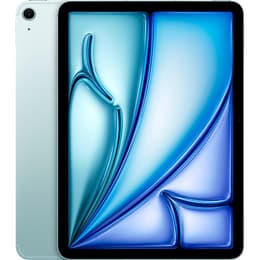
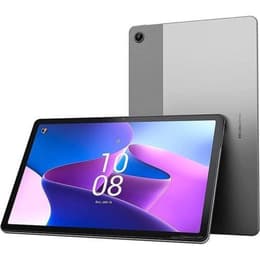


iPad Air 6 (2024, M2 series) Vs Lenovo Tab M10 Gen 3 (10.1", 2022)

iPad Air 6 (2024, M2 series)
Starting at

Refurbished price:400.00

Versus €729.00 new

See options
Lenovo Tab M10 Gen 3 (10.1", 2022)
Starting at

Refurbished price:141.48

Versus €299.99 new

See options

Ratings

The iPad Air 2024 M2 Series, released in May 2024, and the Lenovo Tab M10 Gen 3, launched in September 2022, represent distinct approaches to the tablet experience. While both are designed for portable computing, they cater to different user needs through their respective operating systems and hardware capabilities. The iPad Air operates on Apple's iPadOS, known for its robust app ecosystem and integration with other Apple devices, whereas the Lenovo Tab M10 Gen 3 runs on Android, offering flexibility and customization. The primary differentiators lie in their processing power, display quality, and overall ecosystem integration, influencing their suitability for various tasks.

Scores

Durability

The expected practical lifespan of a tablet is significantly influenced by its release timeline, software support, and build quality. These two devices offer different trajectories in terms of longevity.

  • Release Timeline and OS Support: The iPad Air 2024 M2 Series, being a newer device, benefits from a longer expected period of major iPadOS updates, typically extending for 6-8 years from its release, with security updates continuing even longer. This means users can anticipate software feature updates well into the early 2030s. The Lenovo Tab M10 Gen 3, released in 2022, generally receives fewer major Android OS updates, often around two, followed by security patches for approximately 3-4 years. This suggests a shorter window for new Android features compared to the iPad Air.
  • Software Longevity Expectations: Apple's consistent and extended software support for its devices means the iPad Air will likely remain compatible with the latest applications and features for a more prolonged period. For the Lenovo Tab M10 Gen 3, while it will continue to function, some newer applications or features might eventually require a more recent Android version than what the device will receive.
  • Repairability and Build: The iPad Air features a slim aluminum chassis, contributing to a premium feel and structural rigidity. The Lenovo Tab M10 Gen 3 utilizes a predominantly plastic build with an aluminum chassis, making it lightweight but without an official IP certification for water resistance. While specific repairability scores vary, Apple's ecosystem often involves authorized service for repairs, whereas Android devices can have a broader range of repair options.

Year of Release

2024

2022

Compatible with latest Update

Yes

No

OS

iPadOS

Android

Performance

Performance is a key area where these two tablets diverge, impacting how smoothly they handle various applications and multitasking demands.

  • Processor Capabilities: The iPad Air 2024 M2 Series is equipped with an advanced processor designed for high-performance tasks. This allows it to manage demanding applications, complex creative workflows like 4K video editing, and intensive gaming without noticeable lag. Its architecture ensures efficient handling of multiple applications simultaneously, providing a fluid user experience. In contrast, the Lenovo Tab M10 Gen 3 features a more modest processor, which delivers smooth performance for everyday activities such as web browsing, streaming media, and light gaming. However, it may exhibit slower loading times or choppiness when running more resource-intensive applications or engaging in heavy multitasking.
  • Multitasking and Responsiveness: The iPad Air's powerful internal components and optimized iPadOS allow for seamless multitasking, enabling users to switch between apps, run multiple applications in split view, and handle complex projects with ease. Its system responsiveness is consistently high, providing immediate feedback to user input. The Lenovo Tab M10 Gen 3 is suitable for basic multitasking, such as having a few browser tabs open or switching between social media apps. Users might experience slight delays or reduced fluidity when pushing the device with numerous open applications or demanding processes.
  • Storage Options: The iPad Air offers a wide range of storage configurations, starting from 128GB and going up to 1TB, providing ample space for large files, extensive app libraries, and media. The Lenovo Tab M10 Gen 3 comes with 32GB or 64GB of built-in storage, which can be expanded significantly via a microSD card, offering flexibility for users who need more space for media or documents.

Memory (GB)

8 GB

3 GB

Screen quality

The visual experience on a tablet is largely defined by its display, and both devices offer different qualities tailored to their intended use.

  • Display Technology and Resolution: The iPad Air 2024 M2 Series features a Liquid Retina IPS LCD display, available in 11-inch (2360x1640 pixels) and 13-inch (2732x2048 pixels) sizes. This display technology provides accurate colors and wide viewing angles, making it suitable for detailed work and media consumption. The Lenovo Tab M10 Gen 3 comes with a 10.1-inch IPS LCD display with a resolution of 1920 x 1200 pixels (FHD). While it offers decent color reproduction and clarity for general use, its pixel density is lower than that of the iPad Air.
  • Brightness and Clarity: The iPad Air's display offers up to 500 nits of brightness for the 11-inch model and 600 nits for the 13-inch model, along with an anti-reflective coating, enhancing visibility in various lighting conditions, including outdoors. It also supports P3 wide color for vibrant visuals. The Lenovo Tab M10 Gen 3 has a brightness of 320 nits, which is sufficient for indoor environments but may struggle with glare and direct sunlight. It also includes TÜV Rheinland Low Blue Light certification, designed to reduce eye strain during extended use.
  • Refresh Rate and Smoothness: Both tablets feature a standard 60Hz refresh rate. While the iPad Air's powerful processor ensures smooth animations and transitions despite the 60Hz panel, the Lenovo Tab M10 Gen 3's performance, combined with the standard refresh rate, means animations and scrolling may not appear as fluid as on devices with higher refresh rates.

Resolution

2360 x 1640

1200 x 1920

Screen type

Liquid Retina display

IPS LCD

Pixel density

264ppp

230ppp

Audiovisual

The camera systems on these tablets are designed with different priorities, reflecting their primary use cases.

  • Main and Ultra-Wide Cameras: The iPad Air 2024 M2 Series is equipped with a 12MP Wide rear camera capable of recording 4K video, suitable for capturing detailed photos and high-quality video. Its camera system is optimized for image processing, delivering clear and vibrant results in various lighting conditions. The Lenovo Tab M10 Gen 3 features an 8MP autofocus rear camera, which is adequate for casual photography and scanning documents. Its performance is generally sufficient for everyday snapshots rather than advanced photography.
  • Front Camera and Video Calls: A notable feature of the iPad Air is its 12MP Ultra Wide front camera, which is now positioned on the landscape edge, making it ideal for video calls and conferences when the tablet is used horizontally. It also supports Center Stage, which keeps the user in frame during video calls. The Lenovo Tab M10 Gen 3 has a 5MP fixed-focus front camera, which is suitable for basic video calls and occasional selfies, though its low-light performance is limited.
  • Audio for Media and Calls: The iPad Air includes dual landscape stereo speakers and dual microphones, providing clear audio for media consumption and effective noise reduction during calls. The 13-inch model reportedly offers enhanced sound quality. The Lenovo Tab M10 Gen 3 features dual speakers with Dolby Atmos support, aiming to provide an immersive audio experience for media. However, some users have noted that the speaker output can be weaker than expected.

Miscellaneous

Beyond core performance and display, several practical elements contribute to the overall user experience and differentiate these two tablets.

  • Connectivity Options: The iPad Air 2024 M2 Series supports Wi-Fi 6E and Bluetooth 5.3, offering faster wireless speeds and more stable connections. Cellular models also include 5G connectivity, utilizing eSIM for modern network access. The Lenovo Tab M10 Gen 3 supports Wi-Fi 5 (802.11 a/b/g/n/ac) and Bluetooth 5.0, providing reliable wireless connectivity for most everyday tasks. LTE models are available for mobile data access.
  • Port Types and Sensors: The iPad Air features a versatile USB-C port that supports USB 3 speeds (up to 10 Gb/s) and DisplayPort capabilities, allowing for fast data transfer and external monitor connectivity. It integrates Touch ID into the top button for secure authentication. The Lenovo Tab M10 Gen 3 includes a USB-C 2.0 port and retains a 3.5mm headphone jack, offering broader compatibility with older audio accessories. It supports face unlock for security.
  • Dimensions, Weight, and Build Materials: The 11-inch iPad Air weighs approximately 460g and has a slim aluminum design, contributing to a premium feel and comfortable handling. The Lenovo Tab M10 Gen 3 also weighs around 460g and features a lightweight design with an aluminum chassis and a dual-tone finish, making it easy to hold for extended periods.

Weight

462 g

460 g

Screen size (in)

11

10.1

Network

Wi-Fi

Wi-Fi

Carrier compatibility

Without SIM Port

Unlocked

When evaluating the iPad Air 2024 M2 Series against the Lenovo Tab M10 Gen 3, user feedback and specifications highlight distinct strengths for different user profiles. Users frequently praise the iPad Air for its exceptional performance, making it a powerful tool for creative professionals, students, and anyone requiring robust multitasking capabilities and the ability to run demanding applications. The long-term software support and premium build quality are also commonly cited advantages. Some users, however, note the 60Hz LCD display as a point of comparison against higher-end tablets with OLED or faster refresh rates, and some reports mention heat under heavy load.

The Lenovo Tab M10 Gen 3 is often lauded as a reliable and user-friendly tablet for general media consumption, web browsing, and light productivity tasks. Its long battery life and clean Android software experience are frequently appreciated by users seeking an accessible device for everyday use. Criticisms often revolve around its more modest processing power, which can lead to a less fluid experience with intensive applications, and its basic camera capabilities.

Users prioritizing high performance, a vast ecosystem of optimized applications, and extended software longevity for professional or creative work may find the iPad Air 2024 M2 Series better suited to their needs. Conversely, individuals seeking a straightforward tablet for media consumption, casual browsing, and basic tasks, particularly those who value the flexibility of the Android ecosystem, may lean towards the Lenovo Tab M10 Gen 3. Both devices offer a quality-assured refurbished option, providing an eco-friendly alternative for consumers looking to make an informed and sustainable choice.


See all articles

Our recent comparisons