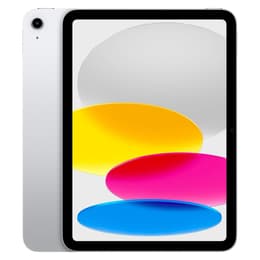

Galaxy Tab S8+ (12.4", 2022) Vs iPad 10 (2022, A14 series)

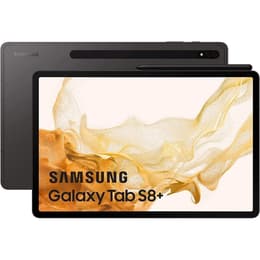
Galaxy Tab S8+ (12.4", 2022)
Starting at

Refurbished price:479.00

Versus €999.00 new

See options
iPad 10 (2022, A14 series)
Starting at

Refurbished price:294.00

Versus €449.00 new

See options

Ratings

The Samsung Galaxy Tab S8 Plus, released in early 2022, and the Apple iPad (10th Generation), launched in late 2022, represent two distinct approaches to the modern tablet experience. While both devices offer robust performance for everyday tasks, they differ significantly in their operating systems, display technologies, and ecosystem integrations. The Galaxy Tab S8 Plus runs on Android with Samsung's One UI, offering a larger, more vibrant display, while the iPad operates on Apple's iPadOS, known for its streamlined user experience and strong app ecosystem.

Scores

Durability

Both tablets, released in 2022, offer a solid foundation for several years of use, though their software support lifecycles and repairability aspects present different long-term considerations.

  • Software Support: The Samsung Galaxy Tab S8 Plus is expected to receive approximately four years of major Android operating system updates and five years of security updates from its release. Apple typically provides around five years of iPadOS updates for its devices, potentially offering a slightly longer period of major OS upgrades for the iPad (10th Generation). [10, 24, 36, 38]
  • Repairability: The iPad (10th Generation) has been noted by repair experts as challenging to repair, particularly concerning battery replacement and the USB-C port, which is welded to the logic board. [20, 27, 31] While specific repairability scores for the Galaxy Tab S8 Plus are less widely publicized, general tablet repair services are available for common issues like screen or battery problems. [21, 30, 37]
  • Practical Lifespan: Users can expect both devices to remain functional and capable for daily tasks well beyond their official software support periods, especially for less demanding activities. However, the availability of future app compatibility and security updates will naturally diminish over time for both.

Year of Release

2022

2022

Compatible with latest Update

Yes

Yes

OS

Android

iPadOS

Performance

These tablets are equipped with capable internal components designed to handle a variety of tasks, from casual browsing to more intensive applications, though their underlying architectures lead to different performance characteristics.

  • Everyday Responsiveness: The Galaxy Tab S8 Plus, powered by a current-generation processor at its release, delivers smooth performance for multitasking, app launching, and general navigation. The iPad (10th Generation), featuring a powerful chip, also provides a fluid user experience, handling demanding applications and light gaming with ease. [5, 8, 17, 23]
  • Multitasking and Storage: The Galaxy Tab S8 Plus typically offers 8GB of RAM, which supports efficient multitasking with multiple applications open simultaneously. It also provides expandable storage via a microSD card slot, allowing users to increase storage capacity up to 1TB. [4, 10, 19] The iPad (10th Generation) comes with 4GB of RAM and fixed internal storage options of 64GB or 256GB, which may influence how many large applications or media files can be stored directly on the device. [1, 22, 25]
  • Battery Behavior: The Galaxy Tab S8 Plus features a large 10090mAh battery, often reported by users to last through a full day of varied use, with some tests indicating 12-14 hours of usage. [4, 9, 28, 32] The iPad (10th Generation) generally offers around 10 hours of battery life under typical usage conditions. [8, 28] Both devices support fast charging, though neither includes a charging adapter in the box. [9, 19]

Memory (GB)

8 GB

4 GB

Screen quality

The visual experience on these tablets is a key differentiator, with each offering distinct display technologies and characteristics that cater to different preferences.

  • Display Technology and Clarity: The Samsung Galaxy Tab S8 Plus features a 12.4-inch Super AMOLED display, known for its deep blacks, high contrast, and vibrant colors. It boasts a resolution of 2800x1752 pixels, resulting in a pixel density of 266 pixels per inch. [4, 6, 9, 13, 17, 18, 26] The iPad (10th Generation) utilizes a 10.9-inch Liquid Retina IPS LCD display with a resolution of 2360x1640 pixels, offering a pixel density of 264 pixels per inch. [1, 2, 3, 5, 11, 26]
  • Refresh Rate and Brightness: A notable difference is the refresh rate; the Galaxy Tab S8 Plus offers a 120Hz refresh rate, providing smoother scrolling and more fluid animations. [9, 17, 23, 24] The iPad (10th Generation) has a standard 60Hz refresh rate. [23, 24] In terms of brightness, the iPad (10th Generation) can reach up to 500 nits, suitable for various lighting conditions. [2, 3, 5, 11] The Galaxy Tab S8 Plus also offers ample brightness, with its OLED panel excelling in outdoor visibility due to its contrast. [13]
  • Viewing Experience: The Galaxy Tab S8 Plus's larger screen and AMOLED technology may appeal to users prioritizing immersive media consumption and rich visual detail. The iPad (10th Generation)'s display, while smaller, provides consistent color accuracy and a clear viewing experience, though some users note an air gap between the glass and the LCD panel, which can be noticeable when using a stylus. [15, 24, 25]

Resolution

1752 x 2800

2360 x 1640

Screen type

Super AMOLED

Liquid Retina display

Pixel density

270ppp

264ppp

Audiovisual

Both tablets include camera systems capable of capturing photos and videos, as well as facilitating video calls, though with varying specifications and user experiences.

  • Rear Camera Capabilities: The Samsung Galaxy Tab S8 Plus is equipped with a dual-camera setup on the rear, featuring a 13-megapixel primary sensor and a 6-megapixel ultrawide sensor. [4, 6, 19, 23, 25] It can record video at 4K resolution at 60 frames per second. [23] The iPad (10th Generation) has a single 12-megapixel wide-angle rear camera, capable of 4K video recording at 60 frames per second. [3, 5, 8, 23, 24, 25]
  • Front Camera for Communication: For video calls and selfies, both tablets feature a 12-megapixel ultrawide front-facing camera. The iPad (10th Generation)'s front camera is notably positioned on the landscape edge, which is beneficial for video conferencing. [2, 3, 5, 16, 23, 29] The Galaxy Tab S8 Plus also has a 12-megapixel ultrawide front camera and can record front-facing video at 4K 60fps, while the iPad (10th Generation) records at 1080p 60fps. [23, 24]
  • Audio and Media Consumption: The Galaxy Tab S8 Plus features quad speakers tuned by AKG with Dolby Atmos support, providing a rich audio experience for media. [9, 13, 17] The iPad (10th Generation) also offers good speaker output, with some sources indicating a two-speaker setup, while others mention quad speakers. [2, 3, 8] Both are suitable for media consumption and video calls.

Miscellaneous

Beyond core performance and display, several practical features and design elements contribute to the overall user experience of these tablets.

  • Connectivity and Ports: Both devices support modern connectivity standards, including Wi-Fi 6 (Wi-Fi 6E for the Tab S8 Plus) and optional 5G cellular capabilities. [2, 4, 5, 19, 26] Both also feature a USB-C port for charging and data transfer. However, the Galaxy Tab S8 Plus's USB-C port supports USB 3.2 speeds, offering faster data transfer, while the iPad (10th Generation)'s USB-C port operates at USB 2.0 speeds. [2, 25] The Galaxy Tab S8 Plus also includes a microSD card slot for expandable storage, a feature absent on the iPad. [10, 19]
  • Stylus and Biometrics: The Samsung Galaxy Tab S8 Plus comes with the S Pen included in the box, offering a natural writing and drawing experience. [9, 10, 13, 17] The iPad (10th Generation) is compatible with the first-generation Apple Pencil, which requires a separate purchase and a USB-C to Lightning adapter for charging with the tablet. [2, 3, 5, 25] For security, the Galaxy Tab S8 Plus features an in-display fingerprint scanner, while the iPad (10th Generation) integrates Touch ID into its power button. [17, 18, 25]
  • Design and Handling: The Galaxy Tab S8 Plus has a larger 12.4-inch screen and a thinner profile at 5.7mm, weighing 567g. [4, 6, 19, 26] The iPad (10th Generation) has a 10.9-inch display, measures 7mm thick, and weighs 477g. [1, 3, 5, 11, 26] Both tablets feature an aluminum build and flat edges, contributing to a premium feel. [5, 15, 25]

Weight

567 g

477 g

Screen size (in)

12.4

10.9

Network

Wi-Fi

Wi-Fi

Carrier compatibility

Without SIM Port

Without SIM Port

Choosing between the Samsung Galaxy Tab S8 Plus and the iPad (10th Generation) involves weighing the strengths of their respective ecosystems and hardware designs. Users often praise the Galaxy Tab S8 Plus for its stunning Super AMOLED display, the included S Pen, and the flexibility of Android with features like Samsung DeX for a desktop-like experience. [9, 13, 19] Some criticisms include the wider aspect ratio not being ideal for all productivity tasks and the software sometimes feeling less optimized for tablets compared to iPadOS. [13, 19]

The iPad (10th Generation) is frequently lauded for its robust performance, the intuitive iPadOS, and its high-quality cameras, particularly the landscape-oriented front camera for video calls. [8, 16] Common user concerns include the standard 60Hz display, the additional cost and adapter needed for the Apple Pencil (1st Gen), and the lack of expandable storage. [5, 15, 23, 25]

Users prioritizing an expansive, high-refresh-rate OLED screen for media consumption, along with the versatility of Android and an included stylus, may find the Galaxy Tab S8 Plus well-suited to their needs. Conversely, individuals who value a streamlined operating system, a strong app ecosystem, and consistent performance for general use and creative tasks might lean toward the iPad (10th Generation). Both devices offer a quality-assured refurbished option, providing an eco-friendly alternative for consumers seeking reliable technology. Ultimately, the decision depends on individual preferences for operating system, display characteristics, and accessory integration.


See all articles

Our recent comparisons