

Galaxy Tab S8 Ultra (14.6", 2022) Vs iPad Air 7 (2025, M3 series)

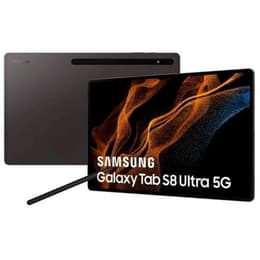
Galaxy Tab S8 Ultra (14.6", 2022)
Starting at

Refurbished price:604.00

Versus €1,249.00 new

See options
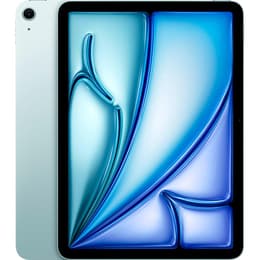
iPad Air 7 (2025, M3 series)
Starting at

Refurbished price:438.00

Versus €729.00 new

See options

Ratings

The Samsung Galaxy Tab S8 Ultra, released in February 2022, and the Apple iPad Air M3 Series, launched in March 2025, represent distinct approaches to the premium tablet experience. While both devices offer powerful performance and high-quality displays, they differ significantly in their operating systems, screen dimensions, and ecosystem integration. The Galaxy Tab S8 Ultra runs on Android, providing a large, expansive display, whereas the iPad Air M3 operates on iPadOS, focusing on a streamlined user experience within Apple's ecosystem.

Scores

Durability

The longevity of a tablet is influenced by its release timeline, software support, and physical durability.

  • Release Timeline and Software Support: The Galaxy Tab S8 Ultra, released in early 2022, is expected to receive Android OS updates until 2026 and security updates until 2027, offering approximately five years of total support from its launch. The iPad Air M3, released in March 2025, benefits from Apple's typically longer software support, often extending to 5-7 years for iPadOS, suggesting a longer period of receiving the latest features and security patches.
  • Repairability and Build: The Galaxy Tab S8 Ultra features an Armor Aluminum frame and Gorilla Glass 5, demonstrating notable durability in bend tests despite its thin profile. Its repairability score is around 5.5 out of 10, indicating moderate ease of repair. The iPad Air M3 maintains a sleek aluminum design. While specific repairability scores for the M3 model are not widely available, iPads generally offer moderate repairability, with Apple providing battery replacement services.
  • Expected Practical Lifespan: Users can expect the Galaxy Tab S8 Ultra to remain functionally capable for everyday tasks beyond its official software support, though it may miss out on newer Android features. The iPad Air M3, with its newer processor and longer anticipated software support, is likely to offer a longer period of optimal performance and access to the latest iPadOS functionalities.

Year of Release

2022

2025

Compatible with latest Update

Yes

Yes

OS

Android

iPadOS

Performance

Both tablets are designed for demanding tasks, but they approach performance with different architectures and user experiences.

  • Processor Capabilities: The Galaxy Tab S8 Ultra is equipped with a processor that handles demanding applications and multitasking smoothly, allowing for efficient operation even with multiple windows open. The iPad Air M3 features Apple's M3 chip, which provides a significant performance boost, making it suitable for intensive tasks like 3D rendering, high-end gaming, and advanced AI/machine learning operations within iPadOS.
  • Multitasking and Responsiveness: The Galaxy Tab S8 Ultra excels in Android multitasking, allowing users to run up to three apps simultaneously on its large display. Its interface is responsive and fluid. The iPad Air M3, with its powerful chip, offers smooth performance across various applications, including professional-level creative apps and games, with users reporting fewer stutters even with new iPadOS features.
  • Storage Options: The Galaxy Tab S8 Ultra offers storage configurations up to 512GB, with the added flexibility of expandable storage via a microSD card. The iPad Air M3 provides storage options up to 1TB, but without the possibility of expandable storage.
  • Battery Behavior: The Galaxy Tab S8 Ultra features a large battery capacity, generally providing good battery life that can last through a full day of typical use. User reports indicate around 9-10 hours of video playback. The iPad Air M3 also offers reliable battery life, with users typically experiencing 9-10 hours of usage, though some reports suggest it might be less efficient than previous models under heavy load.

Memory (GB)

8 GB

8 GB

Screen quality

The visual experience on both tablets is a key differentiator, with distinct display technologies and sizes.

  • Display Technology and Clarity: The Galaxy Tab S8 Ultra features a 14.6-inch Super AMOLED display, known for its deep blacks, vibrant colors, and high contrast. It offers a resolution of 2960 x 1848 pixels. The iPad Air M3 comes in 11-inch and 13-inch Liquid Retina IPS LCD options, providing clear visuals with P3 wide color and True Tone technology.
  • Brightness and Refresh Rate: Both devices offer a 120Hz refresh rate, ensuring smooth scrolling and responsive interactions on the Galaxy Tab S8 Ultra. The iPad Air M3, while offering a crisp display, is capped at a 60Hz refresh rate, which may be noticeable to users accustomed to higher refresh rates. The iPad Air M3's display offers up to 500 nits brightness for the 11-inch model and 600 nits for the 13-inch model.
  • Screen Size and Viewing Experience: The Galaxy Tab S8 Ultra's expansive 14.6-inch display provides a large canvas for multitasking, media consumption, and creative work, making it suitable for users who prioritize screen real estate. The iPad Air M3 offers a choice between an 11-inch or 13-inch screen, balancing portability with a generous viewing area, catering to users who prefer a more compact device or a slightly larger, yet still manageable, display.

Resolution

1848 x 2960

2360 x 1640

Screen type

Super AMOLED

Liquid Retina display

Pixel density

240ppp

264ppp

Audiovisual

While tablets are not typically primary photography devices, both offer capable camera systems for video calls and occasional use.

  • Camera System Capabilities: The Galaxy Tab S8 Ultra features a dual-camera setup on the rear (13MP wide and 6MP ultrawide) and dual front-facing cameras (12MP wide and 12MP ultrawide). The iPad Air M3 includes a 12MP wide rear camera and a 12MP ultrawide front camera with Center Stage.
  • Photography and Video Performance: The Galaxy Tab S8 Ultra's cameras perform well in bright light, with the front cameras being particularly effective for video calls due to their quality and the ultrawide option for group shots. Video capture on the Tab S8 Ultra supports 4K resolution. The iPad Air M3's 12MP rear camera captures high-definition photos and supports 4K recording at up to 60 fps, with cinematic stabilization. The front camera is well-suited for video calls, featuring Smart HDR 4 and Retina Flash.
  • Audio Experience: The Galaxy Tab S8 Ultra is equipped with quad stereo speakers tuned by AKG and supports Dolby Atmos, providing loud and clear audio with rich bass. It also has three microphones for clear dialogue during conversations. The iPad Air M3 offers stereo speakers that deliver a textured and inviting sound, making it suitable for media consumption.

Miscellaneous

Beyond core performance, several practical elements contribute to the overall user experience of these tablets.

  • Connectivity Options: Both tablets support Wi-Fi 6E for high-speed wireless networking and offer optional 5G connectivity for cellular models. The Galaxy Tab S8 Ultra includes Bluetooth 5.2, while the iPad Air M3 supports Bluetooth 5.3.
  • Port Types: The Galaxy Tab S8 Ultra features a USB-C 3.2 port. The iPad Air M3 also uses a USB-C port, which supports fast data transfer speeds.
  • Biometric Security: The Galaxy Tab S8 Ultra incorporates an in-display fingerprint scanner for secure authentication. The iPad Air M3 utilizes Touch ID, integrated into the power button, for biometric security.
  • Weight and Dimensions: The Galaxy Tab S8 Ultra is a large device, weighing around 726g (Wi-Fi) or 728g (5G) and measuring 5.5mm thin. The iPad Air M3 is available in 11-inch (461g) and 13-inch (617g) variants, offering a more portable profile compared to the Tab S8 Ultra.
  • Stylus and Accessories: The Galaxy Tab S8 Ultra includes the S Pen in the box, which attaches magnetically and offers low-latency input for drawing and note-taking. The iPad Air M3 supports the Apple Pencil Pro and Apple Pencil (USB-C), which are sold separately, along with an updated Magic Keyboard.

Weight

726 g

460 g

Screen size (in)

14.6

11

Network

Wi-Fi + 5G

Wi-Fi

Carrier compatibility

Unlocked

Without SIM Port

User sentiment for the Galaxy Tab S8 Ultra often highlights its impressive, large Super AMOLED display and robust performance for an Android tablet. Many appreciate the included S Pen and its capabilities for productivity and creative tasks. Common criticisms sometimes revolve around its sheer size, which can make it less portable for some users, and its battery life, which, while good, may not always meet the demands of its large screen and powerful components.

For the iPad Air M3, users frequently praise its powerful M3 chip, which delivers laptop-level performance, and its reliable battery life. The quality of its screen and the ecosystem of apps and accessories are also highly regarded. Some users express concerns about the 60Hz refresh rate, especially when compared to other premium tablets, and the fact that many accessories are sold separately.

Users prioritizing a large, vibrant OLED display and the flexibility of the Android ecosystem, particularly for multitasking with an included stylus, may find the Galaxy Tab S8 Ultra well-suited to their needs. Its expansive screen is ideal for media consumption and professional applications that benefit from more screen real estate. Conversely, users who value a highly optimized operating system, superior raw processing power for demanding creative applications, and a wide range of integrated accessories within a more compact form factor might lean toward the iPad Air M3. Both devices offer compelling experiences, and for those considering a quality-assured refurbished option, both models are available as sustainable choices.


See all articles

Our recent comparisons