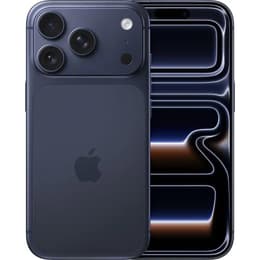
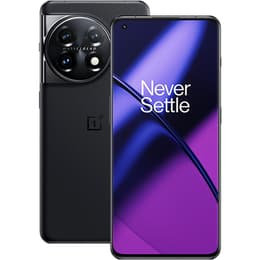


iPhone 17 Pro Vs OnePlus 11

iPhone 17 Pro
iPhone 17 Pro
Starting at

Refurbished price:1,064.00

Versus €1,339.00 new

See options
OnePlus 11
OnePlus 11
Starting at

Refurbished price:325.00

Versus €949.00 new

See options

Ratings

The iPhone 17 Pro, released in September 2025, and the OnePlus 11, launched in early 2023, represent distinct approaches to high-end smartphone design and functionality. While the iPhone 17 Pro operates on Apple's iOS ecosystem, the OnePlus 11 runs on Android, offering users different software experiences. Key distinctions between these two devices lie in their camera systems, display technology, and overall software longevity.

Scores

Durability

When considering the practical lifespan of these devices, their release timelines and software support policies are important factors.

  • Release Timeline: The iPhone 17 Pro, having been released in September 2025, benefits from being a much newer device compared to the OnePlus 11, which launched in January 2023. This difference in age directly impacts the remaining period of official software updates and security patches.
  • Software Longevity: Apple typically provides iOS updates for 5-6 years or more from a device's release, meaning the iPhone 17 Pro can be expected to receive major software support well into the late 2020s. The OnePlus 11, running Android, was promised four generations of Android upgrades and five years of security updates from its launch date. This means its official software support period will conclude sooner than that of the iPhone 17 Pro.
  • Durability Features: The iPhone 17 Pro features Ceramic Shield 2 on its display, which offers enhanced scratch resistance, and boasts an IP68 rating for water and dust resistance. The OnePlus 11 utilizes Gorilla Glass Victus on the front and Gorilla Glass 5 on the back for protection, and carries an IP64 rating, indicating resistance to dust and splashes.

Year of Release

2025

2023

OS

iOS

Android

Foldable

No

No

Performance

Both devices are equipped with powerful internal components designed for demanding tasks, though their underlying architectures differ.

  • Processing Capabilities: The iPhone 17 Pro is powered by Apple's A19 Pro chip, which includes a multi-core CPU and a multi-core GPU with Neural Accelerators. This configuration is designed to deliver smooth performance for complex applications, advanced gaming, and AI-driven tasks, offering a notable increase in sustained performance over its predecessor. The OnePlus 11 features a current-generation Snapdragon processor, which provides robust performance for everyday use, multitasking, and graphically intensive games on the Android platform.
  • System Responsiveness: Users of the iPhone 17 Pro can expect highly responsive interactions and quick app loading times, supported by its optimized hardware and software integration. The OnePlus 11 also offers a fluid user experience, with its processor and ample RAM contributing to efficient multitasking and rapid transitions between applications.
  • Storage and Memory: The iPhone 17 Pro starts with a higher base storage of 256GB, with options extending up to 2TB, providing substantial space for applications, media, and files. The OnePlus 11 offers various configurations, including 128GB, 256GB, and 512GB storage options, paired with different RAM capacities to support its Android operating system.

Memory (GB)

12 GB

16 GB

Screen quality

The visual experience on both smartphones is a highlight, with each offering a high-quality display tailored to different preferences.

  • Display Technology and Resolution: The iPhone 17 Pro features a 6.3-inch Super Retina XDR OLED display with a resolution of 2622x1206 pixels, resulting in a pixel density of 460 pixels per inch. This OLED panel delivers deep blacks and vibrant colors. The OnePlus 11 comes with a larger 6.7-inch Super Fluid AMOLED display, offering a QHD+ resolution of 3216x1440 pixels and a pixel density of 525 ppi.
  • Brightness and Refresh Rate: The iPhone 17 Pro's display can reach an impressive peak outdoor brightness of 3000 nits, ensuring excellent visibility even in direct sunlight. It also supports ProMotion technology, offering an adaptive refresh rate up to 120Hz for smooth scrolling and animations. The OnePlus 11's display has a dynamic refresh rate that can scale from 1Hz to 120Hz, contributing to power efficiency and smooth visuals. Its peak brightness is around 850 nits, which is suitable for most viewing conditions.
  • Viewing Experience: Both devices offer HDR support, with the iPhone 17 Pro featuring HDR display and the OnePlus 11 supporting Dolby Vision and HDR10+. The OnePlus 11's curved display design provides an immersive viewing experience, while the iPhone 17 Pro's display is protected by Ceramic Shield 2 and an anti-reflective coating for improved durability and reduced glare.

Resolution

2622x1206

1440 x 3216

Audiovisual

Both smartphones offer advanced camera systems, each with unique strengths for capturing photos and videos.

  • Rear Camera Systems: The iPhone 17 Pro is equipped with a triple 48-megapixel camera system, including a Fusion Main lens, an Ultra Wide lens, and a Telephoto lens. The Telephoto lens offers 4x optical zoom and can achieve 8x optical-quality zoom through sensor cropping, alongside 40x digital zoom. The OnePlus 11 features a triple-camera setup co-developed with Hasselblad, comprising a 50MP main sensor with optical image stabilization, a 48MP ultrawide sensor, and a 32MP telephoto lens with 2x optical zoom.
  • Photography Performance: The iPhone 17 Pro benefits from an updated Photonic Engine that uses machine learning to enhance detail, reduce noise, and improve color accuracy. The OnePlus 11's Hasselblad color calibration aims for natural and accurate color reproduction, with users often praising its main camera for detail, contrast, and dynamic range.
  • Video Capabilities and Front Camera: Both devices offer high-quality video recording. The iPhone 17 Pro supports 4K video recording across all three cameras, with advanced features like ProRes RAW, Log 2 video recording, and Genlock support for professional workflows. Its front camera is an 18MP Centre Stage camera with Dual Capture functionality. The OnePlus 11 can record video up to 8K at 24fps and features a 16MP front camera.

Miscellaneous

Beyond core specifications, several practical elements contribute to the overall user experience of these devices.

  • Connectivity and Ports: The iPhone 17 Pro supports Wi-Fi 7, Bluetooth 6, and Thread networking technology, along with 5G connectivity (sub-6 GHz and mmWave). It features a USB-C port with 10Gbps speeds. The OnePlus 11 also supports 5G and features Wi-Fi 6/7 and Bluetooth 5.3. It includes a USB-C 2.0 port.
  • Design and Build: The iPhone 17 Pro has a unibody aluminum chassis and a vapor chamber cooling system. Its dimensions are approximately 150mm in height, 71.9mm in width, and 8.75mm in thickness. The OnePlus 11 features a glass and aluminum construction, with dimensions of 163.1mm in height, 74.1mm in width, and 8.53mm in thickness, weighing 205g.
  • Sensors and Other Features: Both devices include essential sensors like accelerometers, gyroscopes, and ambient light sensors. The iPhone 17 Pro integrates Face ID for secure authentication. The OnePlus 11 features an in-display fingerprint sensor for biometric security. The iPhone 17 Pro also introduces Apple Intelligence, integrating AI across its apps.

Weight

206 g

205 g

Screen size (in)

6.3

6.7

Network

5G

5G

SIM card

Physical SIM + eSIM

Physical SIM

Carrier compatibility

Unlocked

Unlocked

The iPhone 17 Pro and OnePlus 11 cater to users with differing priorities, reflecting their distinct ecosystems and release strategies.

Users often praise the iPhone 17 Pro for its advanced camera capabilities, particularly its versatile zoom options and professional video features. Its display is noted for exceptional brightness and clarity, making it suitable for outdoor use. The long-term software support and robust performance are also frequently highlighted as strong points. Some users might find the iOS ecosystem more streamlined for their needs, especially those already invested in Apple's services. Conversely, potential criticisms might revolve around its specific design choices or the integration of new features.

The OnePlus 11 receives commendation for its vibrant AMOLED display with a high refresh rate, offering a smooth visual experience. Its fast wired charging capability is a significant advantage for users who need to power up quickly. The camera system, co-developed with Hasselblad, is generally well-regarded for its color accuracy and overall image quality. Users appreciate the flexibility and customization options offered by the Android operating system. Some feedback might point to its IP64 rating being less robust than some competitors or the absence of wireless charging.

Users prioritizing cutting-edge camera technology, extended software longevity, and a highly integrated ecosystem may find the iPhone 17 Pro well-suited to their needs. Those who value rapid charging, a larger, high-resolution Android display, and a customizable software experience might lean towards the OnePlus 11. Both devices offer compelling features, and for those seeking a more sustainable choice, quality-assured refurbished options are available for both models, providing an eco-friendly alternative.


See all articles

Our recent comparisons