
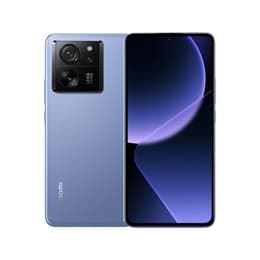


Google Pixel 8 Pro Vs Xiaomi 13T

Google Pixel 8 Pro
Google Pixel 8 Pro
Starting at

Refurbished price:293.00

Versus €1,099.00 new

See options
Xiaomi 13T
Xiaomi 13T
Starting at

Refurbished price:183.00

Versus €630.00 new

See options

Ratings

The Google Pixel 8 Pro, released in October 2023, and the Xiaomi 13T, launched in September 2023, are both contemporary smartphones running on the Android operating system. While both devices offer a premium smartphone experience, they cater to slightly different user priorities through their distinct approaches to camera technology, software longevity, and display characteristics.

Scores

Durability

The practical lifespan of a smartphone is influenced by its release timeline, software support, and physical durability.

  • Release Timeline: The Google Pixel 8 Pro was released in October 2023, while the Xiaomi 13T launched slightly earlier in September 2023. This means both devices are relatively new, offering current technology and features.
  • Software Longevity: The Pixel 8 Pro stands out with an exceptional commitment from Google, promising seven years of Android OS upgrades, security updates, and Feature Drops, extending support until 2030. In contrast, the Xiaomi 13T offers four generations of Android OS upgrades and five years of security patches. This difference means the Pixel 8 Pro is designed for significantly longer software relevance.
  • Durability and Repairability: Both devices feature robust build quality. The Pixel 8 Pro is protected by Corning Gorilla Glass Victus 2 on its display and has an IP68 rating for dust and water resistance. The Xiaomi 13T also boasts an IP68 rating and uses Corning Gorilla Glass 5 for screen protection. Regarding repairability, the Pixel 8 Pro has been noted to have a lower repairability score in some assessments due to factors like battery access, while the Pixel 8 (non-Pro) received a decent score.

Year of Release

2023

2023

Compatible with latest Update

Yes

Yes

Foldable

No

No

Performance

Performance in modern smartphones is determined by the efficiency of their internal components, impacting everything from app responsiveness to battery usage.

  • Processor Capabilities: The Google Pixel 8 Pro is equipped with a current-generation processor designed by Google, which focuses on integrating advanced artificial intelligence and machine learning capabilities directly into the device for tasks like enhanced call screening and advanced photo processing. The Xiaomi 13T utilizes a powerful processor from MediaTek, which delivers strong performance for everyday applications and demanding games.
  • System Responsiveness and Multitasking: The Pixel 8 Pro typically comes with 12GB of RAM, providing ample capacity for smooth multitasking and handling numerous applications simultaneously without slowdowns. The Xiaomi 13T is available with either 8GB or 12GB of RAM, allowing for efficient app switching and responsive operation, particularly with the 12GB variant.
  • Battery Behavior: The Pixel 8 Pro houses a 5050 mAh battery, supporting 30W fast wired charging and wireless charging. The Xiaomi 13T features a 5000 mAh battery and supports significantly faster 67W wired charging, capable of reaching a full charge in approximately 42 minutes, though it lacks wireless charging.

Memory (GB)

12 GB

8 GB

Screen quality

The visual experience on a smartphone is largely defined by its display technology, resolution, and brightness levels.

  • Display Technology and Clarity: The Google Pixel 8 Pro features a 6.7-inch LTPO OLED display with a QHD+ resolution (2992 x 1344 pixels), resulting in a high pixel density for sharp and detailed visuals. The Xiaomi 13T offers a 6.67-inch AMOLED display with a 1.5K resolution (2712 x 1220 pixels), providing clear and vibrant images.
  • Brightness and Refresh Rate: The Pixel 8 Pro's display can reach a peak brightness of 2400 nits, with HDR content peaking at 1600 nits, ensuring excellent visibility even in bright outdoor conditions. It also features an adaptive refresh rate that can dynamically adjust from 1Hz to 120Hz for smooth scrolling and power efficiency. The Xiaomi 13T boasts an impressive peak brightness of 2600 nits and a high refresh rate of up to 144Hz, offering a very fluid visual experience.
  • Screen Protection: The Pixel 8 Pro uses Corning Gorilla Glass Victus 2 for enhanced durability against scratches and drops. The Xiaomi 13T is protected by Corning Gorilla Glass 5.

Resolution

1344 x 2992

1220 x 2712

Screen type

LTPO OLED

AMOLED

Audiovisual

Camera systems are a primary consideration for many users, with both devices offering advanced photographic and videographic capabilities.

  • Rear Camera System: The Google Pixel 8 Pro features a versatile triple-camera setup, including a 50 MP wide main sensor, a 48 MP ultrawide lens, and a 48 MP telephoto lens with 5x optical zoom. It is known for its computational photography and AI-driven enhancements. The Xiaomi 13T also comes with a triple-camera system, co-engineered with Leica, featuring a 50 MP wide main sensor, a 50 MP telephoto lens with 2x optical zoom, and a 12 MP ultrawide lens.
  • Photography Performance: The Pixel 8 Pro excels in low-light photography with features like Night Sight, which has also been extended to video recording for improved quality in challenging conditions. Its AI photo editing tools offer extensive post-capture flexibility. The Xiaomi 13T, with its Leica co-engineering, aims to deliver professional-grade images with a focus on color science and detail.
  • Video Recording and Audio: Both devices are capable of high-quality video recording. The Pixel 8 Pro supports 4K video at various frame rates and includes optical and electronic image stabilization on its main and telephoto lenses. While specific microphone and speaker details vary, both are expected to provide clear audio for calls and media consumption typical of their class.
  • Front Camera: For selfies and video calls, the Pixel 8 Pro has a 10.5 MP front camera. The Xiaomi 13T is equipped with a 20 MP front-facing camera.

Main camera

50 megapixels

50 megapixels

Front camera

10.5 megapixels

20 megapixels

Miscellaneous

Beyond core specifications, several practical features contribute to the overall user experience and device utility.

  • Connectivity and Ports: Both smartphones support 5G connectivity for fast mobile data. The Pixel 8 Pro includes Wi-Fi 7 and Bluetooth 5.3, along with NFC and a USB-C 3.2 port. The Xiaomi 13T supports Wi-Fi 6 (802.11ax) and Bluetooth 5.3, also featuring NFC and a USB-C port. The Xiaomi 13T additionally includes an infrared (IR) blaster, allowing it to function as a universal remote control.
  • Biometric Security: Both devices offer secure biometric authentication. The Pixel 8 Pro features an in-display fingerprint sensor and face recognition. The Xiaomi 13T also uses an optical in-display fingerprint sensor and AI face unlock.
  • Physical Design and Handling: The Pixel 8 Pro measures 162.6 x 76.5 x 8.8 mm and weighs 213 grams. The Xiaomi 13T is slightly more compact and lighter, with dimensions of 162.2 x 75.7 x 8.5 mm and a weight of 193g or 197g, depending on the back material. The Pixel 8 Pro features a glass front and back (Gorilla Glass Victus 2) with an aluminum frame, while the Xiaomi 13T offers options for a glass front (Gorilla Glass 5) with a glass or silicone polymer back and an aluminum frame.

Weight

213 g

193 g

Screen size (in)

6.7

6.67

Network

5G

5G

SIM card

Physical SIM + eSIM

Dual Physical SIM

Carrier compatibility

Unlocked

Unlocked

User feedback often highlights the Google Pixel 8 Pro's exceptional camera capabilities, particularly its advanced computational photography and AI features that enhance both photos and videos, especially in challenging lighting conditions. Users also frequently praise its long-term software support, with Google promising seven years of updates, which is a significant advantage for those who keep their devices for an extended period. Some common criticisms, however, sometimes point to its battery life, which, while generally good, may not always match the endurance of some competitors under heavy usage, and its repairability score is noted to be lower than some other devices.

The Xiaomi 13T is often lauded for its vibrant and bright display with a high refresh rate, offering a very smooth visual experience. Its fast wired charging is another frequently praised feature, allowing for quick power-ups. The Leica-tuned cameras are also a strong point, delivering appealing image quality. Potential concerns sometimes revolve around its software update policy, which, while improved, does not match the Pixel 8 Pro's extended commitment, and the absence of wireless charging might be a drawback for some users.

Users prioritizing a device with the longest possible software support, cutting-edge AI camera features, and a consistently refined Android experience may find the Google Pixel 8 Pro well-suited to their needs. Conversely, users who value a very bright and fluid display, extremely fast wired charging, and a strong camera system with a distinct photographic style might lean towards the Xiaomi 13T. Both devices represent excellent choices in the Android ecosystem, and considering a quality-assured refurbished option for either model can be an eco-friendly alternative to purchasing new.


See all articles

Our recent comparisons