

iPad Pro (2020, A12 series) Vs iPad Pro (2021, M1 series)

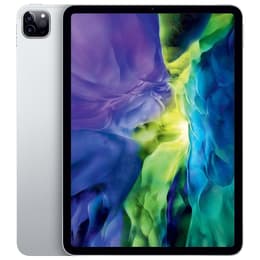
iPad Pro (2020, A12 series)
Starting at

Refurbished price:379.00

Versus €1,019.00 new

See options
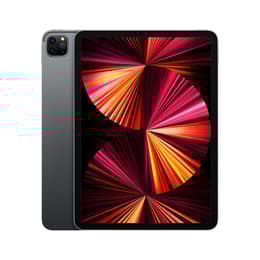
iPad Pro (2021, M1 series)
Starting at

Refurbished price:452.00

Versus €909.00 new

See options

Ratings

The iPad Pro 2020, released in March 2020, and the iPad Pro 2021, launched in May 2021, represent two consecutive generations of Apple's high-performance tablet line. While both devices share a similar design aesthetic and operate on the iPadOS platform, the 2021 model introduced notable advancements in internal processing power, camera capabilities, and, for the larger variant, a significant display upgrade. This comparison aims to highlight the practical differences between these two powerful tablets to help users determine which model best suits their needs.

Scores

Durability

The longevity of a device is often influenced by its release timeline and the duration of software support it receives, alongside its physical resilience.

  • Release Timeline: The iPad Pro 2020 was released in March 2020, while the iPad Pro 2021 followed in May 2021. This difference means the 2021 model will likely receive major iPadOS updates for approximately one year longer than its predecessor, extending its software lifespan.
  • Software Longevity: Both devices benefit from Apple's consistent software update policy, ensuring they remain functional and secure for several years. However, the newer 2021 model inherently offers a longer runway for future operating system features and security patches.
  • Repairability: The iPad Pro 2020 received a low repairability score, indicating that repairs can be challenging. While specific scores for the 2021 model are not widely available, Apple's tablet designs generally present similar repair complexities, suggesting both models may be difficult to repair outside of authorized service.

Year of Release

2020

2021

Compatible with latest Update

Yes

Yes

OS

iPadOS

iPadOS

Maximum Operating System supported

iPadOS 18

iPadOS 18

Performance

Performance is a key differentiator, particularly for users engaging in demanding tasks. Both iPad Pro models offer robust capabilities, but the newer generation brings a significant leap in processing power.

  • Processing Power: The iPad Pro 2020 handles demanding applications and multitasking smoothly, providing ample power for creative work, gaming, and productivity. The iPad Pro 2021, however, offers a substantial performance increase, with up to 50% faster central processing and 40% faster graphics processing compared to the 2020 model, making it exceptionally responsive for professional-grade video editing, 3D rendering, and complex computational tasks.
  • Storage and RAM: The 2020 model is available with storage options up to 1TB and features 6GB of RAM across all configurations. The 2021 model expands storage up to 2TB, offering 8GB of RAM for lower storage tiers and 16GB of RAM for the 1TB and 2TB configurations, which benefits intensive multitasking and handling larger files.
  • Battery Behavior: Both generations are designed to provide around 10 hours of battery life for typical usage like web browsing or video playback. Actual battery duration can vary based on usage intensity, with demanding applications or high screen brightness potentially reducing the time between charges.

Memory (GB)

6 GB

8 GB

Processor

Apple A12Z Bionic

Apple M1

Screen quality

The visual experience on both iPad Pro models is impressive, though the 2021 12.9-inch model introduces a significant advancement in display technology.

  • Display Technology: The iPad Pro 2020 features a Liquid Retina IPS LCD display. The 11-inch iPad Pro 2021 retains a similar Liquid Retina IPS LCD panel. However, the 12.9-inch iPad Pro 2021 boasts a Liquid Retina XDR display, which utilizes mini-LED technology, offering superior contrast and brightness.
  • Brightness and Contrast: The 2020 models and the 11-inch 2021 model offer a typical brightness of up to 600 nits. The 12.9-inch iPad Pro 2021 significantly enhances this with up to 1000 nits of full-screen brightness and a peak of 1600 nits for HDR content, alongside a 1,000,000:1 contrast ratio, providing deeper blacks and more vibrant highlights.
  • Refresh Rate and Clarity: Both generations feature ProMotion technology, enabling an adaptive refresh rate up to 120Hz for smooth scrolling and responsive interactions. Both also maintain high resolutions, delivering sharp and clear visuals for text and images.

Resolution

2388 x 1668

2388 x 1668

True Tone

Yes

Yes

Pro-Motion

Yes

Yes

Screen type

Liquid Retina display

Liquid Retina display

Pixel density

264ppp

264ppp

Brightness

600 nits brightness max

600 nits brightness max

Sound quality

Speakers

Four speaker audio

Four speaker audio

Audiovisual

Both iPad Pro generations offer capable camera systems, suitable for document scanning, augmented reality, and casual photography, with the 2021 model introducing a notable front-facing camera enhancement.

  • Rear Camera System: Both the iPad Pro 2020 and 2021 feature a dual-camera setup on the rear, consisting of a 12MP wide lens and a 10MP ultra-wide lens. Both also include a LiDAR scanner, which enhances augmented reality experiences and improves autofocus in low-light conditions.
  • Front Camera Capabilities: The iPad Pro 2020 is equipped with a 7MP TrueDepth front camera. The iPad Pro 2021 upgrades this to a 12MP ultra-wide TrueDepth camera, which supports a feature called Center Stage. Center Stage automatically adjusts the camera to keep subjects centered during video calls, even as they move around, and expands to include others who enter the frame.
  • Audio and Video: Both models are capable of recording 4K video at up to 60 frames per second. They also feature multiple microphones for clear audio capture and quad speakers that deliver a rich sound experience for media consumption.

Miscellaneous

Beyond core performance and display, several practical elements contribute to the overall user experience and connectivity of these tablets.

  • Connectivity Options: The iPad Pro 2020 supports Wi-Fi 6 and offers optional 4G LTE for cellular connectivity. The iPad Pro 2021 enhances this by adding support for 5G connectivity in its cellular models, providing faster wireless data speeds where available.
  • Port Technology: The iPad Pro 2020 features a USB-C port for charging and data transfer. The iPad Pro 2021 upgrades its USB-C port to support Thunderbolt and USB 4, enabling significantly faster data transfer speeds and compatibility with a wider range of high-performance accessories and external displays.
  • Physical Design and Sensors: Both generations maintain a similar industrial design with an aluminum chassis. They both include Face ID for secure authentication and the LiDAR scanner for advanced augmented reality applications. The 12.9-inch iPad Pro 2021 is slightly thicker and heavier than its 2020 counterpart due to the mini-LED display technology.

Weight

471 g

466 g

Width

17.85 cm

17.85 cm

Height

24.76 cm

24.76 cm

Depth

0.59 cm

0.59 cm

Screen size (in)

11

11

Network

Wi-Fi

Wi-Fi

Carrier compatibility

Without SIM Port

Without SIM Port

Wi-Fi technology

Wi-Fi 6 802.11ax

Wi-Fi 6 802.11ax

Bluetooth Version

Bluetooth 5.0

Bluetooth 5.0

Face ID

Yes

Yes

Touch ID

No

No

Connector

USB Type-C

USB Type-C

The iPad Pro 2020 and iPad Pro 2021 are both highly capable tablets, each excelling in different areas based on user priorities. The 2020 model is frequently praised for its robust performance, excellent display, and overall premium feel, even years after its release. Users often highlight its continued ability to handle demanding applications and its strong battery life for everyday tasks. A common observation, however, was that its performance upgrade over its immediate predecessor was not a dramatic leap for all users.

The iPad Pro 2021, on the other hand, garners significant acclaim for its substantial performance boost, particularly with its advanced internal processing, which brings desktop-class power to a tablet. The 12.9-inch model's Liquid Retina XDR display is widely celebrated for its exceptional brightness and contrast, making it ideal for HDR content creation and consumption. The improved front camera with Center Stage is also a frequently lauded feature for video conferencing. Some users, however, note that the full potential of the 2021 model's processing power can sometimes feel constrained by the current capabilities of iPadOS.

Users prioritizing a powerful tablet for general productivity, creative tasks, and media consumption, where the absolute latest display technology or peak performance isn't the primary concern, may find the iPad Pro 2020 well-suited to their needs. It remains a highly capable device for a wide range of uses. Conversely, users who demand the highest performance for professional-grade creative work, such as intensive video editing or 3D design, those who will benefit significantly from the enhanced visual experience of the 12.9-inch model's display, or those who require 5G connectivity and the expanded capabilities of Thunderbolt/USB 4, will likely find the iPad Pro 2021 to be the more appropriate choice. Both models offer a premium tablet experience, and considering a quality-assured refurbished option for either can be an eco-friendly alternative to purchasing new.


See all articles

Our recent comparisons