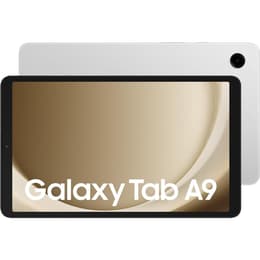
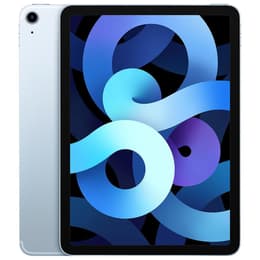


Galaxy Tab A9 (8.7", 2023) Vs iPad Air 4 (2020, A14 series)

Galaxy Tab A9 (8.7", 2023)
Starting at

Refurbished price:153.00

Versus €255.86 new

See options
iPad Air 4 (2020, A14 series)
Starting at

Refurbished price:271.00

Versus €679.00 new

See options

Ratings

The Samsung Galaxy Tab A9, released in October 2023, and the Apple iPad Air (4th generation), launched in October 2020, represent distinct approaches to the tablet experience. While both offer portable computing, they cater to different user needs through their respective operating systems and hardware philosophies. The Tab A9 focuses on a compact form factor and the Android ecosystem, whereas the iPad Air (2020) provides a larger display and the robust iPadOS environment, along with more powerful internal components.

Scores

Durability

When considering the longevity of these devices, their release timelines and software support play a significant role. The Galaxy Tab A9 is a newer device, having been released in late 2023, while the iPad Air (2020) is an older model from late 2020.

  • Software Updates: The Galaxy Tab A9 is expected to receive major Android updates up to Android 15, with Samsung generally providing around four years of updates for its A-series tablets. The iPad Air (2020), running iPadOS, typically benefits from a longer support window, with Apple providing major iPadOS updates for approximately five to seven years from its release. This suggests the iPad Air (2020) may continue to receive new features and security patches for a longer duration.
  • Practical Lifespan: Both tablets are built to last, with the iPad Air featuring a recycled aluminum case and the Tab A9 sporting a sturdy metal body. The practical lifespan for either device will largely depend on how demanding a user's applications are and the continued availability of software updates. Users who prioritize the latest software features and security updates for the longest possible time might find the iPad Air (2020) to offer a slightly extended functional life.
  • Repairability: Both devices are consumer electronics and are not designed for easy user repair. Professional repair services are available for both, with Apple typically offering repair services for up to seven years after a product is last sold.

Year of Release

2023

2020

Compatible with latest Update

Yes

Yes

OS

Android

iPadOS

Performance

The performance capabilities of these two tablets differ, influencing their suitability for various tasks, from everyday browsing to more demanding applications.

  • Processing Power: The iPad Air (2020) is equipped with a powerful processor that delivers smooth and responsive performance across a wide range of applications, including demanding games and creative tasks. Users report impeccable performance and a smooth experience even with video editing. The Galaxy Tab A9, while capable for daily use, offers sufficient performance for casual gaming and multimedia consumption, but may show limitations with more intensive applications.
  • Multitasking and Responsiveness: The iPad Air (2020) handles multitasking efficiently, allowing users to switch between apps and run multiple applications simultaneously without significant slowdowns. Its system responsiveness is consistently noted as fast. The Galaxy Tab A9 provides a generally fine experience for navigating the operating system and switching between apps, though it may struggle when pushed with very demanding tasks.
  • Storage and Battery Behavior: The iPad Air (2020) is available with 64GB or 256GB of internal storage, while the Galaxy Tab A9 offers 64GB or 128GB, with the added benefit of expandable storage via a microSD card up to 1TB. In terms of battery, the iPad Air (2020) generally provides around 9-10 hours of use for web browsing or video playback. The Galaxy Tab A9's battery life can vary, with some tests showing over 12 hours of general use, while others indicate around 6-7 hours for continuous video streaming at maximum brightness.

Memory (GB)

4 GB

4 GB

Screen quality

The visual experience on these tablets is shaped by their display technology, resolution, and overall screen characteristics.

  • Display Technology and Clarity: The iPad Air (2020) features a 10.9-inch Liquid Retina IPS LCD with a resolution of 2360 x 1640 pixels, resulting in a clear and sharp image with 264 pixels per inch. It also includes P3 wide color support and True Tone technology, which adjusts the display to ambient lighting for a more natural viewing experience. The Galaxy Tab A9 comes with an 8.7-inch LCD panel with a resolution of 1340 x 800 pixels, offering a decent viewing experience for everyday tasks, though some users may notice individual pixels when reading.
  • Brightness and Outdoor Use: The iPad Air (2020) offers a brightness of up to 500 nits and an anti-reflective coating, making it more comfortable to use in brighter environments. The Galaxy Tab A9's display is also noted to be bright, with some sources indicating up to 570 nits, and it supports Widevine Level L1 for HD streaming.
  • Refresh Rate and Viewing Experience: Both tablets feature a standard 60Hz refresh rate, which provides a smooth experience for most content. The iPad Air (2020)'s larger screen size and higher resolution contribute to a more expansive and detailed viewing experience, particularly beneficial for productivity and immersive media consumption. The Tab A9's more compact screen is well-suited for portability and one-handed use.

Resolution

800 x 1340

2360 x 1640

Screen type

TFT LCD

Liquid Retina display

Pixel density

180ppp

264ppp

Audiovisual

While tablets are not typically primary photography devices, their camera systems are important for video calls, document scanning, and casual photography.

  • Rear Camera Performance: The iPad Air (2020) is equipped with a 12-megapixel rear camera that can record 4K video at up to 60 frames per second, offering good quality for a tablet and performing well in various lighting conditions. The Galaxy Tab A9 features an 8-megapixel rear camera, suitable for basic photography and document capture.
  • Front Camera and Video Calls: For video conferencing and selfies, the iPad Air (2020) has a 7-megapixel front-facing camera that records 1080p video at 60 frames per second, noted for its strong low-light capabilities and clear image capture. The Galaxy Tab A9 comes with a 2-megapixel front camera, which is adequate for standard video calls.
  • Audio Experience: Both tablets offer a good audio experience. The iPad Air (2020) provides stereo speakers that deliver clear sound, especially when held in landscape orientation, enhancing media consumption and video call quality. The Galaxy Tab A9 also features stereo speakers with Dolby Atmos support, contributing to an immersive audio experience.

Miscellaneous

Beyond core specifications, several practical elements contribute to the overall user experience of these tablets.

  • Connectivity and Ports: The iPad Air (2020) supports Wi-Fi 6 and Bluetooth 5.0, with an optional LTE version available, and features a versatile USB-C port for charging and connecting accessories. The Galaxy Tab A9 includes Wi-Fi 5 and Bluetooth 5.3, also with an optional LTE variant, and offers a USB-C port along with a 3.5mm headphone jack, which is absent on the iPad Air (2020).
  • Biometric Security and Accessories: The iPad Air (2020) integrates Touch ID into its power button for secure and convenient unlocking. It also supports the second-generation Apple Pencil and Apple's Smart Keyboard Folio, expanding its utility for creative and productivity tasks. The Galaxy Tab A9 does not support an active stylus like the S Pen, and its biometric security relies on face recognition.
  • Design and Handling: The iPad Air (2020) features a thin and light design, weighing around 458g for the Wi-Fi model, with a 10.9-inch display and slim bezels. The Galaxy Tab A9 is more compact and lighter at approximately 332g for the Wi-Fi model, with an 8.7-inch screen, making it easy to hold in one hand. Both devices have a premium feel due to their metal construction.

Weight

332 g

458 g

Width

21,1 cm

17.85 cm

Height

12,47 cm

24.76 cm

Depth

0,8 cm

0.61 cm

Screen size (in)

8.7

10.9

Network

Wi-Fi

Wi-Fi

Carrier compatibility

Without SIM Port

Without SIM Port

User feedback for the iPad Air (2020) frequently praises its powerful performance, high-quality display, and robust ecosystem, making it well-suited for demanding tasks and creative work. Users appreciate its compatibility with accessories like the Apple Pencil and Magic Keyboard, enhancing its versatility. Some criticisms occasionally point to its battery life being average for heavy use compared to some competitors, and its design, while modern, is now a few years old.

The Galaxy Tab A9 is often commended for its compact size, solid build quality, and suitability for basic media consumption and everyday tasks. Users find it to be a good budget-friendly option. Common criticisms include its lower-resolution screen, modest performance for intensive applications, and sometimes shorter battery life compared to other tablets.

Users prioritizing a larger, higher-resolution display, strong performance for productivity and creative applications, and a longer software support window will find the iPad Air (2020) well-suited to their needs. Its integration with the Apple ecosystem and accessory support makes it a strong choice for those who value a comprehensive tablet experience. Conversely, users who prefer a more compact and portable device for casual browsing, media consumption, and light tasks, within the Android ecosystem, may lean toward the Galaxy Tab A9. It offers a practical solution for those seeking a straightforward tablet experience.

For those considering either device, exploring quality-assured refurbished options can provide an eco-friendly alternative, offering excellent value while extending the lifespan of these electronics.

See all articles

Our recent comparisons