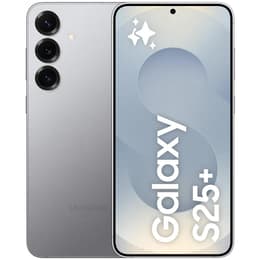
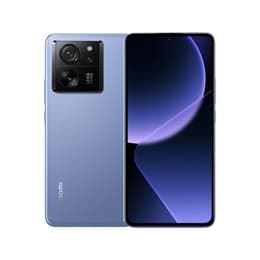


Galaxy S25+ Vs Xiaomi 13T

Galaxy S25+
Galaxy S25+
Starting at

Refurbished price:624.00

Versus €1,401.57 new

See options
Xiaomi 13T
Xiaomi 13T
Starting at

Refurbished price:183.00

Versus €630.00 new

See options

Ratings

The Samsung Galaxy S25 Plus, released in February 2025, and the Xiaomi 13T, launched in September 2023, are both capable smartphones designed to offer a comprehensive mobile experience. While the Galaxy S25 Plus represents a more recent iteration in the flagship segment, the Xiaomi 13T provides a strong offering from the previous year. A primary distinction lies in their software support timelines and the specific enhancements each manufacturer prioritizes in their camera systems.

Scores

Durability

When considering the long-term usability of a smartphone, software support and physical durability are key factors. The Galaxy S25 Plus, being a more recent release, benefits from an extended support window, while the Xiaomi 13T also offers a commendable commitment to updates.

  • Software Longevity: The Samsung Galaxy S25 Plus is designed to receive seven generations of Android operating system upgrades and seven years of security updates, extending its software relevance significantly into the future. In contrast, the Xiaomi 13T is committed to four generations of OS updates and five years of security patches, with Android 16 expected to be its final major OS upgrade.
  • Physical Durability: Both devices feature an IP68 rating, indicating resistance to dust and water immersion. The Galaxy S25 Plus incorporates Gorilla Glass Victus 2 on both its front and back for enhanced scratch and drop protection. The Xiaomi 13T utilizes Corning Gorilla Glass 5 for screen protection.
  • Repairability Aspects: The Samsung Galaxy S25 Plus has shown improvements in repairability, with some components like the battery being more accessible for servicing. While specific repairability scores for the Xiaomi 13T are less widely publicized, both devices, like many modern smartphones, involve adhesives in their construction which can impact the ease of repair.

Year of Release

2025

2023

Compatible with latest Update

Yes

Yes

OS

Android

Android

Foldable

No

No

Performance

The performance of a smartphone is central to the user experience, influencing everything from app responsiveness to gaming capabilities and battery endurance. Both the Galaxy S25 Plus and the Xiaomi 13T are equipped with powerful internal components designed for smooth operation.

  • Processing Power: The Galaxy S25 Plus features a current-generation processor that delivers very fast performance, enabling demanding applications and multitasking to run smoothly. Users can expect a highly responsive experience across various tasks. The Xiaomi 13T is powered by a capable processor that handles everyday usage with grace and supports gaming at high frame rates, providing a fluid experience for most users.
  • Multitasking and Storage: The Galaxy S25 Plus typically comes with 12 GB of RAM, contributing to efficient multitasking and app management. It offers internal storage options of 256 GB or 512 GB. The Xiaomi 13T is available with 8 GB or 12 GB of RAM and 256 GB of internal storage, allowing for competent multitasking and ample space for applications and media. Neither device supports expandable storage.
  • Battery Behavior: The Galaxy S25 Plus is equipped with a 4900 mAh battery, which users report provides a full day of use with moderate settings and consistently more than six hours of screen-on time. It supports 45W wired charging and 15W wireless charging. The Xiaomi 13T houses a 5000 mAh battery, generally offering a full day of power even with casual gaming. It supports faster 67W wired charging but lacks wireless charging capabilities.

Memory (GB)

12 GB

8 GB

Screen quality

The display is a primary interface for smartphone interaction, and both devices offer vibrant and responsive screens, though with some differences in their underlying technology and specifications.

  • Display Technology and Clarity: The Samsung Galaxy S25 Plus features a 6.7-inch Dynamic LTPO AMOLED 2X display, providing deep blacks, vibrant colors, and excellent contrast. Its resolution of 1440 x 3120 pixels (QHD+) results in a very sharp and detailed viewing experience. The Xiaomi 13T comes with a 6.67-inch AMOLED display, also offering rich colors and good contrast, with a resolution of 1220 x 2712 pixels.
  • Brightness and Refresh Rate: Both phones offer high peak brightness levels, reaching up to 2600 nits, which ensures good visibility even in bright outdoor conditions. The Galaxy S25 Plus has an adaptive refresh rate of up to 120Hz, providing smooth scrolling and fluid animations. The Xiaomi 13T features a slightly higher refresh rate of up to 144Hz, which can offer an even smoother visual experience, particularly noticeable in fast-paced content or gaming.
  • Viewing Experience: The screen sizes are very similar, offering expansive viewing areas suitable for media consumption and productivity. The Galaxy S25 Plus's LTPO technology allows for more dynamic adjustment of the refresh rate, potentially contributing to battery efficiency.

Resolution

1440 x 3120 pixels

1220 x 2712

Audiovisual

Photography and videography capabilities are often a deciding factor for many users, and both the Galaxy S25 Plus and Xiaomi 13T offer versatile camera systems designed to capture quality images and videos.

  • Rear Camera Systems: The Samsung Galaxy S25 Plus is equipped with a triple rear camera setup, including a 50 MP wide-angle main sensor with optical image stabilization (OIS), a 12 MP ultra-wide-angle lens, and a 10 MP telephoto lens offering 3x optical zoom with OIS. This configuration allows for detailed shots across various focal lengths. The Xiaomi 13T also features a triple rear camera system, co-engineered with Leica, comprising a 50 MP wide-angle main sensor, a 50 MP telephoto lens with 2x optical zoom, and a 12 MP ultra-wide-angle lens.
  • Photography Performance: The Galaxy S25 Plus is known for producing good images with punchy colors and handles low-light scenes effectively, delivering bright and clear results. The Xiaomi 13T's camera system is praised for its impressive detail and colors, with particular strengths in low-light video performance. Its Leica-tuned modes offer distinct photographic styles.
  • Front Camera and Video: For selfies, the Galaxy S25 Plus has a 12 MP front-facing camera that produces sharp images with good color. The Xiaomi 13T features a 20 MP front camera, also capable of good results. In terms of video recording, the Galaxy S25 Plus supports up to 8K resolution at 24/30 frames per second (fps) and 4K at 30/60 fps. The Xiaomi 13T records video at up to 4K resolution at 30 fps.

Front camera

12MP

20 megapixels

Miscellaneous

Beyond core performance and display, several practical features and design elements contribute to the overall user experience of these smartphones.

  • Connectivity and Ports: Both devices support 5G connectivity for fast mobile data. The Galaxy S25 Plus includes Wi-Fi 7 and Bluetooth 5.4, offering advanced wireless capabilities. The Xiaomi 13T supports Wi-Fi 6 and Bluetooth 5.4. Both utilize a USB Type-C port for charging and data transfer. Neither phone includes a 3.5mm headphone jack or a microSD card slot for expandable storage.
  • Design and Handling: The Galaxy S25 Plus measures 158.4 x 75.8 x 7.3 mm and weighs 190 g, featuring a design with flat metal edges and a premium feel. The Xiaomi 13T has dimensions of 162.2 x 75.7 x 8.5 mm and weighs 197 g (glass version), with some variants offering a vegan leather back. Both devices incorporate an under-display optical fingerprint sensor for secure unlocking.
  • Additional Features: The Galaxy S25 Plus includes stereo speakers tuned by AKG, providing a rich audio experience. It also features Samsung's suite of artificial intelligence capabilities. The Xiaomi 13T also offers stereo speakers and includes an infrared blaster, a feature useful for controlling various home electronics.

Weight

190 g

193 g

Screen size (in)

6.7

6.67

Network

5G

5G

SIM card

Physical SIM + eSIM

Dual Physical SIM

Carrier compatibility

Unlocked

Unlocked

Connector

USB-C

USB-C

User feedback for the Samsung Galaxy S25 Plus often highlights its super-fast performance, excellent AI features, and outstanding cameras, alongside impressive battery life and a long software support window. Some users note that while the design is refined, it retains a familiar aesthetic. For the Xiaomi 13T, common praise points include its stylish design, capable camera system co-engineered with Leica, and reliable battery life. Criticisms sometimes point to the selfie camera's video resolution being limited compared to some competitors, and some users find the MIUI software overlay can be extensive.

Users prioritizing the longest possible software support and the latest processing power will find the Samsung Galaxy S25 Plus well-suited to their needs. Its higher display resolution and wireless charging capabilities also cater to those seeking a premium experience. Conversely, users who value a slightly faster screen refresh rate, quicker wired charging, and a camera system with Leica's distinct photographic styles may lean toward the Xiaomi 13T. Both devices offer robust performance and durability, making them suitable for a range of users, from professionals to students. For those considering a more sustainable choice, exploring quality-assured refurbished options for either model can provide an eco-friendly alternative.


See all articles

Our recent comparisons