
Galaxy S25+ Vs iPhone 14 Pro

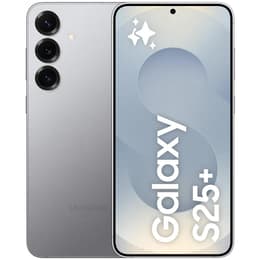
Galaxy S25+
Galaxy S25+
Starting at

Refurbished price:624.00

Versus €1,401.57 new

See options
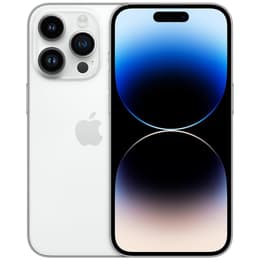
iPhone 14 Pro
iPhone 14 Pro
Starting at

Refurbished price:424.00

Versus €1,339.00 new

See options

Ratings

The Samsung Galaxy S25 Plus, released in February 2025, and the Apple iPhone 14 Pro, launched in September 2022, represent distinct approaches to high-end smartphone design and functionality. While both devices offer premium experiences, they differ in their operating systems, display sizes, and camera philosophies. The Galaxy S25 Plus operates on Android, providing extensive customization, whereas the iPhone 14 Pro runs on iOS, known for its integrated ecosystem and streamlined user experience.

Scores

Durability

When considering the long-term usability of a smartphone, software support and physical resilience are key factors. The Galaxy S25 Plus, being a more recent release, benefits from a longer guaranteed software support period compared to the iPhone 14 Pro.

  • Release Timeline: The Galaxy S25 Plus was released in February 2025, making it a newer device compared to the iPhone 14 Pro, which launched in September 2022. This difference in release dates directly impacts their respective software support lifecycles.
  • OS Support Duration: Samsung has committed to providing seven years of operating system upgrades and security updates for the Galaxy S25 series, meaning it is expected to receive updates until approximately 2032. The iPhone 14 Pro typically receives iOS updates for five to seven years from its release, suggesting support could extend until around 2028.
  • Physical Durability: The Galaxy S25 Plus features an Armor Aluminum frame and Corning Gorilla Glass Victus 2 on both its front and back. The iPhone 14 Pro utilizes a Ceramic Shield front cover and a stainless steel frame, with a dual-ion glass back. Both devices offer IP68 water and dust resistance. User experiences with the iPhone 14 Pro's durability have been mixed, with some reports of the back glass shattering in drop tests, while the Ceramic Shield front has shown resilience.

Year of Release

2025

2022

Compatible with latest Update

Yes

Yes

OS

Android

iOS

Foldable

No

No

Performance

Both the Galaxy S25 Plus and the iPhone 14 Pro are equipped with powerful internal components designed to handle demanding applications and multitasking efficiently, though their underlying architectures differ.

  • Processing Capabilities: The Galaxy S25 Plus features a current-generation processor optimized for its Android ecosystem, enabling smooth operation for everyday tasks, demanding applications, and gaming. The iPhone 14 Pro is powered by a processor known for its strong performance in graphics-intensive tasks and efficient handling of iOS applications.
  • Multitasking and Responsiveness: The Galaxy S25 Plus typically comes with a larger amount of RAM, which can contribute to maintaining responsiveness when switching between many open applications. The iPhone 14 Pro, with its optimized software and hardware integration, also delivers a fluid multitasking experience, even with a comparatively smaller RAM capacity.
  • Storage Options: The Galaxy S25 Plus is available with 256GB or 512GB of internal storage. The iPhone 14 Pro offers a wider range of storage configurations, starting from 128GB and extending up to 1TB, providing more choices for users with varying storage needs.
  • Battery Behavior: The Galaxy S25 Plus houses a 4900 mAh battery, which generally provides ample power for a full day of typical use, with some users reporting up to 10 hours of screen-on time. The iPhone 14 Pro has a 3200 mAh battery, and in various tests, it has shown to last around 10 hours of continuous web browsing, often sufficient for a day's use depending on individual habits.

Memory (GB)

12 GB

6 GB

Screen quality

The visual experience on both devices is a highlight, with each offering a high-quality display that provides clarity and vibrant colors, though they differ in size and specific technologies.

  • Display Technology and Size: The Galaxy S25 Plus features a larger 6.7-inch Dynamic AMOLED 2x display, offering a spacious viewing area. The iPhone 14 Pro comes with a 6.1-inch Super Retina XDR OLED display, providing a more compact form factor. Both OLED-based panels deliver deep blacks and high contrast.
  • Resolution and Clarity: The Galaxy S25 Plus boasts a resolution of 3120x1440 pixels, resulting in a pixel density of approximately 513 pixels per inch (ppi). The iPhone 14 Pro has a resolution of 2556x1179 pixels, with a pixel density of around 460 ppi. Both resolutions ensure sharp text and detailed images for typical viewing distances.
  • Brightness and Refresh Rate: Both phones feature adaptive refresh rates, with the Galaxy S25 Plus offering up to 120Hz, and the iPhone 14 Pro's ProMotion display also reaching 120Hz and capable of scaling down to 1Hz for power efficiency. In terms of brightness, the Galaxy S25 Plus can reach a peak of 2,600 nits, while the iPhone 14 Pro can achieve a peak brightness of 2,000 nits, ensuring good visibility in bright outdoor conditions.

Resolution

1440 x 3120 pixels

1179 x 2556

Audiovisual

Both the Galaxy S25 Plus and the iPhone 14 Pro offer versatile camera systems designed to capture high-quality photos and videos in various conditions, each with its own strengths in image processing and sensor capabilities.

  • Rear Camera Systems: The Galaxy S25 Plus is equipped with a triple-camera setup, including a 50MP main wide-angle lens, a 12MP ultra-wide lens, and a 10MP telephoto lens with 3x optical zoom. The iPhone 14 Pro also features a triple-camera system, comprising a 48MP main sensor, a 12MP ultra-wide lens, and a 12MP telephoto lens with 3x optical zoom.
  • Photography Performance: The Galaxy S25 Plus, despite using similar hardware to its predecessor, benefits from an updated image processing engine, delivering good details and colors in well-lit environments, and capable low-light performance from its main sensor. The iPhone 14 Pro's 48MP main camera, which typically outputs 12MP images, excels in bright conditions, producing detailed and vibrant photos. Its low-light performance is strong with the main lens, though the ultra-wide can show some limitations in very dim settings.
  • Video Recording and Audio: Both devices offer advanced video recording capabilities. The Galaxy S25 Plus can record up to 8K video at 30 frames per second with its main camera, and 4K at 60 frames per second with its other lenses. The iPhone 14 Pro supports 4K video recording at up to 60 frames per second across its camera array. Both phones provide good microphone quality for calls and video recording, and their speakers deliver clear audio for media consumption.

Front camera

12MP

12 megapixels

Miscellaneous

Beyond core performance, several practical features and design elements contribute to the overall user experience of these smartphones.

  • Connectivity and Ports: The Galaxy S25 Plus supports modern connectivity standards, including 5G and advanced Wi-Fi, and features a USB-C port for charging and data transfer. The iPhone 14 Pro also offers 5G connectivity and Wi-Fi 6, but it utilizes Apple's proprietary Lightning port.
  • Biometric Security: The iPhone 14 Pro relies on Face ID for secure facial recognition. The Galaxy S25 Plus is expected to offer both an in-display fingerprint sensor and facial recognition for unlocking and authentication.
  • Design and Handling: The Galaxy S25 Plus, with its 6.7-inch display, is a larger device, which can be beneficial for media consumption and productivity. The iPhone 14 Pro, with its 6.1-inch display and a weight of 206g, offers a more compact and potentially easier-to-handle form factor for some users. Both phones feature premium build materials, with the Galaxy S25 Plus using Armor Aluminum and Gorilla Glass Victus 2, and the iPhone 14 Pro featuring a stainless steel frame and Ceramic Shield front.
  • Unique Features: The iPhone 14 Pro introduced the Dynamic Island, an interactive area around the front camera cutout that displays alerts and background activities. The Galaxy S25 Plus integrates advanced AI features, enhancing various aspects of the user experience, from photo editing to communication.

Weight

190 g

206 g

Screen size (in)

6.7

6.1

Network

5G

5G

SIM card

Physical SIM + eSIM

Physical SIM + eSIM

Carrier compatibility

Unlocked

Unlocked

Connector

USB-C

Lightning

The Samsung Galaxy S25 Plus and the iPhone 14 Pro cater to users with differing priorities and preferences. User feedback for the Galaxy S25 Plus often praises its vibrant display, strong overall performance, and the extended software support policy, which ensures longevity. Some users have noted that while its camera system is capable, the telephoto zoom might not match the capabilities of some higher-end competitors. Battery life has received mixed reviews, with some finding it excellent and others less impressed, suggesting usage patterns play a significant role.

For the iPhone 14 Pro, common praise points include its robust performance, the quality of its main camera in good lighting, and the seamless integration within the Apple ecosystem. The Dynamic Island has also been highlighted as an innovative feature. Criticisms sometimes revolve around its battery life, which some users found to be a step back from its predecessor, and the continued use of the Lightning port. Some users also reported that the physical durability, particularly the back glass, could be a concern without adequate protection.

Users prioritizing a larger display, extensive software support, and the flexibility of the Android operating system with advanced AI features may find the Galaxy S25 Plus to be a more suitable choice. Conversely, individuals who value a more compact device, the consistent performance and user experience of iOS, and a highly capable camera system for everyday photography might lean towards the iPhone 14 Pro. Both devices offer a premium smartphone experience, and considering a quality-assured refurbished option for either model can be a sustainable choice for consumers.


See all articles

Our recent comparisons