


Compare models
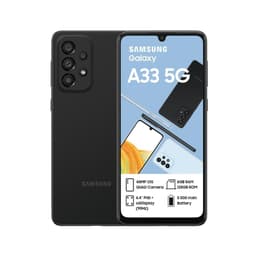
Galaxy A33 5G Vs Google Pixel 9a
- 1-year minimum warranty
- Free delivery on all orders
- Free 30-day returns
Differences at a glance
The Samsung Galaxy A33 5G (2022) and the Google Pixel 9a (2025) are popular mid-range smartphones designed to deliver reliable everyday performance without the complexity or scale of top-tier flagship lines. Both devices offer robust mobile capabilities running on the Android operating system, yet they stem from different release years and manufacturing philosophies. While the Galaxy A33 5G focuses on expandable storage and a dependable multi-lens camera setup, the Google Pixel 9a introduces a newer-generation processor, extended software longevity, and a fluid high-refresh-rate display.
Available Models
Colour
Storage
Scores
Durability
When examining longevity and hardware endurance, these two smartphones reflect their distinct launch timelines and software commitment schedules.
- Software Support Window: The Google Pixel 9a benefits from an extended software update commitment spanning seven years, whereas the Galaxy A33 5G follows an earlier multi-year support model, meaning the Pixel model will retain official system security updates further into the future.
- Build Integrity and Repair: Both models feature durable outer shells designed for daily wear, though everyday users seeking an eco-friendly approach often look toward a quality-assured refurbished option to extend device life cycles sustainably.
- Expected Longevity: The Pixel 9a's newer processor and extended update schedule provide more long-term readiness for future application requirements compared to its older counterpart.
Year of Release
2022
2025
Compatible with latest Update
Yes
Yes
OS
Android
Android
Foldable
No
No
Performance
Underneath their exteriors, both smartphones handle daily tasks such as web browsing, messaging, and media streaming with steady efficiency while utilizing different hardware foundations.
- App Loading and Multitasking: The Google Pixel 9a handles demanding apps, heavy multitasking, and modern games more fluidly thanks to its current-generation processor and higher base memory bandwidth.
- Storage Configurations: The Galaxy A33 5G offers the practical advantage of expandable storage via a microSD card slot, whereas the Pixel 9a relies entirely on fixed internal storage options.
- Battery Behavior: Both devices comfortably manage a full day of typical usage on a single charge, though their respective energy management profiles differ slightly under heavy gaming or navigation tasks.
Screen quality
Visual output and screen responsiveness play a significant role in day-to-day interactions, with both manufacturers implementing vibrant display technologies.
- Display Panel and Smoothness: The Google Pixel 9a features an OLED display with a dynamic refresh rate scaling up to 120Hz, resulting in smoother scrolling animations than the Galaxy A33 5G's 90Hz Super AMOLED panel.
- Outdoor Visibility: Both screens maintain clear legibility under bright sunlight, though the Pixel 9a achieves higher peak brightness levels for improved outdoor viewing clarity.
- Viewing Area: The Galaxy A33 5G offers a 6.4-inch viewing space, while the Pixel 9a provides a slightly more compact 6.3-inch frame with slim, symmetrical bezels.
Resolution
1080 x 2400
2424 x 1080
Audiovisual
Photography and media consumption capabilities vary across these devices based on their sensor configurations and image processing software.
- Primary and Secondary Lenses: The Galaxy A33 5G utilizes a quad-camera arrangement including macro and depth sensors, while the Pixel 9a opts for a streamlined dual-camera layout paired with advanced computational photography software for balanced exposure and detail.
- Low-Light Performance: Users report that the Pixel 9a excels in challenging lighting conditions by automatically balancing shadows and highlights effectively.
- Audio and Video Output: Both devices feature stereo speakers that deliver clear sound for hands-free calls and casual video viewing, supported by reliable multi-microphone setups for voice recording.
Front camera
13 megapixels
13 megapixels
Miscellaneous
Practical everyday elements such as connectivity standards, physical dimensions, and security sensors shape the overall handling experience of each phone.
- Connectivity and Ports: Both models support 5G networks, modern Wi-Fi standards, and Bluetooth, utilizing reversible USB Type-C ports for charging and data synchronization.
- Biometric Security: The Galaxy A33 5G uses an optical in-display fingerprint scanner, while the Pixel 9a incorporates responsive biometric authentication options for quick unlocking.
- Physical Dimensions: Weighing roughly the same at 186 grams, both phones offer comfortable hand-feel, though minor differences in thickness and width affect how they sit in pockets or smaller bags.
Weight
186 g
186 g
Screen size (in)
6.4
6.3
Network
5G
5G
SIM card
Dual Physical SIM
Physical SIM + eSIM
Carrier compatibility
Unlocked
Unlocked
What the community thinks
User feedback from online communities highlights distinct preference patterns for each device. Owners of the Galaxy A33 5G frequently praise its dependable battery endurance, expandable storage slot, and reliable everyday utility. On the other hand, Pixel 9a users commonly commend the streamlined software experience, high-brightness fluid screen, and reliable camera processing. Common criticisms for the older Samsung model center on occasional interface stutter during heavy multitasking, while some Pixel users note the absence of expandable storage as a limitation.
Users prioritizing expanded storage flexibility and a traditional multi-lens camera layout may find the Galaxy A33 5G well-suited to their preferences. Meanwhile, users prioritizing a high-refresh-rate display, extended software update longevity, and current-generation processing power will likely lean toward the Pixel 9a. For consumers exploring sustainable technology choices, opting for a quality-assured refurbished model from Back Market provides a reliable and eco-friendly alternative to purchasing newly manufactured hardware.











