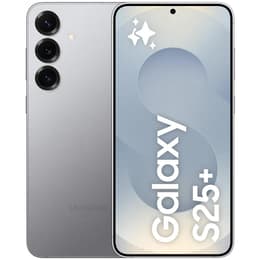


Galaxy S25+ Vs Google Pixel 9

Galaxy S25+
Galaxy S25+
Starting at

Refurbished price:624.00

Versus €1,401.57 new

See options
Google Pixel 9
Google Pixel 9
Starting at

Refurbished price:376.00

Versus €1,066.71 new

See options

Ratings

The Samsung Galaxy S25 Plus and the Google Pixel 9 represent distinct approaches to the modern smartphone experience, both released in 2025. While the Galaxy S25 Plus, a premium Android device, focuses on a comprehensive feature set and a refined user interface, the Google Pixel 9 emphasizes a streamlined Android experience with advanced computational photography and artificial intelligence capabilities. These devices cater to users with differing priorities, offering unique strengths in their respective ecosystems.

Scores

Durability

When considering the long-term usability of a smartphone, software support and physical resilience are key factors. Both the Galaxy S25 Plus and the Google Pixel 9 are designed with longevity in mind, offering extensive software update commitments.

  • Software Support: The Samsung Galaxy S25 Plus is expected to receive seven years of operating system and security updates, aligning with Samsung's recent commitment to extended support for its flagship devices. Similarly, the Google Pixel 9 is also promised seven years of OS and security updates, continuing Google's policy for its recent Pixel models. This extended support ensures both devices remain secure and receive new features for a considerable period.
  • Physical Durability: Both smartphones feature robust builds with high-quality materials. The Galaxy S25 Plus is anticipated to maintain an IP68 rating for dust and water resistance, a standard for premium devices. The Google Pixel 9 is also expected to carry an IP68 rating, offering similar protection against environmental elements.
  • Repairability: While specific repairability scores for these unreleased models are not yet available, both manufacturers generally design their devices with some consideration for component replacement, though professional servicing is typically recommended for complex repairs.

Year of Release

2025

2024

Compatible with latest Update

Yes

Yes

OS

Android

Android

Foldable

No

No

Performance

Performance in modern smartphones extends beyond raw processing power, encompassing how smoothly applications run, the efficiency of multitasking, and overall system responsiveness. Both the Galaxy S25 Plus and the Google Pixel 9 are equipped with advanced internal components to handle demanding tasks.

  • Processing Capabilities: The Galaxy S25 Plus is powered by a current-generation processor, likely the Snapdragon 8 Elite for Galaxy in many regions, designed to deliver high-speed performance for gaming, complex applications, and intensive multitasking. The Google Pixel 9 features Google's Tensor G4 chip, which is optimized for artificial intelligence tasks and aims to provide a highly responsive and intelligent user experience, particularly with on-device machine learning.
  • Multitasking and Storage: The Galaxy S25 Plus is expected to come with 12GB of RAM, facilitating seamless switching between numerous applications and efficient background processes. Storage options typically include 256GB and 512GB, providing ample space for apps, media, and files. The Google Pixel 9 is likely to offer 8GB or 12GB of RAM, ensuring smooth operation for daily use and moderate multitasking, with storage configurations of 128GB and 256GB.
  • Battery Behavior: The Galaxy S25 Plus is anticipated to house a 4900mAh battery, supporting extended usage throughout the day for most users. The Google Pixel 9 is rumored to feature a 4700mAh battery, which, combined with the efficiency of its processor and software optimizations, aims to provide reliable power management.

Memory (GB)

12 GB

12 GB

Screen quality

The display is a primary interface for smartphone interaction, and both the Galaxy S25 Plus and the Google Pixel 9 offer high-quality visual experiences, though with some distinctions in their specifications.

  • Display Technology and Resolution: The Samsung Galaxy S25 Plus is expected to feature a 6.7-inch Dynamic AMOLED 2X display with a WQHD (3120 x 1440) resolution, providing sharp details and vibrant colors. The Google Pixel 9 is rumored to have a slightly smaller 6.1-inch or 6.2-inch OLED display, likely with an FHD+ (1080p) resolution, offering clear visuals in a more compact form factor.
  • Brightness and Refresh Rate: Both devices are expected to offer high peak brightness levels, ensuring good visibility even in bright outdoor conditions. The Galaxy S25 Plus is anticipated to feature a 120Hz adaptive refresh rate, contributing to smooth scrolling and fluid animations. The Pixel 9 is also expected to support a 120Hz refresh rate, enhancing the responsiveness of the user interface.
  • Viewing Experience: The larger, higher-resolution display of the Galaxy S25 Plus may appeal to users who prioritize immersive media consumption and detailed content viewing. The Pixel 9's potentially more compact screen size could be preferred by those seeking easier one-handed use and portability.

Resolution

1440 x 3120 pixels

1080 x 2424

Audiovisual

Camera capabilities are a significant consideration for many smartphone users, and both the Galaxy S25 Plus and the Google Pixel 9 offer advanced photographic tools, albeit with different hardware configurations and processing philosophies.

  • Rear Camera Systems: The Samsung Galaxy S25 Plus is expected to feature a versatile triple-camera setup, including a 50MP main sensor, a 12MP ultra-wide lens, and a 10MP telephoto lens with 3x optical zoom, providing flexibility for various photographic scenarios. The Google Pixel 9 is rumored to come with a dual-camera system, featuring a 50MP main sensor and an upgraded 50MP ultrawide lens, but without a dedicated telephoto lens on the base model.
  • Photography Performance: The Galaxy S25 Plus is known for producing sharp, vibrant photos with a slightly warmer white balance, and its telephoto lens offers enhanced capabilities for zoomed-in shots. The Pixel 9, leveraging Google's computational photography, is expected to excel in image processing, particularly in challenging lighting conditions and with features like improved dynamic range and detail retention.
  • Video Recording and Front Camera: Both devices are capable of high-resolution video recording, with the Galaxy S25 Plus supporting up to 8K at 30fps. For selfies, the Galaxy S25 Plus is expected to have a 12MP front camera, while the Pixel 9 is rumored to feature a 10.5MP selfie camera, potentially with autofocus.

Front camera

12MP

10.5 megapixels

Miscellaneous

Beyond core performance and display, several practical elements contribute to the overall user experience of a smartphone. The Galaxy S25 Plus and the Google Pixel 9 offer a range of features designed for convenience and connectivity.

  • Connectivity and Ports: Both devices are expected to support the latest connectivity standards, including 5G for fast mobile data, Wi-Fi 7 for high-speed wireless internet, and Bluetooth 5.3 for efficient accessory pairing. Both will likely feature a USB-C port for charging and data transfer.
  • Biometric Security: The Galaxy S25 Plus is anticipated to include an in-display fingerprint sensor for secure unlocking. The Google Pixel 9 is also expected to offer an in-display fingerprint scanner and may include facial recognition capabilities.
  • Design and Handling: The Galaxy S25 Plus is rumored to have dimensions of 158.4 x 75.8 x 7.3mm and weigh 190 grams, suggesting a relatively slim and manageable profile for its screen size. The Pixel 9 is expected to feature a redesigned, flatter aesthetic, potentially with dimensions around 150.5 x 70.8 x 8.9mm and a weight of 187 grams for the Pixel 8, indicating a more compact form factor.

Weight

190 g

198 g

Screen size (in)

6.7

6.3

Network

5G

5G

SIM card

Physical SIM + eSIM

Physical SIM + eSIM

Carrier compatibility

Unlocked

Unlocked

Connector

USB-C

USB-C

The Samsung Galaxy S25 Plus and the Google Pixel 9 each present a compelling package for different types of users. User sentiment for Samsung's Plus models often highlights their robust feature sets, vibrant displays, and versatile camera systems, making them a strong choice for those who appreciate a comprehensive smartphone experience with a polished interface. Criticisms sometimes point to the potential for regional processor variations or the sheer number of features that might overwhelm some users.

Conversely, Google Pixel devices are frequently praised for their clean Android interface, exceptional computational photography, and timely software updates, appealing to users who prioritize a straightforward, intelligent, and camera-centric experience. Common concerns might revolve around battery life compared to some larger flagships or the raw gaming performance when stacked against devices with more gaming-focused processors.

Users prioritizing a larger, high-resolution display and a dedicated telephoto camera for diverse photography needs may find the Galaxy S25 Plus well-suited to their requirements. Those who value a more compact device, a pure Android experience, and cutting-edge AI-driven camera features might lean toward the Google Pixel 9. Both devices offer long-term software support, making them sustainable choices. For those considering an eco-friendly alternative, quality-assured refurbished options for both models will become available, providing a way to make an informed and sustainable choice.


See all articles

Our recent comparisons