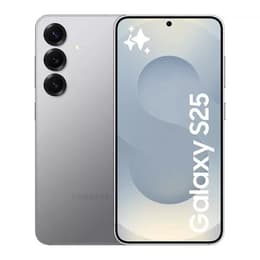



Galaxy S25 Vs Google Pixel 8

Galaxy S25
Galaxy S25
Starting at

Refurbished price:489.00

Versus €799.00 new

See options
Google Pixel 8
Google Pixel 8
Starting at

Refurbished price:235.00

Versus €999.00 new

See options

Ratings

The Samsung Galaxy S25, released in February 2025, and the Google Pixel 8, launched in October 2023, represent distinct approaches to the modern smartphone experience. While both devices operate on the Android platform, the Galaxy S25 offers a more recent hardware foundation and Samsung's One UI, whereas the Pixel 8 emphasizes Google's integrated AI features and a streamlined Android interface. The primary differentiators lie in their release timelines, camera philosophies, and the specific user experiences each aims to deliver.

Scores

Durability

When considering the practical lifespan of these devices, both the Galaxy S25 and the Pixel 8 offer substantial software support, a key factor in long-term usability.

  • Software Longevity: The Samsung Galaxy S25 is guaranteed to receive seven years of Android operating system upgrades and security updates, extending its support until 2032. Similarly, the Google Pixel 8 also offers an impressive seven years of OS, security, and Feature Drop updates from its release. This commitment from both manufacturers ensures that users will have access to the latest features and security patches for an extended period.
  • Build Materials: The Galaxy S25 features an aluminum body with Gorilla Glass Victus 2 on both the front and back for enhanced durability. The Pixel 8 utilizes Gorilla Glass Victus for its display protection and a glass back with an unpolished aluminum frame. Both devices carry an IP68 rating, indicating resistance to dust and water immersion.
  • Repairability: While specific repairability scores can vary, both manufacturers generally design their flagship devices with a degree of modularity to facilitate repairs, contributing to their overall practical lifespan.

Year of Release

2025

2023

Compatible with latest Update

Yes

Yes

OS

Android

Android

Foldable

No

No

Performance

Performance is a core aspect of any smartphone, influencing how smoothly applications run and how efficiently tasks are handled. The Galaxy S25 benefits from a newer hardware generation, while the Pixel 8 leverages its integrated system for optimized performance.

  • Processing Power: The Galaxy S25 is equipped with a current-generation processor, enabling it to handle demanding applications, complex multitasking, and graphic-intensive gaming with fluidity. The Pixel 8, powered by its custom-designed chip, delivers a responsive user experience, excelling in AI-driven tasks and maintaining smooth operation across everyday usage.
  • Multitasking and Responsiveness: Both devices offer 8GB of RAM in their base configurations, which supports efficient multitasking and quick app switching. Users can expect rapid application loading times and a generally seamless interaction with the operating system on both smartphones.
  • Storage Options: Both the Galaxy S25 and Pixel 8 are available with 128GB or 256GB of internal storage, providing ample space for applications, media, and documents.

Memory (GB)

12 GB

8 GB

Screen quality

The visual experience is paramount for daily smartphone interaction, and both the Galaxy S25 and Pixel 8 offer high-quality displays designed for clarity and vibrant visuals.

  • Display Technology and Clarity: The Galaxy S25 features a 6.2-inch Dynamic LTPO AMOLED 2X display, offering deep blacks and vibrant colors with a resolution of 2340x1080 pixels. The Pixel 8 also sports a 6.2-inch FHD+ OLED display, known as 'Actua display,' providing sharp visuals with a 2400x1080 pixel resolution.
  • Brightness and Refresh Rate: The Galaxy S25 boasts a peak brightness of 2600 nits and a variable refresh rate of 1-120 Hz, ensuring excellent visibility even in bright outdoor conditions and smooth scrolling. The Pixel 8 offers a peak brightness of 2000 nits and a variable refresh rate of 60-120 Hz, delivering a bright and fluid viewing experience.
  • Viewing Experience: Both displays are well-suited for media consumption, web browsing, and general use, providing clear and engaging visuals. The higher peak brightness of the Galaxy S25 may offer a slight advantage in extremely bright environments.

Resolution

1080x2340

1080 x 2400

Audiovisual

The camera systems on both the Galaxy S25 and Pixel 8 are central to their appeal, though they approach photography with different strengths.

  • Rear Camera Systems: The Galaxy S25 is equipped with a versatile triple-camera setup, including a 50 MP main sensor with optical image stabilization, a 12 MP ultra-wide lens, and a 10 MP telephoto lens with 3x optical zoom and OIS. This configuration allows for a wide range of photographic scenarios, from expansive landscapes to detailed zoomed-in shots. The Pixel 8 features a dual-camera system with a 50 MP main sensor (f/1.68, OIS) and a 12 MP ultrawide camera with autofocus, which also enables macro photography.
  • Photography Performance: The Galaxy S25 delivers crisp details and vibrant color reproduction, with a focus on hardware versatility. The Pixel 8 excels in computational photography, offering strong low-light performance and advanced AI features for image enhancement.
  • Video Capabilities: The Galaxy S25 supports video recording at up to 8K resolution at 30 frames per second. The Pixel 8 records video at 4K resolution at 24, 30, or 60 frames per second and includes features like 'Video Boost' for improved video quality in challenging lighting.

Miscellaneous

Beyond core features, several practical elements contribute to the overall user experience and connectivity of these smartphones.

  • Connectivity Standards: The Samsung Galaxy S25 supports 5G connectivity, Wi-Fi 7, and Bluetooth 5.4, offering fast and reliable wireless connections. The Google Pixel 8 also supports 5G and Wi-Fi 7, alongside Bluetooth 5.3, ensuring modern connectivity options. Both devices include NFC for contactless payments and interactions.
  • Ports and Biometrics: Both smartphones feature a USB Type-C 3.2 port for charging and data transfer. For security, the Galaxy S25 incorporates an ultrasonic in-screen fingerprint sensor. The Pixel 8 includes an in-display fingerprint scanner and supports secure facial recognition.
  • Physical Design: The Galaxy S25 has a slightly slimmer and lighter design compared to its predecessor, making it comfortable to hold. The Pixel 8 is also designed for comfortable handling, with dimensions of 150.5 x 70.8 x 8.9 mm and a weight of 187 grams.

Weight

162 g

187 g

Screen size (in)

6.2

6,2

Network

5G

5G

SIM card

Physical SIM + eSIM

Physical SIM + eSIM

Carrier compatibility

Unlocked

Unlocked

Connector

USB-C

USB-C

User feedback for the Google Pixel 8 often highlights its exceptional camera capabilities, particularly its computational photography and AI-driven features, which consistently produce high-quality images. Users also appreciate its clean Android experience and the promise of long-term software support. Some common criticisms have occasionally pointed to connectivity issues, though software updates have been released to address these concerns. The Samsung Galaxy S25, being a more recent release, is praised for its cutting-edge processor, vibrant display, and versatile camera system, building on Samsung's established reputation for premium hardware. Its extended software support is also a significant advantage.

Users prioritizing a device with the very latest hardware, a highly versatile camera system with optical zoom capabilities, and a bright, dynamic display may find the Samsung Galaxy S25 to be a compelling choice. Its newer release date also means a longer period before it reaches the end of its software support cycle. Conversely, users who value a streamlined Android experience, advanced computational photography with unique AI features, and a strong commitment to software updates from Google itself may lean towards the Google Pixel 8. Its focus on intelligent software enhancements for photography and a pure Android interface are key attractions.

Ultimately, the decision between these two capable smartphones depends on individual priorities. Both offer robust performance and long-term support, and considering a quality-assured refurbished option for either device can be an eco-friendly alternative for consumers.

See all articles

Our recent comparisons