

Galaxy S24 Vs Xiaomi Redmi Note 13 Pro+

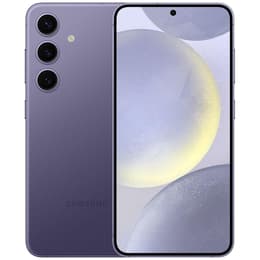
Galaxy S24
Galaxy S24
Starting at

Refurbished price:323.00

Versus €956.40 new

See options
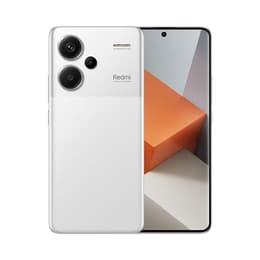
Xiaomi Redmi Note 13 Pro+
Starting at

Refurbished price:198.00

Versus €449.00 new

See options

Ratings

The Samsung Galaxy S24 and the Xiaomi Redmi Note 13 Pro+ 5G are both contemporary smartphones released in early 2024, offering distinct experiences tailored to different user priorities. While the Galaxy S24 operates on Android 14 and represents a compact flagship offering, the Redmi Note 13 Pro+ 5G, launching with Android 13, positions itself as a feature-rich device with a focus on display and camera capabilities.

Scores

Durability

When considering the long-term usability of these devices, their respective release timelines and software support policies are key factors.

  • Software Longevity: The Samsung Galaxy S24 offers an extensive commitment to software updates, promising seven years of Android operating system upgrades and seven years of security updates. This means the device is expected to receive updates through Android 21. In contrast, the Xiaomi Redmi Note 13 Pro+ 5G is anticipated to receive three major Android OS updates, extending to Android 16, along with four years of security patches, with support expected until 2028.
  • Physical Durability: Both devices feature an IP68 rating, indicating robust resistance to dust and water immersion. For screen protection, the Galaxy S24 utilizes Gorilla Glass, while the Redmi Note 13 Pro+ 5G is equipped with Corning Gorilla Glass Victus, offering enhanced durability against drops and scratches.
  • Expected Practical Lifespan: The Galaxy S24's extended software support suggests a longer period of receiving new features and security enhancements, potentially making it a more future-proof option for users who keep their devices for many years. The Redmi Note 13 Pro+ 5G, while offering solid protection and reasonable software support, aligns with a typical lifespan for devices in its category.

Year of Release

2024

2023

Compatible with latest Update

Yes

Yes

OS

Android

Android

Foldable

No

No

Performance

The performance of a smartphone is crucial for daily tasks, app responsiveness, and demanding applications like gaming. Both devices offer capable hardware, but with different underlying architectures.

  • Processing Power: The Samsung Galaxy S24 is powered by an octa-core processor, which can be either the Snapdragon 8 Gen 3 or the Exynos 2400 depending on the region. This hardware configuration provides a smooth and fast experience, handling demanding applications and multitasking with ease. The Xiaomi Redmi Note 13 Pro+ 5G features a MediaTek Dimensity 7200 Ultra chipset, which delivers very good performance for its segment, feeling fast and smooth in everyday use and capable for more advanced tasks and gaming.
  • Memory and Storage: The Galaxy S24 typically comes with 8GB of RAM and offers storage options of 128GB, 256GB, or 512GB. The Redmi Note 13 Pro+ 5G is available with 8GB or 12GB of RAM and 256GB or 512GB of storage, utilizing LPDDR5 RAM and UFS 3.1 storage for efficient data handling.
  • Battery Behavior: The Galaxy S24 is equipped with a 4000mAh battery, which in testing has shown to provide commendable endurance, often lasting a full day of moderate to heavy use. The Redmi Note 13 Pro+ 5G houses a 5000mAh battery, generally offering around 1.5 days of use on a single charge for many users.

Memory (GB)

8 GB

12 GB

Screen quality

The visual experience is a primary interaction point for any smartphone, and both the Galaxy S24 and Redmi Note 13 Pro+ 5G offer vibrant displays with high refresh rates.

  • Display Technology and Resolution: The Samsung Galaxy S24 features a 6.2-inch Dynamic AMOLED 2X display with an FHD+ resolution of 2340x1080 pixels. The Xiaomi Redmi Note 13 Pro+ 5G boasts a larger 6.67-inch CrystalRes AMOLED display with a higher resolution of 2712x1220 pixels, resulting in a sharp 446 PPI.
  • Brightness and Refresh Rate: Both devices offer a smooth viewing experience with a 120Hz refresh rate. The Galaxy S24's display is adaptive, ranging from 1Hz to 120Hz, and can reach a peak brightness of 2600 nits. The Redmi Note 13 Pro+ 5G also has an adaptive 120Hz refresh rate (switching between 60Hz and 120Hz) and achieves a peak brightness of 1800 nits.
  • Eye Comfort and Protection: The Galaxy S24 incorporates a higher PWM refresh rate of 492Hz, which can contribute to less eye strain for sensitive users. The Redmi Note 13 Pro+ 5G is protected by Corning Gorilla Glass Victus, enhancing its resistance to damage.

Resolution

1080 x 2340

1220 x 2712

Screen type

Dynamic LTPO AMOLED 2X

AMOLED

Audiovisual

Photography and videography capabilities are significant considerations for many users, and both smartphones offer versatile camera systems with distinct strengths.

  • Rear Camera System: The Samsung Galaxy S24 is equipped with a triple rear camera setup, including a 50MP main sensor with optical image stabilization (OIS), a 12MP ultra-wide lens, and a 10MP telephoto lens capable of 3x optical zoom. The Xiaomi Redmi Note 13 Pro+ 5G also features a triple rear camera system, highlighted by a 200MP main sensor with OIS and a large 1/1.4-inch sensor, an 8MP ultra-wide camera, and a 2MP macro lens.
  • Photography Performance: The Galaxy S24 produces sharp photos with good detail and vibrant, though sometimes slightly oversaturated, colors. Its telephoto lens provides clear zoomed-in shots. The Redmi Note 13 Pro+ 5G's 200MP main camera captures sharp images with good colors, and its 2x in-sensor zoom feature is noted for its quality. However, the 8MP ultra-wide can sometimes show inconsistencies in sharpness and color, and the 2MP macro lens is considered less impactful.
  • Video Recording and Front Camera: Both devices offer capable video recording. The Galaxy S24 records good quality video, particularly in well-lit conditions, with effective stabilization. It has a 12MP front camera with autofocus. The Redmi Note 13 Pro+ 5G supports 4K video recording at 30fps with OIS+EIS stabilization, and it includes a 16MP front camera.

Main camera

50 megapixels

200 megapixels

Front camera

12 megapixels

16 megapixels

Miscellaneous

Beyond core performance and display, several practical features contribute to the overall user experience and daily convenience of a smartphone.

  • Design and Handling: The Samsung Galaxy S24 is a more compact device, measuring 147.00 x 70.60 x 7.60mm and weighing 168.00 grams, making it comfortable for one-handed use. The Xiaomi Redmi Note 13 Pro+ 5G is larger and heavier at 161.4mm x 74.2mm x 8.9mm and 204.5g. Both feature a premium feel, with the Galaxy S24 offering an all-around matte finish.
  • Connectivity and Ports: Both smartphones support 5G connectivity, Wi-Fi (802.11 ax for S24), Bluetooth (v5.3 for S24), and NFC. Both utilize a USB Type-C port for charging and data transfer. The Redmi Note 13 Pro+ 5G notably omits a 3.5mm headphone jack.
  • Security and Sensors: For biometric security, both devices incorporate an in-display fingerprint sensor. The Redmi Note 13 Pro+ 5G also includes AI Face Unlock.

Weight

167 g

204 g

Width

7,06 cm

7,42 cm

Height

14,7 cm

16,14 cm

Depth

0,76 cm

0,89 cm

Screen size (in)

6.2

6.67

Network

5G

5G

SIM card

Dual Physical SIM + eSIM

Dual Physical SIM

Carrier compatibility

Unlocked

Unlocked

The Samsung Galaxy S24 and Xiaomi Redmi Note 13 Pro+ 5G cater to different segments of the smartphone market, each bringing a compelling set of features to the table. User feedback for the Galaxy S24 often highlights its compact size, premium build, and vibrant display as significant advantages. Many users appreciate its swift performance for daily tasks and the advanced camera system, which consistently delivers good results. The extended software support is also a frequently praised aspect, offering peace of mind for long-term ownership. Some criticisms point to the camera system not always being the absolute best in every scenario compared to some rivals, and video stabilization can occasionally struggle with sudden movements.

For the Redmi Note 13 Pro+ 5G, common praise centers on its high-resolution display, which offers excellent clarity and brightness, and its remarkably fast wired charging capabilities. The main 200MP camera is also frequently lauded for capturing detailed images, with the 2x in-sensor zoom being a pleasant surprise for many. On the other hand, some users have noted that the overall battery life, while decent, might not always meet expectations for heavy use, and the secondary cameras (ultra-wide and macro) can be inconsistent in quality. The software experience, while functional, is sometimes perceived as less refined compared to competitors.

Users prioritizing a compact form factor, a very long software support timeline, and a consistently reliable camera system for general photography may find the Samsung Galaxy S24 well-suited to their needs. Conversely, individuals who value a larger, higher-resolution display, exceptionally fast charging, and a high-megapixel main camera for detailed shots might lean towards the Xiaomi Redmi Note 13 Pro+ 5G. Both devices offer robust build quality with IP68 ratings, making them durable choices. For those looking for an eco-friendly alternative, both models are available as quality-assured refurbished options, providing a sustainable choice for consumers.

See all articles

Our recent comparisons