

Compare models

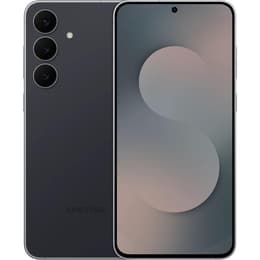
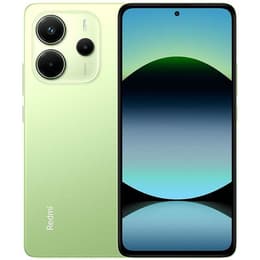
Galaxy S25 FE Vs Xiaomi Redmi Note 14 4G

  • 1-year minimum warranty
  • Free delivery on all orders
  • Free 30-day returns
Galaxy S25 FE
Starting at

Refurbished price:€390.00

Versus €750.00 new

See options
Xiaomi Redmi Note 14 4G
Starting at

Refurbished price:€231.00

Versus €229.99 new

See options

Differences at a glance

The Samsung Galaxy S25 FE and the Xiaomi Redmi Note 14 4G are smartphones designed for distinct usage preferences within the modern mobile landscape. While both devices offer large screens and capable everyday feature sets, they approach performance, software ecosystem, and hardware build from entirely different directions. The Galaxy S25 FE operates on Android with comprehensive long-term manufacturer support, whereas the Xiaomi Redmi Note 14 4G runs a customized interface tailored for balanced daily utility without advanced cellular network additions.

Available Models

Colour

Storage

Scores

Durability

When evaluating structural longevity and software support, both smartphones handle updates differently based on their product positioning and hardware architecture.

  • Software Support Duration: The Galaxy S25 FE benefits from several years of scheduled operating system upgrades and security patches, whereas the Xiaomi Redmi Note 14 4G receives a shorter cycle of system updates typical of regional daily-driver models.
  • Build Integrity: The Galaxy S25 FE incorporates reinforced aluminum and protective glass coatings designed for shock absorption, while the Xiaomi Redmi Note 14 4G uses durable composite materials suited for standard daily handling.
  • Expected Practical Lifespan: Users seeking extended hardware relevance over many years will find the Galaxy S25 FE well-equipped for long-term deployment, while the Xiaomi Redmi Note 14 4G serves shorter upgrade cycles efficiently.

Year of Release

2025

2025

OS

Android

Android

Foldable

No

No

Performance

System responsiveness and day-to-day multitasking capabilities vary notably due to the internal components powering each device.

  • Multitasking and Responsiveness: The Galaxy S25 FE handles demanding applications, graphics-heavy gaming, and intensive background tasks smoothly, whereas the Xiaomi Redmi Note 14 4G manages web browsing, messaging, and lighter apps reliably.
  • Battery Behavior: The Xiaomi Redmi Note 14 4G relies on a high-capacity power cell designed for extended standalone usage between charges, while the Galaxy S25 FE balances energetic processing speeds with adaptive power management.
  • Storage and Memory: Both smartphones offer multiple memory configurations to accommodate user files, with the Xiaomi Redmi Note 14 4G additionally supporting expandable storage via external memory cards.

Screen quality

Visual output across both displays provides clear, high-contrast viewing experiences suited for media consumption and text readability.

  • Display Technology: Both models utilize vibrant AMOLED display panels that deliver deep contrast levels and rich color reproduction for everyday viewing.
  • Refresh Rate and Fluidity: The inclusion of high refresh rate capabilities on both devices ensures smooth scrolling through web pages and fluid interface navigation.
  • Outdoor Visibility: High peak brightness levels allow both screens to remain legible under direct sunlight, though adaptive display controls adjust automatically to varying ambient light environments.

Audiovisual

Imaging hardware and audio output vary between the two models to accommodate casual photography and media playback preferences.

  • Camera System Capabilities: The Galaxy S25 FE features a versatile multi-lens arrangement including optical image stabilization for steady low-light captures, whereas the Xiaomi Redmi Note 14 4G relies on a high-resolution main sensor for everyday snapshots.
  • Video Recording: The Galaxy S25 FE supports high-resolution video capture up to cinematic frame rates, while the Xiaomi Redmi Note 14 4G handles standard definition recording for casual sharing.
  • Audio and Media Output: Stereo speaker configurations on both devices provide adequate sound clarity for hands-free calls and casual video streaming.

Miscellaneous

Practical day-to-day usability elements differ across physical dimensions, connectivity standards, and sensor equipment.

  • Connectivity and Networks: The Galaxy S25 FE supports next-generation 5G cellular connectivity and modern Wi-Fi standards, while the Xiaomi Redmi Note 14 4G focuses strictly on 4G networks and local wireless connections.
  • Physical Dimensions: Both devices share similar large-screen footprints, though slight variations in thickness and weight influence pocket portability and single-handed handling.
  • Biometric Security: Both models integrate secure unlocking mechanisms including facial recognition and integrated fingerprint sensors for quick device access.

Weight

190 g

196 g

Screen size (in)

6.7

6.67

Network

5G

4G

SIM card

Physical SIM + eSIM

Physical SIM + eSIM

Carrier compatibility

Unlocked

Unlocked

What the community thinks

User feedback from online communities highlights that owners of the Galaxy S25 FE frequently praise its smooth processing speeds, robust gaming capability, and comprehensive software update schedule. Conversely, common discussions surrounding the Xiaomi Redmi Note 14 4G emphasize its dependable battery endurance and clear display quality for everyday communication tasks, though some users note limitations during intensive multitasking.

Users prioritizing heavy app performance, advanced photography stabilization, and extended software longevity will find the Galaxy S25 FE well-suited to their needs. Meanwhile, users prioritizing straightforward daily messaging, media streaming, and reliable battery staying power may lean toward the Xiaomi Redmi Note 14 4G. For those exploring sustainable purchasing habits, choosing a quality-assured refurbished option provides an eco-friendly alternative that extends device life cycles without compromising on performance standards.