
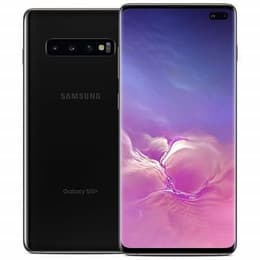


Galaxy S10e Vs Galaxy S10+

Galaxy S10e
Galaxy S10e
Starting at

Refurbished price:121.00

Versus €759.00 new

See options
Galaxy S10+
Galaxy S10+
Starting at

Refurbished price:135.00

Versus €1,009.00 new

See options

Ratings

The Samsung Galaxy S10e and the Samsung Galaxy S10 Plus, both released in early 2019, were part of Samsung's flagship S10 series. While sharing the same core operating system and many underlying technologies, they cater to different user preferences primarily through their size, display, and camera configurations. Both devices launched with Android 9.0 Pie and received software updates up to Android 12.

Scores

Durability

When considering the practical lifespan of these devices, their release timeline and software support are key factors. Both models were launched in March 2019, meaning they have received major Android updates for several years.

  • Software Longevity: Both the Galaxy S10e and S10 Plus launched with Android 9.0 Pie and concluded their major OS update cycle with Android 12. This means their software support has largely aligned, offering a similar duration of official feature updates.
  • Physical Durability: Both devices feature an IP68 rating for dust and water resistance, indicating protection against immersion in up to 1.5 meters of water for 30 minutes. The S10e uses Gorilla Glass 5 for its display, while the S10 Plus features the slightly more robust Gorilla Glass 6 on its front.
  • Repairability: While specific repairability scores can vary, both models generally offer a similar level of repair complexity due to their sealed designs and extensive use of adhesive. Users seeking to extend the life of their device might consider quality-assured refurbished options, which often come with warranties.

Year of Release

2019

2019

Compatible with latest Update

No

No

OS

Android

Android

Foldable

No

No

Performance

Both the Galaxy S10e and S10 Plus are equipped with the same generation of processing hardware, offering comparable performance for daily tasks and demanding applications. The primary differences lie in their available memory configurations and battery capacities.

  • Processing Power: Both devices handle demanding applications, multitasking, and graphic-intensive games smoothly. This consistent performance is due to their shared internal components, ensuring a responsive user experience across both models.
  • Multitasking and Storage: The Galaxy S10e typically comes with 6GB or 8GB of RAM, alongside 128GB or 256GB of internal storage. The S10 Plus offers more expansive options, starting with 8GB of RAM and 128GB, 512GB, or even 1TB of internal storage, with some variants featuring 12GB of RAM. Both models support microSD card expansion up to 512GB, allowing users to significantly increase storage capacity.
  • Battery Behavior: The S10e houses a 3100 mAh battery, which some users have reported as requiring more frequent charging, especially with heavy use. In contrast, the S10 Plus features a larger 4100 mAh battery, generally providing a full day of use for most users and often extending beyond that for moderate usage.

Memory (GB)

6 GB

8 GB

Screen quality

The display experience on the Galaxy S10e and S10 Plus shares Samsung's Dynamic AMOLED technology, known for its vibrant colors and deep blacks, but they differ in size, resolution, and physical design.

  • Display Technology and Size: Both phones feature Dynamic AMOLED displays, offering excellent contrast and color reproduction. The S10e has a 5.8-inch flat display with a resolution of 1080 x 2280 pixels, resulting in a pixel density of approximately 438 ppi. The S10 Plus boasts a larger 6.4-inch curved display with a higher resolution of 1440 x 3040 pixels, yielding a sharper pixel density of around 522 ppi.
  • Clarity and Viewing Experience: The S10 Plus's higher resolution and larger, curved screen provide a more immersive viewing experience, particularly for media consumption and detailed content. The S10e's smaller, flat screen offers a more compact form factor, which some users prefer for one-handed use. Both displays support HDR10+, enhancing the visual quality of compatible content.
  • Brightness and Refresh Rate: Both devices offer ample brightness for outdoor visibility. While neither features a high refresh rate display, their standard refresh rate provides a smooth experience for everyday interactions.

Resolution

1080 x 2280

1440 x 3040

Screen type

Dynamic AMOLED

Dynamic AMOLED

Audiovisual

The camera systems on the Galaxy S10e and S10 Plus offer distinct capabilities, with the S10 Plus providing a more versatile setup due to additional lenses.

  • Rear Camera System: The Galaxy S10e features a dual-camera setup on the rear, comprising a 12MP wide-angle lens with a variable aperture (f/1.5-f/2.4) and optical image stabilization (OIS), alongside a 16MP ultra-wide-angle lens. The S10 Plus elevates this with a triple-camera array, adding a 12MP telephoto lens with 2x optical zoom and OIS to the wide and ultra-wide lenses found on the S10e. This telephoto lens allows for clearer zoomed-in shots.
  • Photography Performance: Both devices deliver strong performance in good lighting conditions, producing detailed and vibrant images. The S10 Plus's telephoto lens provides an advantage for capturing distant subjects without significant loss of quality. For low-light scenarios, both rely on their wide-angle lenses with OIS and variable aperture to gather more light.
  • Front Camera and Video: The S10e has a single 10MP front-facing camera. The S10 Plus features a dual front camera setup, adding an 8MP depth sensor to its 10MP main selfie camera, which can enhance portrait mode effects. Both phones are capable of recording 4K video at 60 frames per second with their main rear cameras, and the S10e supports HDR10+ video recording.

Main camera

12 megapixels

12 megapixels

Front camera

10 megapixels

10 megapixels

Miscellaneous

Beyond core performance and display, several practical elements differentiate the user experience between these two Galaxy models.

  • Connectivity and Ports: Both devices support modern connectivity standards, including Wi-Fi 6 (802.11ax) and Bluetooth 5.0. They both feature a USB-C port for charging and data transfer, and notably, both retain the 3.5mm headphone jack.
  • Biometric Security: The Galaxy S10e incorporates a side-mounted fingerprint sensor integrated into the power button, which many users find fast and intuitive. The S10 Plus, on the other hand, features an in-display ultrasonic fingerprint sensor, offering a more futuristic and seamless unlocking experience. Both also support facial recognition.
  • Design and Handling: The S10e is the more compact and lighter device, measuring 142.2 x 69.9 x 7.9mm and weighing 150g. This makes it easier for one-handed operation and pocketability. The S10 Plus is larger and heavier at 157.6 x 74.1 x 7.8mm and 175g (standard glass back) or 198g (ceramic back for higher storage variants), offering a more expansive screen but requiring a two-handed grip for many tasks.

Weight

150 g

175 g

Screen size (in)

5.8

6.4

Network

4G

4G

SIM card

Physical SIM

Physical SIM

Carrier compatibility

Unlocked

Unlocked

Connector

USB-C + Jack 3.5mm

USB-C + Jack 3.5mm

The Samsung Galaxy S10e and S10 Plus, while part of the same generation, offer distinct experiences tailored to different user priorities. Users often praise the S10e for its compact size and comfortable one-handed use, making it a favorite for those who prefer smaller phones. Its side-mounted fingerprint sensor is frequently cited as quick and reliable. However, a common criticism of the S10e is its battery life, which many users find to be merely adequate or requiring mid-day top-ups, especially with heavy usage.

Conversely, the Galaxy S10 Plus is frequently lauded for its larger, higher-resolution display, which provides a more immersive media consumption experience. Its significantly larger battery capacity is a major advantage, with many users reporting comfortable all-day usage and sometimes more. The more comprehensive triple-camera system, including a telephoto lens, is also a strong point for photography enthusiasts. Some users, however, might find its larger size less convenient for portability and one-handed operation.

Users prioritizing a compact form factor, ease of one-handed use, and a physical fingerprint sensor may find the Galaxy S10e well-suited to their needs. Those who prioritize a larger, higher-resolution display, extended battery life, and a more versatile camera system with optical zoom will likely lean towards the Galaxy S10 Plus. Both devices remain capable smartphones for everyday tasks, and opting for a quality-assured refurbished option can be an eco-friendly alternative to extend their lifecycle.


See all articles

Our recent comparisons