
Compare models
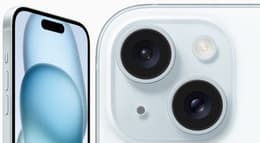
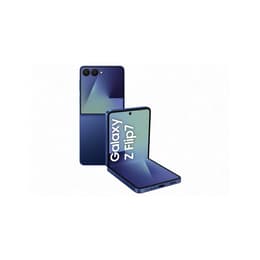
Galaxy Z Flip7 Vs iPhone 15 Plus
- 1-year minimum warranty
- Free delivery on all orders
- Free 30-day returns
Differences at a glance
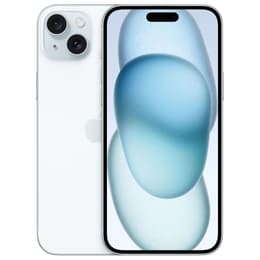
The Samsung Galaxy Z Flip7 (2025) and the Apple iPhone 15 Plus (2023) represent two distinct approaches to modern smartphone design, contrasting a compact folding form factor with a traditional large-screen slate build. While the Galaxy Z Flip7 features a versatile clamshell body that folds in half for portability, the iPhone 15 Plus focuses on offering an expansive viewing area and extended battery longevity within a standard rigid structure. Operating on Android and iOS respectively, these devices cater to users looking for different balances between pocket-friendly engineering and traditional daily usability.
Available Models
Colour
Storage (GB)
Scores
Durability
When evaluating structural longevity and software longevity, both models offer distinct timelines shaped by their respective release dates and design architectures.
-
Release timeline and build maintenance: The Galaxy Z Flip7 launched in mid-2025 with a refined folding hinge mechanism, whereas the iPhone 15 Plus arrived in late 2023 utilizing a standard aluminum and glass slate body.
Software support duration: Both manufacturers provide long-term operating system updates, though exact support windows vary by platform policy, ensuring multi-year security patches for both devices.
Expected practical lifespan: While standard slate phones like the iPhone 15 Plus generally present fewer moving parts over years of heavy use, modern foldable engineering continues to close the durability gap for everyday handlers.
Year of Release
2025
2023
Compatible with latest Update
Yes
Yes
OS
Android
iOS
Foldable
Yes
No
Performance
Underneath their exteriors, both smartphones handle everyday multitasking, streaming, and demanding mobile applications smoothly through current-generation hardware optimization.
-
Storage configurations and memory: The Galaxy Z Flip7 provides generous baseline storage paired with high-capacity RAM for seamless background app management, while the iPhone 15 Plus relies on optimized system resources to maintain fluid daily responsiveness.
Battery behavior and endurance: The iPhone 15 Plus utilizes its larger physical frame to house a high-capacity battery capable of sustaining heavy all-day use, whereas the Galaxy Z Flip7 balances a more compact power cell with efficient processing components.
System fluidity: Both devices load demanding apps quickly and handle routine switching between productivity tools without noticeable stutter or slowdowns.
Screen quality
Display technology differs significantly between the two models, directly influencing how users consume media, read text, and interact with outdoor lighting conditions.
-
Display technology and panels: The Galaxy Z Flip7 utilizes a flexible OLED inner panel with a fluid high refresh rate for smooth scrolling, complemented by a large functional outer cover screen.
Resolution and outdoor clarity: The iPhone 15 Plus features a bright Super Retina XDR OLED display with sharp resolution and high peak brightness levels for comfortable visibility under direct sunlight.
Viewing experience: Users who prefer an uninterrupted, large monolithic glass surface will find the iPhone 15 Plus well-suited, while those interested in innovative secondary cover screen shortcuts will gravitate toward the folding display format.
Resolution
1080x2520
1290 x 2796
Audiovisual
Photography and media recording capabilities vary across both devices, catering to casual shooters as well as users who frequently record video content.
-
Camera system capabilities: Both smartphones feature capable dual rear camera arrays that capture detailed everyday photos, supported by wide-angle and ultra-angle lenses.
Low-light and video performance: Image processing software on both models manages low-light noise effectively while delivering stable video recording with clear stereo sound capture.
Media and speaker output: Built-in stereo speakers on each device provide balanced audio output for hands-free calls, podcasts, and casual video playback without requiring external speakers.
Front camera
10 megapixels
12 megapixels
Miscellaneous
Practical daily usability is shaped by physical dimensions, connection standards, and security authentication features built into each chassis.
-
Connectivity and ports: Both models support modern 5G cellular networks, fast Wi-Fi standards, and universal USB-C connectivity for charging and data transfer.
Handling and dimensions: The Galaxy Z Flip7 folds down into a compact square that slips easily into small pockets, whereas the iPhone 15 Plus has a wider, thinner slate profile that requires two-handed use for comfortable reach.
Security and biometrics: The Galaxy Z Flip7 integrates a side-mounted fingerprint sensor alongside facial recognition, while the iPhone 15 Plus relies exclusively on advanced facial recognition technology.
Weight
188 g
201 g
Screen size (in)
6.9
6.7
Network
5G
5G
SIM card
Physical SIM + eSIM
Physical SIM + eSIM
Carrier compatibility
Unlocked
Unlocked
Connector
USB-C
USB-C
What the community thinks
Choosing between the Samsung Galaxy Z Flip7 and the Apple iPhone 15 Plus ultimately depends on personal preference regarding physical form factor and operating system ecosystem. Users prioritizing a compact, pocket-friendly design with innovative folding capabilities will find the Galaxy Z Flip7 well-suited to their daily routine. Conversely, users who prefer a traditional large-screen slate experience with extended battery life and straightforward software navigation will lean toward the iPhone 15 Plus. Community discussions often praise the Galaxy Z Flip7 for its unique space-saving design and expanded cover screen utility, while the iPhone 15 Plus receives consistent recognition for dependable battery endurance and screen estate. When making your final decision, exploring a quality-assured refurbished option via Back Market provides an eco-friendly alternative that supports sustainable consumption without compromising on device reliability.