

Galaxy S24 Ultra Vs Xiaomi Redmi Note 13 Pro

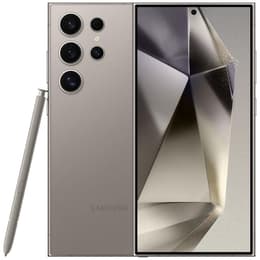
Galaxy S24 Ultra
Galaxy S24 Ultra
Starting at

Refurbished price:542.00

Versus €1,141.93 new

See options
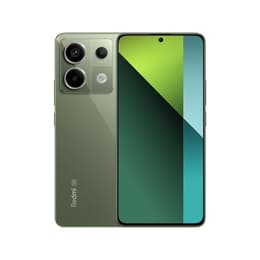
Xiaomi Redmi Note 13 Pro
Starting at

Refurbished price:179.00

Versus €349.00 new

See options

Ratings

The Samsung Galaxy S24 Ultra, released in January 2024, and the Xiaomi Redmi Note 13 Pro, launched in January 2024, are contemporary smartphones offering distinct experiences. While the Galaxy S24 Ultra represents a premium flagship device with advanced features, the Redmi Note 13 Pro aims to deliver a capable experience for everyday use. Both devices operate on the Android platform, though with different custom user interfaces and update policies.

Scores

Durability

The longevity of a smartphone is influenced by its build quality, software support, and ease of repair. These aspects determine how well a device withstands daily use and remains functional over time.

  • Software Support: The Galaxy S24 Ultra benefits from Samsung's commitment to providing seven years of major Android OS upgrades and security updates, ensuring extended software longevity. The Redmi Note 13 Pro typically receives fewer major Android updates, with some sources indicating up to three major Android upgrades, alongside security patches.
  • Physical Durability: The Galaxy S24 Ultra features a titanium frame, Gorilla Glass Armor on the front display, and an IP68 rating for dust and water resistance, offering robust protection against environmental elements. The Redmi Note 13 Pro utilizes Gorilla Glass Victus for its front display, a Panda-X back shell, and an aluminum middle bezel, with an IP54 rating for splash and dust resistance.
  • Repairability: The Galaxy S24 Ultra has received a high repairability score of 9 out of 10 from some assessments, indicating that many components are relatively easy to replace, though the display can be challenging to remove without damage. The Redmi Note 13 Pro, or similar models in its series, generally have an average repairability score, with adhesive used for the back cover and battery potentially complicating repairs.

Year of Release

2024

2023

Compatible with latest Update

Yes

Yes

OS

Android

Android

Foldable

No

No

Performance

Performance in smartphones is about how smoothly applications run, how quickly tasks are completed, and the overall responsiveness of the system. This is influenced by the internal components and their optimization.

  • Processing Power: The Galaxy S24 Ultra is equipped with a current-generation, high-performance processor, enabling it to handle demanding applications, intensive multitasking, and graphically rich games with ease. The Redmi Note 13 Pro features a capable mid-range processor that provides smooth performance for everyday tasks, general app usage, and moderate gaming.
  • Multitasking and Responsiveness: With 12GB of RAM as standard, the Galaxy S24 Ultra offers substantial capacity for keeping numerous applications open simultaneously and switching between them without noticeable delays. The Redmi Note 13 Pro is available with 8GB or 12GB of RAM, which supports efficient multitasking for most users, though the experience may differ with very heavy usage compared to the Galaxy S24 Ultra.
  • Storage Options: The Galaxy S24 Ultra provides ample storage configurations, ranging from 256GB up to 1TB, catering to users with extensive data and media libraries. The Redmi Note 13 Pro offers storage options from 128GB to 512GB, which is suitable for many users but may require more careful management for those with large collections of photos, videos, or applications.

Memory (GB)

12 GB

8 GB

Screen quality

The display is a primary interface for smartphone interaction, and its quality significantly impacts the user experience, from viewing content to navigating the interface.

  • Display Technology and Clarity: The Galaxy S24 Ultra features a 6.8-inch Dynamic AMOLED 2X display with a QHD+ resolution (3120x1440 pixels), offering exceptional sharpness and detail. The Redmi Note 13 Pro comes with a 6.67-inch AMOLED display with a 1.5K resolution (2712x1220 pixels), providing clear and vibrant visuals for its class.
  • Brightness and Outdoor Visibility: The Galaxy S24 Ultra boasts a peak brightness of 2600 nits, combined with an anti-reflective coating, which significantly enhances visibility and reduces glare in bright outdoor conditions. The Redmi Note 13 Pro offers a peak brightness of 1800 nits, providing good visibility in various lighting environments, though the anti-reflective properties of the S24 Ultra offer an advantage in direct sunlight.
  • Smoothness and Responsiveness: Both devices feature a 120Hz refresh rate, contributing to smooth scrolling, fluid animations, and a responsive touch experience. The Galaxy S24 Ultra's display is protected by Gorilla Glass Armor, while the Redmi Note 13 Pro uses Gorilla Glass Victus, both offering a degree of scratch and drop resistance.

Resolution

1440 x 3120

1220 x 2712

Screen type

Dynamic LTPO AMOLED 2X

AMOLED

Audiovisual

Camera capabilities are a key consideration for many users, encompassing the quality of photos and videos in various conditions, as well as the versatility of the camera system.

  • Rear Camera System: The Galaxy S24 Ultra features a versatile quad-camera setup, including a 200MP main sensor, a 12MP ultrawide, a 10MP 3x telephoto, and a 50MP 5x telephoto lens, offering extensive zoom capabilities and detailed imagery. The Redmi Note 13 Pro is equipped with a triple-camera system, highlighted by a 200MP main sensor with optical image stabilization, an 8MP ultrawide, and a 2MP macro lens, focusing on high-resolution primary shots.
  • Photography Performance: The Galaxy S24 Ultra delivers consistently high-quality photos across various lighting conditions, with improved low-light performance, especially with its telephoto lenses, and more natural color processing. The Redmi Note 13 Pro's 200MP main camera excels in well-lit conditions, producing sharp images, though low-light performance can introduce noise, and color accuracy may vary.
  • Video Recording and Front Camera: The Galaxy S24 Ultra supports video recording up to 8K at 30fps and 4K at 60fps across all cameras, including its 12MP front camera, with advanced stabilization. The Redmi Note 13 Pro can record rear video up to 4K at 30fps and front video up to 1080p at 60fps from its 16MP selfie camera, providing solid performance for general video capture.

Main camera

200 megapixels

200 megapixels

Front camera

12 megapixels

16 megapixels

Miscellaneous

Beyond core specifications, several practical features contribute to the overall user experience, including connectivity, physical design, and additional functionalities.

  • Connectivity and Ports: Both devices support 5G connectivity for fast mobile data. The Galaxy S24 Ultra features Wi-Fi 6E (802.11ax) and Bluetooth 5.3, while the Redmi Note 13 Pro includes Wi-Fi 5 (802.11ac) and Bluetooth 5.2. Both utilize a USB Type-C port for charging and data transfer.
  • Biometric Security: Both smartphones incorporate in-display fingerprint sensors for secure and convenient unlocking. The Galaxy S24 Ultra also offers advanced facial recognition, while the Redmi Note 13 Pro includes AI Face Unlock.
  • Design and Handling: The Galaxy S24 Ultra has dimensions of 162.3 x 79.0 x 8.6mm and weighs 232g, featuring a flat display and a titanium frame. The Redmi Note 13 Pro is slightly more compact and lighter at 161.15 x 74.24 x 7.98mm and 187g, with a sleek design that includes thin bezels.

Weight

232 g

187 g

Screen size (in)

6.8

6.67

Network

5G

5G

SIM card

Physical SIM + eSIM

Dual Physical SIM

Carrier compatibility

Unlocked

Unlocked

The Samsung Galaxy S24 Ultra and the Xiaomi Redmi Note 13 Pro cater to different user priorities, each offering a compelling set of features. Users often praise the Galaxy S24 Ultra for its exceptional display clarity and brightness, its highly versatile and capable camera system, and its robust build quality with extended software support. Common positive feedback highlights its powerful performance for demanding tasks and its anti-reflective screen, which significantly improves outdoor usability. Some discussions revolve around the shift in telephoto lens configuration compared to its predecessor, though overall camera performance remains strong.

The Redmi Note 13 Pro is frequently lauded for its vibrant AMOLED display, its 200MP main camera's ability to capture detailed photos in good lighting, and its fast charging capabilities. Users appreciate its smooth performance for everyday use and its sleek design. Criticisms sometimes point to its low-light camera performance and the potential for a less refined software experience compared to premium devices.

Users prioritizing a top-tier camera system with extensive zoom capabilities, a highly durable build, and the longest possible software support will find the Galaxy S24 Ultra well-suited to their needs. Its advanced display technology and powerful processing make it ideal for power users and those who consume a lot of media outdoors. Conversely, users seeking a capable smartphone for daily tasks, with a good display and a high-resolution main camera, may lean toward the Redmi Note 13 Pro. It offers a balanced experience for general usage, photography in favorable conditions, and efficient charging.

For those considering either device, exploring quality-assured refurbished options can provide an eco-friendly alternative, offering access to these technologies while supporting sustainable consumption.


See all articles

Our recent comparisons