

Galaxy S24+ Vs iPhone 17

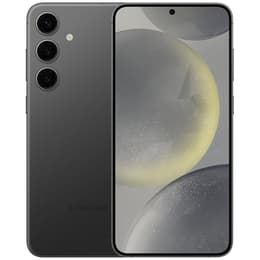
Galaxy S24+
Galaxy S24+
Starting at

Refurbished price:399.00

Versus €1,167.06 new

See options
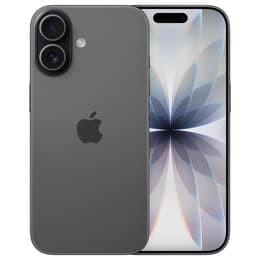
iPhone 17
iPhone 17
Starting at

Refurbished price:685.00

Versus €979.00 new

See options

Ratings

The Samsung Galaxy S24 Plus, released in January 2024, and the iPhone 17, launched in September 2025, represent two distinct approaches to the premium smartphone experience. While both offer advanced features and robust performance, they cater to different user preferences through their respective operating systems and hardware philosophies. The Galaxy S24 Plus emphasizes a feature-rich Android ecosystem with extensive customization, whereas the iPhone 17 focuses on a streamlined iOS experience with deep integration across Apple's services.

Scores

Durability

When considering the long-term usability of a smartphone, software support and physical resilience are key factors. The Galaxy S24 Plus and iPhone 17 offer strong commitments to longevity, though their timelines differ.

  • Software Updates: The Samsung Galaxy S24 Plus is notable for its extended software support, promising seven years of operating system updates and security patches from its January 2024 release. This provides a substantial period of access to the latest Android features and security enhancements. The iPhone 17, released in September 2025, is expected to receive major iOS updates for approximately five to seven years, aligning with Apple's typical support cycle. [2, 13, 21]
  • Physical Durability: Both devices feature advanced materials designed to withstand daily wear. The Galaxy S24 Plus incorporates Gorilla Glass Victus 2 on its front and back, paired with an Armor Aluminum frame, offering resistance against drops and scratches. The iPhone 17 utilizes Ceramic Shield 2 for its front display, which is engineered for enhanced scratch resistance, alongside an aluminum frame and a frosted glass back. Both models carry an IP68 rating for dust and water resistance, indicating protection against immersion in water. [1, 4, 12, 21, 24]
  • Practical Lifespan: Users can expect both devices to remain functional and receive critical updates for many years. The Galaxy S24 Plus's seven-year update policy provides a clear roadmap for its practical lifespan, while the iPhone 17's newer release date inherently offers a slightly longer period before its software support concludes.

Year of Release

2024

2025

Compatible with latest Update

Yes

Yes

OS

Android

iOS

Foldable

No

No

Performance

Both the Galaxy S24 Plus and the iPhone 17 are engineered to deliver smooth and responsive performance for a wide range of tasks, from everyday browsing to demanding applications and gaming.

  • System Responsiveness: The Galaxy S24 Plus, equipped with a current-generation processor, handles multitasking and app switching efficiently, ensuring a fluid user experience. The iPhone 17, featuring Apple's latest chip, is designed for seamless operation, providing quick app launches and smooth transitions, particularly benefiting from optimizations within the iOS ecosystem. [1, 2, 21]
  • Multitasking and Storage: The Galaxy S24 Plus typically comes with 12GB of RAM, allowing it to manage numerous applications simultaneously without significant slowdowns. It offers storage options of 256GB and 512GB. The base iPhone 17 model includes 8GB of RAM, which is optimized by iOS for efficient multitasking, and is available with 128GB, 256GB, or 512GB of internal storage. [5, 7, 12, 29, 33]
  • Battery Behavior: The Galaxy S24 Plus houses a 4900 mAh battery, which, in typical usage scenarios, can last for approximately 1.5 days on a single charge, with some users reporting up to two days with moderate use. The iPhone 17 is expected to offer improved battery life compared to its predecessors, designed to comfortably last through a full day of varied usage. [4, 32, 39]

Memory (GB)

12 GB

8 GB

Screen quality

The visual experience on both devices is a highlight, with each offering a high-quality display designed for clarity, vibrant colors, and smooth interactions.

  • Display Technology and Clarity: The Galaxy S24 Plus features a 6.7-inch Dynamic AMOLED 2X display, providing deep blacks, high contrast, and vivid colors. Its QHD+ resolution (3120 x 1440 pixels) results in sharp text and detailed images. The iPhone 17 comes with a 6.3-inch Super Retina XDR OLED display, offering excellent color accuracy and contrast, with a resolution of 2622 x 1206 pixels. [1, 9, 19, 21]
  • Brightness and Smoothness: Both phones excel in brightness, making them suitable for outdoor viewing. The Galaxy S24 Plus can reach a peak brightness of 2600 nits, while the iPhone 17 boasts an impressive 3000 nits peak brightness for outdoor use. Both devices feature adaptive refresh rates up to 120Hz, ensuring smooth scrolling, fluid animations, and responsive gaming experiences. The iPhone 17 also includes an Always-On display feature. [1, 9, 19, 21]
  • Viewing Experience: The larger 6.7-inch screen of the Galaxy S24 Plus offers an expansive canvas for media consumption and productivity. The iPhone 17's slightly smaller 6.3-inch display provides a balanced viewing experience that is still immersive while potentially being more manageable for one-handed use for some users. [1, 9]

Resolution

1440 x 3120

2622x1206

Screen type

Dynamic LTPO AMOLED 2X

Super Retina XDR

Audiovisual

Both smartphones offer advanced camera systems capable of capturing high-quality photos and videos, though their configurations and specific strengths vary.

  • Rear Camera Systems: The Galaxy S24 Plus features a versatile triple-camera setup on the rear, including a 50MP main sensor with optical image stabilization (OIS), a 12MP ultrawide lens, and a 10MP telephoto lens with 3x optical zoom. This allows for a range of photographic styles, from wide landscapes to zoomed-in shots. The iPhone 17, in its base model, comes with a dual-lens rear camera system, featuring a 48MP Fusion Wide lens and a 48MP Fusion Ultra Wide lens. It does not include a dedicated telephoto lens, relying on digital zoom or cropping from the main sensor for magnified shots. [2, 15, 21, 27]
  • Photography Performance: The Galaxy S24 Plus is praised for producing detailed images with accurate colors across various lighting conditions, including enhanced night photography and AI-assisted editing features. The iPhone 17's camera system is expected to deliver high-quality images with improved low-light performance and advanced computational photography, benefiting from Apple's image processing algorithms. [2, 21, 25]
  • Video and Front Camera: Both devices offer strong video recording capabilities, with the Galaxy S24 Plus supporting up to 8K video recording and the iPhone 17 offering 4K Dolby Vision video recording. For selfies and video calls, the Galaxy S24 Plus has a 12MP front camera, while the iPhone 17 features an 18MP front-facing camera with Center Stage, which keeps subjects in frame during video calls. [1, 15, 21]

Main camera

50 megapixels

48 megapixels

Front camera

12 megapixels

18 megapixels

Miscellaneous

Beyond core performance and display, several other features contribute to the overall user experience and connectivity of these devices.

  • Connectivity and Ports: The Galaxy S24 Plus supports Wi-Fi 6E and in some regions, Wi-Fi 7, along with Bluetooth 5.3 and USB-C 3.2 for data transfer and charging. The iPhone 17 is equipped with Wi-Fi 7 and Bluetooth 6.0, utilizing an Apple-designed networking chip for enhanced efficiency, and features a USB-C port. Both devices offer 5G connectivity. [1, 2, 17, 21, 26, 36]
  • Biometrics and Design: The Galaxy S24 Plus includes an in-display fingerprint sensor and face recognition for secure unlocking. It has dimensions of 158.5 x 75.9 x 7.7 mm and weighs 196g. The iPhone 17 relies on Face ID for biometric authentication and measures 149.6 x 71.5 x 7.95 mm, weighing 177g. Both phones feature premium build materials, with the Galaxy S24 Plus using an Armor Aluminum frame and the iPhone 17 an aluminum frame. [1, 5, 6, 19, 21]
  • Unique Features: The Galaxy S24 Plus introduces a suite of Galaxy AI features, such as Circle to Search, Note Assist, and Live Translate, enhancing productivity and communication. The iPhone 17 integrates Apple Intelligence, offering advanced AI capabilities across its operating system, and retains features like the Dynamic Island and a customizable Action button. [1, 21, 28, 31]

Weight

197 g

177 g

Screen size (in)

6.7

6.3

Network

5G

5G

SIM card

Dual Physical SIM + eSIM

eSIM

Carrier compatibility

Unlocked

Unlocked

Connector

USB-C

USB-C

User feedback for the Galaxy S24 Plus often highlights its vibrant display, robust battery life, and the practical utility of its new AI features. Many appreciate the versatility of its camera system and the extended software support. Some common observations include the regional variation in processors, which can lead to differing performance expectations, and the incremental nature of some hardware upgrades compared to its predecessor. [2, 4, 25, 32, 39]

For the iPhone 17, user expectations and early reviews often praise its expected display enhancements, particularly the ProMotion technology and increased outdoor brightness, as well as the advancements in its camera system and the integration of Apple Intelligence. Users typically value the seamless iOS experience and the device's long-term software support. [1, 11, 14, 16]

Users prioritizing a larger, high-resolution AMOLED display, a dedicated optical telephoto lens, and a highly customizable Android experience with extensive AI features may find the Samsung Galaxy S24 Plus well-suited to their needs. Its long-term software commitment also makes it a compelling choice for those seeking extended device longevity. Conversely, users who value a slightly more compact design, the integrated Apple ecosystem, a streamlined user interface, and advanced computational photography with a focus on video capabilities may lean toward the iPhone 17. Its expected display and performance upgrades, coupled with Apple Intelligence, offer a refined user experience.

Both devices represent strong contenders in the premium smartphone market, and considering a quality-assured refurbished option for either model can provide an eco-friendly alternative for consumers.


See all articles

Our recent comparisons