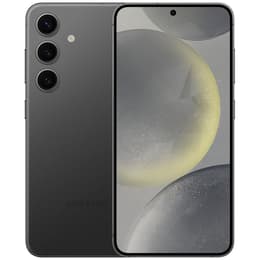
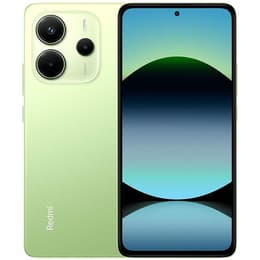


Galaxy S24 Vs Xiaomi Redmi Note 14 4G

Galaxy S24
Galaxy S24
Starting at

Refurbished price:323.00

Versus €956.40 new

See options
Xiaomi Redmi Note 14 4G
Starting at

Refurbished price:155.00

Versus €259.00 new

See options

Ratings

The Samsung Galaxy S24, released in early 2024, is a flagship smartphone designed for high performance and advanced features. In contrast, the Xiaomi Redmi Note 14 4G, launched in early 2025, positions itself as a capable mid-range device focusing on essential functionalities and extended battery life. Both devices operate on the Android platform, with the Galaxy S24 running Android 14 with One UI 6.1, and the Redmi Note 14 4G featuring Android 14 with Xiaomi HyperOS. The primary distinctions lie in their processing power, camera versatility, and network connectivity, with the Galaxy S24 offering 5G capabilities and the Redmi Note 14 4G supporting 4G networks.

Scores

Durability

When considering the practical lifespan of these devices, both offer substantial software support, though with different durations and material constructions.

  • Software Longevity: The Samsung Galaxy S24 is notable for its extended software commitment, promising up to seven years of operating system and security updates, which means support is expected to continue until around 2031. The Xiaomi Redmi Note 14 4G also offers a commendable update policy, with a promise of four years of OS updates and six years of security patches. [5, 11, 17]
  • Physical Durability: The Galaxy S24 features an IP68 rating for dust and water resistance, indicating robust protection against immersion. Its display is protected by Gorilla Glass, contributing to its overall resilience. [32] The Redmi Note 14 4G comes with an IP54 rating, offering splash and dust resistance, and its screen is safeguarded by Corning Gorilla Glass 5. [1, 4, 6, 9] While the Galaxy S24 utilizes premium materials like an aluminum frame, some user reports suggest that despite advanced glass, it can still be prone to damage from drops. [13, 35] The Redmi Note 14 4G, while using more economical internal materials, incorporates shock-absorbing foam for internal durability. [14]
  • Expected Lifespan: Users prioritizing the longest possible software support and higher water resistance may find the Galaxy S24 more aligned with their needs. For those seeking a device with solid everyday protection and a good software update cycle for its category, the Redmi Note 14 4G presents a viable option.

Year of Release

2024

2025

OS

Android

Android

Foldable

No

No

Performance

The performance capabilities of the Galaxy S24 and Redmi Note 14 4G cater to different user demands, primarily due to their distinct internal components.

  • Processing Power: The Samsung Galaxy S24 is equipped with a high-end processor, enabling swift performance for demanding applications, seamless multitasking, and smooth gaming experiences. [2] This allows the device to handle complex computations and graphics-intensive tasks with ease. The Xiaomi Redmi Note 14 4G features a mid-range processor that strikes a balance between performance and energy efficiency. It capably handles general usage and entertainment needs, though some users have noted occasional stutters during heavy usage. [1, 3]
  • Storage and Responsiveness: The Galaxy S24 offers various internal storage options up to 512GB, paired with 8GB of RAM, contributing to its overall system responsiveness. [2, 24, 32] The Redmi Note 14 4G provides storage configurations up to 256GB and up to 8GB of RAM, with the added flexibility of expandable storage via a microSD card, which can be beneficial for users with extensive media libraries. [6, 9, 19]
  • Real-world Usage: For users who frequently engage in high-performance activities like advanced mobile gaming or intensive video editing, the Galaxy S24 offers a more robust and consistent experience. The Redmi Note 14 4G is well-suited for everyday tasks, social media, web browsing, and casual gaming, providing a reliable experience for general use.

Memory (GB)

8 GB

6 GB

Screen quality

Both smartphones offer vibrant displays, but they differ in size, technology, and peak brightness, influencing the overall viewing experience.

  • Display Technology and Clarity: The Samsung Galaxy S24 features a 6.2-inch Dynamic AMOLED 2X display with FHD+ resolution, delivering deep blacks, vibrant colors, and sharp image quality. [2, 24] The Xiaomi Redmi Note 14 4G boasts a larger 6.67-inch AMOLED display, also with FHD+ resolution, providing an immersive viewing area. [1, 3, 6, 9]
  • Brightness and Smoothness: The Galaxy S24's display can reach a peak brightness of up to 2,600 nits for HDR content and 1,300 nits in high brightness mode, ensuring excellent visibility even in bright outdoor conditions. [2, 33] It also features an adaptive 120Hz refresh rate for smooth scrolling and fluid animations. [2] The Redmi Note 14 4G offers a peak brightness of 1,800 nits and a 120Hz refresh rate, which contributes to a smooth visual experience and good outdoor visibility for its category. [1, 3, 6, 9]
  • Viewing Experience: Users who prefer a more compact device with a highly refined and exceptionally bright display will appreciate the Galaxy S24. Those who prioritize a larger screen for media consumption and general browsing, without needing the absolute highest brightness levels, will find the Redmi Note 14 4G's display to be a strong contender.

Resolution

1080 x 2340

1080x2400

Screen type

Dynamic LTPO AMOLED 2X

AMOLED

Audiovisual

The camera systems on the Galaxy S24 and Redmi Note 14 4G are designed with different priorities, impacting their photographic and videographic capabilities.

  • Rear Camera Versatility: The Samsung Galaxy S24 features a versatile triple-camera setup, including a 50MP main sensor, a 12MP ultrawide lens, and a 10MP telephoto lens with 3x optical zoom. This configuration allows for a wide range of photographic styles, from expansive landscapes to detailed zoomed-in shots. [2, 32] The Xiaomi Redmi Note 14 4G primarily relies on its 108MP main camera, complemented by 2MP macro and 2MP depth sensors. It notably lacks an ultrawide camera, which some users might find limiting. [3, 4, 5, 9]
  • Photography Performance: The Galaxy S24 delivers excellent image quality in various conditions, with improved imaging algorithms and strong performance in low light. [2] The Redmi Note 14 4G's main camera performs well in daylight, capturing sharp images with good detail, but its low-light performance can be less consistent, with noticeable noise. [4, 5, 14]
  • Video Recording and Front Camera: The Galaxy S24 supports 8K video recording at 30 frames per second and features a 12MP front camera for high-quality selfies and video calls. [2, 32] The Redmi Note 14 4G records video at a maximum of 1080p and includes a 20MP front camera, which performs well in good lighting but may struggle in dimmer environments. [5, 19]

Miscellaneous

Beyond core features, several practical elements differentiate these two smartphones, influencing daily usability and connectivity.

  • Connectivity and Ports: The Samsung Galaxy S24 offers 5G connectivity, ensuring faster mobile data speeds where available, along with Wi-Fi 6E and Bluetooth 5.3. It features a USB Type-C port for charging and data transfer but omits a traditional 3.5mm headphone jack. [32] The Xiaomi Redmi Note 14 4G supports 4G networks, Wi-Fi 5, and Bluetooth 5.3. It includes a USB Type-C port, a 3.5mm headphone jack, and an IR Blaster, which allows it to function as a universal remote control. [9, 19, 27]
  • Biometrics and Design: Both devices incorporate an in-display fingerprint sensor for secure unlocking. [1, 9, 19, 32] The Galaxy S24 maintains a compact and lightweight profile with flat edges and a premium aluminum frame. [2, 13] The Redmi Note 14 4G has a slightly larger form factor with a matte plastic back and flat sides, offering a comfortable grip. [3, 4]
  • Battery Features: The Redmi Note 14 4G stands out with its large 5500 mAh battery, designed for extended usage, and features a smart battery management system to maintain battery health over time. [1, 4, 5] The Galaxy S24 has a 4000 mAh battery, which provides a full day of moderate use for many users. [12, 18, 23] Both support 33W fast wired charging. [1, 4, 5, 32]

Weight

167 g

196 g

Screen size (in)

6.2

6.67

Network

5G

4G

SIM card

Dual Physical SIM + eSIM

Physical SIM + eSIM

Carrier compatibility

Unlocked

Unlocked

The Samsung Galaxy S24 and Xiaomi Redmi Note 14 4G cater to distinct user needs, each excelling in different areas. The Galaxy S24 is frequently praised by users for its compact design, vibrant display, and swift performance, making it a strong choice for those seeking a premium Android experience with advanced camera capabilities and long-term software support. [2] However, some users have noted that its battery life, while adequate for a full day of moderate use, might not meet the expectations of heavy users without a mid-day charge. [12, 18, 22]

The Xiaomi Redmi Note 14 4G receives commendation for its exceptional battery life, large and bright AMOLED display, and the inclusion of practical features like a 3.5mm headphone jack and expandable storage. [3, 5] Criticisms often point to its camera system being less versatile than higher-end phones, particularly the absence of an ultrawide lens and inconsistent low-light performance. [3, 4] Some users have also reported occasional software stutters, though overall performance is considered good for its category. [3, 7]

Users prioritizing a compact, high-performance device with a top-tier camera system and the longest possible software updates may prefer the Samsung Galaxy S24. Conversely, individuals who value extended battery life, a larger display for media, and features like a headphone jack, while primarily using 4G networks, will find the Xiaomi Redmi Note 14 4G well-suited to their requirements. Both devices offer compelling options, and considering a quality-assured refurbished option for either model can provide an eco-friendly alternative for informed purchasing decisions.

See all articles

Our recent comparisons






