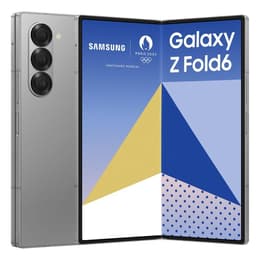
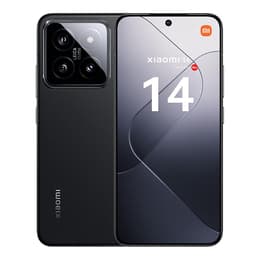


Galaxy Z Fold6 Vs Xiaomi 14

Galaxy Z Fold6
Galaxy Z Fold6
Starting at

Refurbished price:750.00

Versus €1,973.53 new

See options
Xiaomi 14
Xiaomi 14
Starting at

Refurbished price:384.00

Versus €1,099.00 new

See options

Ratings

The Samsung Galaxy Z Fold6, released in July 2024, and the Xiaomi 14, launched globally in early 2024, represent distinct approaches to modern smartphone design. The Z Fold6 offers a unique foldable form factor, transforming from a traditional smartphone into a tablet-like device, while the Xiaomi 14 provides a compact, high-performance experience in a conventional slab design. Both devices run on the Android operating system, with Samsung's One UI and Xiaomi's HyperOS offering different user interfaces and feature sets.

Scores

Durability

The expected lifespan and ongoing support for these devices vary, influenced by their design and manufacturer policies.

  • Release Timeline and Software Support: The Galaxy Z Fold6, being a 2024 release, is set to receive an extended period of software updates, with Samsung promising seven years of Android upgrades. The Xiaomi 14, released slightly earlier, typically receives 3-4 major Android updates and five years of security updates, offering a solid but shorter support window compared to the Z Fold6.
  • Physical Durability: The Z Fold6 features an Armor Aluminum frame and Gorilla Glass Victus 2 on its cover screen and back panel, providing a degree of protection against drops and scratches. Its internal folding screen, however, is covered with a plastic layer, making it more susceptible to scratches than a traditional glass display. The Xiaomi 14 utilizes an aluminum frame and Gorilla Glass Victus for its display, offering robust protection for a conventional smartphone.
  • Water and Dust Resistance: The Galaxy Z Fold6 carries an IP48 rating, indicating resistance to water and some protection against solid objects larger than 1mm. The Xiaomi 14 boasts a higher IP68 rating, signifying comprehensive dust and water resistance, allowing submersion in fresh water up to 1.5 meters for 30 minutes.

Year of Release

2024

2023

Compatible with latest Update

Yes

Yes

OS

Android

Android

Foldable

Yes

No

Performance

Both the Galaxy Z Fold6 and the Xiaomi 14 are equipped with current-generation processors, delivering robust performance for demanding applications and multitasking.

  • Processing Power: Both devices are powered by advanced processors, enabling them to handle intensive applications, graphic-rich games, and complex multitasking scenarios with fluidity. Users can expect smooth navigation and quick app loading times on either device.
  • Memory and Storage: The Galaxy Z Fold6 comes with 12GB of RAM and offers storage options up to 1TB. The Xiaomi 14 provides more flexibility with RAM options, including 8GB, 12GB, and 16GB, alongside storage configurations up to 1TB. For users who frequently switch between many applications or engage in heavy gaming, higher RAM configurations can contribute to a more consistent experience.
  • Battery Performance: The Galaxy Z Fold6 is equipped with a 4400mAh battery, generally providing around 1.5 days or 43 hours of typical usage, with screen-on times in tests ranging from 10.5 to 11.5 hours. The Xiaomi 14 features a slightly larger 4610mAh battery, also rated for approximately 1.5 days or 43 hours of usage, and has shown strong real-world battery efficiency, with some reports indicating it can outlast other compact flagships. The Xiaomi 14 supports faster wired charging at 90W, compared to the Z Fold6's 25W, allowing for quicker recharges.

Memory (GB)

12 GB

16 GB

Screen quality

The display experience is a primary differentiator between these two smartphones, largely due to their distinct form factors.

  • Display Technology and Clarity: The Galaxy Z Fold6 features a large 7.6-inch foldable Dynamic AMOLED 2X main display with a resolution of 2160x1856 pixels, offering an expansive and immersive viewing area. Its 6.3-inch Dynamic AMOLED 2X cover screen has a resolution of 2376x968 pixels, providing a more usable external display than previous generations. The Xiaomi 14 sports a 6.36-inch LTPO AMOLED display with a resolution of 2670x1200 pixels, delivering sharp and vibrant visuals in a traditional smartphone format.
  • Brightness and Refresh Rate: Both devices offer high peak brightness levels, with the Z Fold6 reaching 2600 nits and the Xiaomi 14 achieving up to 3000 nits, ensuring good visibility even in bright outdoor conditions. Both displays also feature adaptive refresh rates ranging from 1Hz to 120Hz, contributing to smooth scrolling and responsive interactions while optimizing power consumption.
  • Viewing Experience: The Z Fold6's large internal screen is well-suited for productivity, media consumption, and gaming, offering a tablet-like experience. The crease on the foldable display is still present but has become less noticeable over generations. The Xiaomi 14 provides a compact yet vibrant viewing experience, with its display praised for excellent color reproduction and sharp details.

Resolution

1856 x 2160

1200 x 2670

Audiovisual

Both smartphones offer advanced camera systems, though their approaches and specific strengths differ.

  • Rear Camera Systems: The Galaxy Z Fold6 is equipped with a triple-camera setup on the rear, including a 50MP main sensor, a 12MP ultrawide lens, and a 10MP telephoto lens with 3x optical zoom. The Xiaomi 14 also features a versatile triple 50MP rear camera system, co-engineered with Leica, comprising a 50MP main camera, a 50MP ultrawide lens, and a 50MP telephoto lens with 3.2x optical zoom.
  • Photography Performance: The Z Fold6's camera system is competent for everyday photography, capturing good shots in most typical situations, though its ultrawide camera can produce noisy results in low light. The Xiaomi 14, with its Leica collaboration, is praised for delivering impressive images with good detail, color consistency across lenses, and strong low-light performance. Users often find the Xiaomi 14's camera to produce natural colors and a professional-grade feel.
  • Video Capabilities and Front Cameras: Both devices support 8K video recording. The Z Fold6 can record 4K 60fps video from all its cameras except the inner display selfie camera. It features a 10MP cover selfie camera and a 4MP under-display camera on the main screen. The Xiaomi 14 offers a 32MP front-facing camera capable of 4K 60fps video recording, which is noted for its quality.

Front camera

4 megapixels

32 megapixels

Miscellaneous

Beyond core specifications, several practical elements contribute to the overall user experience of these devices.

  • Connectivity and Ports: Both the Galaxy Z Fold6 and Xiaomi 14 support modern connectivity standards, including 5G for fast mobile data, Wi-Fi 6E or Wi-Fi 7 for high-speed wireless internet, and Bluetooth 5.3 or 5.4 for accessories. Both devices utilize a USB-C port for charging and data transfer.
  • Biometrics and Additional Features: The Z Fold6 incorporates a side-mounted fingerprint sensor for secure unlocking, along with face recognition. It also supports Ultra Wideband (UWB) and Samsung DeX, allowing for a desktop-like experience when connected to an external display. The Xiaomi 14 features an in-display fingerprint sensor and face unlock.
  • Physical Characteristics: The Galaxy Z Fold6, when folded, measures 153.5 x 68.1 x 12.1 mm and weighs 239g, making it a substantial device in hand. Unfolded, it is 153.5 x 132.6 x 5.6 mm. The Xiaomi 14 is a more compact device, measuring 152.8 x 71.5 x 8.2 mm and weighing 193g, offering a more traditional smartphone feel. The Z Fold6's build materials include Armor Aluminum and Gorilla Glass Victus 2, while the Xiaomi 14 uses an aluminum frame and Gorilla Glass Victus.

Weight

239 g

188 g

Screen size (in)

7.6

6.36

Network

5G

5G

SIM card

Physical SIM + eSIM

Dual Physical SIM

Carrier compatibility

Unlocked

Unlocked

The Samsung Galaxy Z Fold6 and Xiaomi 14 cater to different user preferences, each excelling in distinct areas. The Z Fold6 is frequently praised for its innovative foldable design, offering a large, immersive internal display that enhances productivity and media consumption. Users appreciate its refined hardware and the extended software support provided by Samsung. However, some common criticisms include concerns about the durability of the inner plastic screen, the camera system not always matching the performance of Samsung's S-series flagships, and its charging speeds. There have also been some user discussions regarding dust ingress into the hinge, though the device does pass bend tests.

The Xiaomi 14, on the other hand, is lauded for being a compact yet powerful traditional smartphone. Its camera system, co-engineered with Leica, receives significant praise for its detail, color accuracy, and strong performance across various lighting conditions. Users also highlight its vibrant display, impressive battery life, and exceptionally fast wired charging capabilities. Some minor points of concern include the presence of pre-installed software and the glossy back attracting fingerprints.

Users prioritizing a versatile device with a large, adaptable screen for multitasking, reading, or media viewing, coupled with long-term software support, may find the Galaxy Z Fold6 well-suited to their needs. Conversely, individuals seeking a compact, high-performance smartphone with a top-tier camera system, rapid charging, and robust build quality in a traditional form factor will likely lean towards the Xiaomi 14. Both devices are available as quality-assured refurbished options, providing an eco-friendly alternative for consumers.

See all articles

Our recent comparisons






