

Galaxy S24 FE Vs Xiaomi Redmi Note 13 Pro

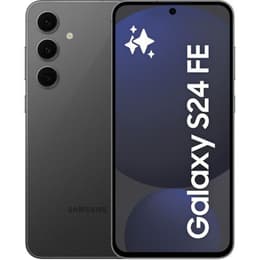
Galaxy S24 FE
Galaxy S24 FE
Starting at

Refurbished price:329.00

Versus €991.15 new

See options
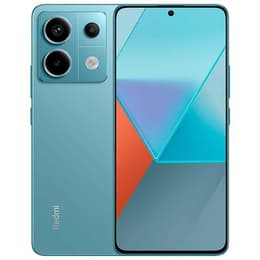
Xiaomi Redmi Note 13 Pro
Starting at

Refurbished price:179.00

Versus €349.00 new

See options

Ratings

The Samsung Galaxy S24 FE, released in October 2024, and the Xiaomi Redmi Note 13 Pro (4G), launched globally in January 2024, are contemporary smartphones offering distinct experiences within the Android ecosystem. While both devices aim to provide a comprehensive smartphone experience, they differentiate themselves through their core processing power, camera philosophies, and long-term software commitment. Both operate on the Android platform, with Samsung offering its One UI and Xiaomi featuring MIUI.

Scores

Durability

The longevity of a smartphone is influenced by its release timeline, software support, and physical durability features.

  • Release Timeline and Software Support: The Samsung Galaxy S24 FE, launched in October 2024, benefits from Samsung's commitment to seven years of operating system upgrades and security patches, extending its support until 2031. In contrast, the Xiaomi Redmi Note 13 Pro (4G), released in January 2024, typically receives a shorter period of major Android updates, often around two to three generations, with security updates for a few years beyond that. This difference means the Galaxy S24 FE offers a considerably longer period of official software support.
  • Physical Durability: The Galaxy S24 FE features Corning Gorilla Glass Victus+ on its front and rear, providing enhanced protection against drops and scratches. The Redmi Note 13 Pro (4G) is protected by Corning Gorilla Glass 5. Both devices offer a degree of ingress protection; the Redmi Note 13 Pro (4G) carries an IP54 rating for splash and dust resistance.
  • Expected Practical Lifespan: Users prioritizing extended software functionality and the latest Android features will find the Galaxy S24 FE's longer update policy more appealing. For those who upgrade their devices more frequently or prioritize initial hardware specifications, the Redmi Note 13 Pro (4G) offers a robust build for its class.

Year of Release

2024

2023

OS

Android

Android

Foldable

No

No

Performance

Performance in daily use, from app handling to gaming, is largely determined by the internal processing unit and memory configuration.

  • Processing Capabilities: The Samsung Galaxy S24 FE is equipped with a current-generation processor, designed to handle demanding applications and multitasking smoothly. This allows for a responsive user experience and capable gaming performance. The Xiaomi Redmi Note 13 Pro (4G) utilizes a mid-range processor, which provides a capable experience for everyday tasks and casual gaming. However, for graphically intensive games or heavy multitasking, the Galaxy S24 FE generally offers more processing headroom.
  • Memory and Storage: Both devices offer multiple configurations for RAM and internal storage. The Galaxy S24 FE comes with 8GB of RAM and storage options up to 512GB, without expandable storage. The Redmi Note 13 Pro (4G) is available with up to 12GB of RAM and up to 512GB of internal storage, with some variants supporting expandable storage up to 1TB.
  • Battery Behavior: The Galaxy S24 FE houses a 4700 mAh battery, which contributes to a long battery life for many users. The Redmi Note 13 Pro (4G) features a 5000 mAh battery, often reported by users to last a full day with typical usage.

Memory (GB)

8 GB

8 GB

Screen quality

The visual experience is a key aspect of smartphone interaction, with display technology, resolution, and brightness playing significant roles.

  • Display Technology and Clarity: The Samsung Galaxy S24 FE features a 6.7-inch Dynamic AMOLED 2X display, offering vibrant colors, deep blacks, and a Full HD+ resolution (1080x2340 pixels). The Xiaomi Redmi Note 13 Pro (4G) comes with a 6.67-inch AMOLED display, also providing rich colors and a Full HD+ resolution (2400x1080 pixels).
  • Brightness and Refresh Rate: Both phones offer a smooth viewing experience with a 120Hz refresh rate. The Galaxy S24 FE boasts a peak brightness of 1900 nits, which can be beneficial for outdoor visibility, though real-world tests show varying results. The Redmi Note 13 Pro (4G) has a peak brightness of 1300 nits.
  • Viewing Experience: The Galaxy S24 FE features slimmer bezels, contributing to a more expansive screen experience. Both displays are well-suited for media consumption, with the Galaxy S24 FE's Dynamic AMOLED 2X panel potentially offering a slight edge in color accuracy and overall vibrancy.

Resolution

1080 x 2340

1220 x 2712

Screen type

Dynamic AMOLED 2X

AMOLED

Audiovisual

Camera capabilities are a significant consideration for many users, encompassing still photography, video recording, and front-facing camera performance.

  • Rear Camera Systems: The Samsung Galaxy S24 FE is equipped with a versatile triple camera setup: a 50MP main sensor with optical image stabilization (OIS), a 12MP ultrawide lens, and an 8MP telephoto lens offering 3x optical zoom with OIS. This configuration provides flexibility for various shooting scenarios, including distant subjects. The Xiaomi Redmi Note 13 Pro (4G) features a 200MP main sensor with OIS and multi-directional PDAF, an 8MP ultrawide camera, and a 2MP macro lens. Its high-resolution main sensor allows for detailed images and up to 4x lossless zoom.
  • Photography Performance: The Galaxy S24 FE offers decent overall camera performance, with its dedicated telephoto lens providing clear zoomed-in shots. The Redmi Note 13 Pro (4G)'s 200MP sensor can capture highly detailed photos, and users often praise its performance in well-lit conditions.
  • Video Recording and Front Camera: The Galaxy S24 FE supports video recording up to 8K resolution at 30 frames per second, and features a 10MP front camera. The Redmi Note 13 Pro (4G) can record videos at 4K resolution at 30 frames per second and includes a 16MP front camera.

Miscellaneous

Beyond the core specifications, practical elements like connectivity, ports, and physical design contribute to the overall user experience.

  • Connectivity and Ports: The Samsung Galaxy S24 FE supports 5G connectivity, Wi-Fi 6E, and Bluetooth 5.3, offering modern wireless standards. It features a USB-C port and supports dual-SIM functionality (Nano-SIM and eSIM). The Xiaomi Redmi Note 13 Pro (4G) offers 4G connectivity, Wi-Fi, and Bluetooth 5.2, with a USB-C port. Some variants of the Redmi Note 13 Pro also include a 3.5mm headphone jack.
  • Sensors and Biometrics: Both devices incorporate an in-display fingerprint sensor for secure unlocking. The Galaxy S24 FE also includes a range of sensors such as an accelerometer, ambient light sensor, compass, gyroscope, and proximity sensor. The Redmi Note 13 Pro (4G) similarly features an accelerometer, ambient light sensor, proximity sensor, compass, and gyroscope.
  • Design and Handling: The Galaxy S24 FE has an aluminum frame and glass panels on the front and back, measuring 162 x 77.3 x 8 mm and weighing 213g. The Redmi Note 13 Pro (4G) has a plastic frame with a glass front, with dimensions of 161.1mm x 74.95mm x 7.98mm and a weight of 188g. The Galaxy S24 FE's design is often described as sleek and comfortable to hold.

Weight

213 g

187 g

Width

7.7 cm

7,42 cm

Height

16.2 cm

16,11 cm

Depth

0.8 cm

0,8 cm

Screen size (in)

6.7

6.67

Network

5G

5G

SIM card

Dual Physical SIM

Dual Physical SIM

Carrier compatibility

Unlocked

Unlocked

User feedback for the Samsung Galaxy S24 FE often highlights its strong performance, reliable battery life, and the inclusion of advanced software features. Some users note that its camera performance, while capable, may not reach the level of more premium flagship devices, and its speakers might sound thin. The Xiaomi Redmi Note 13 Pro (4G) receives praise for its vivid display, robust built-in speakers, and fast charging capabilities. Common criticisms include a potentially cluttered software experience and some reports of the device warming up during demanding tasks.

Users who prioritize long-term software support, a powerful processor for demanding applications, and a dedicated telephoto camera will find the Samsung Galaxy S24 FE well-suited to their needs. Its extended update commitment ensures relevance for many years. Conversely, individuals who value a high-resolution main camera, a slightly larger battery, and potentially expandable storage may lean towards the Xiaomi Redmi Note 13 Pro (4G). Both devices offer a quality-assured refurbished option, providing an eco-friendly alternative for consumers seeking reliable technology.


See all articles

Our recent comparisons