

Galaxy S21 Ultra 5G Vs iPhone 16 Plus

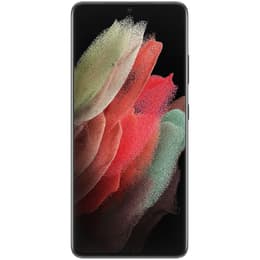
Galaxy S21 Ultra 5G
Galaxy S21 Ultra 5G
Starting at

Refurbished price:228.00

Versus €1,297.00 new

See options
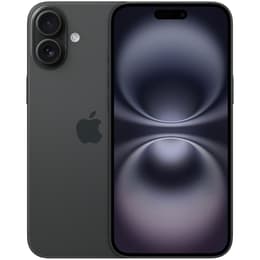
iPhone 16 Plus
iPhone 16 Plus
Starting at

Refurbished price:559.00

Versus €979.00 new

See options

Ratings

The Samsung Galaxy S21 Ultra 5G, released in January 2021, and the Apple iPhone 16 Plus, launched in September 2024, represent different generations of flagship smartphones from their respective manufacturers. While both offer premium experiences, they cater to distinct user preferences through their operating systems and hardware philosophies. The Galaxy S21 Ultra runs on Android, offering extensive customization, whereas the iPhone 16 Plus operates on Apple's iOS, known for its streamlined ecosystem. Key differentiators lie in their camera systems, display technologies, and overall software longevity.

Scores

Durability

The lifespan of a smartphone is often determined by its physical durability and the duration of software support it receives. These two devices, released years apart, offer different expectations in this regard.

  • Software Longevity: The Galaxy S21 Ultra 5G, having launched with Android 11, received its final major OS update to Android 15 (One UI 7) in May 2025, with security updates concluding in February 2026. [27, 40, 43] In contrast, the iPhone 16 Plus, released with iOS 18, benefits from Apple's typically longer software support cycle, extending its functional lifespan for several more years. [3, 4, 13]
  • Physical Durability: Both devices feature an IP68 rating for dust and water resistance, indicating protection against immersion in water up to 6 meters for 30 minutes. [3, 10, 14, 38] The iPhone 16 Plus incorporates Ceramic Shield on its front, designed for enhanced drop performance, while the Galaxy S21 Ultra utilizes Gorilla Glass Victus for its display and back panel. [3, 14, 38]
  • Repairability: While specific repairability scores can vary, both devices are designed with modern smartphone construction, meaning professional repair is generally recommended for significant damage. Users seeking to extend the life of their device beyond its initial purchase can consider quality-assured refurbished options, which often come with warranties.

Year of Release

2021

2024

Compatible with latest Update

Yes

Yes

Foldable

No

No

Performance

Performance is crucial for daily tasks, from browsing to demanding applications. These devices approach processing power and efficiency from different platforms.

  • System Responsiveness: The Galaxy S21 Ultra 5G, powered by a high-end processor from its era, delivers smooth performance for multitasking and running various applications. [31] The iPhone 16 Plus, featuring a more recent Apple-designed chip, offers robust performance, handling demanding apps and multitasking with efficiency. [3, 4, 7, 20]
  • Multitasking and Storage: The Galaxy S21 Ultra was available with up to 16GB of RAM, providing ample capacity for heavy multitasking and keeping many applications open simultaneously. [19, 28, 38] The iPhone 16 Plus comes with 8GB of RAM, which, combined with iOS's memory management, ensures a fluid user experience even with multiple apps running. [3, 4, 20] Both devices offer storage options up to 512GB, catering to users with large media libraries or extensive app collections. [3, 7, 10, 12, 14, 19, 28, 38]
  • Battery Behavior: The Galaxy S21 Ultra 5G is equipped with a 5000 mAh battery, providing reliable all-day power for most users, with some reporting over 7 hours of screen-on time. [10, 15, 18, 19, 24, 28, 31, 39] The iPhone 16 Plus, with its 4674 mAh battery, is noted for its exceptional battery life, often extending into a second day for many users, and offering up to 27 hours of video playback. [1, 3, 6, 8, 17, 22, 23, 30, 32, 33, 35]

Memory (GB)

12 GB

8 GB

Screen quality

The display is a primary interface for any smartphone, and both models offer large, vibrant viewing experiences with distinct characteristics.

  • Display Technology and Clarity: The Galaxy S21 Ultra 5G features a 6.8-inch Dynamic AMOLED 2X display with a resolution of 3200 x 1440 pixels, resulting in a sharp 515 pixels per inch (PPI). [10, 19, 28, 38] The iPhone 16 Plus sports a 6.7-inch Super Retina XDR OLED display with a resolution of 2796 x 1290 pixels, yielding approximately 460 PPI. [2, 3, 4, 12, 16, 20] Both technologies deliver deep blacks and vibrant colors, suitable for media consumption and detailed work.
  • Brightness and Refresh Rate: The Galaxy S21 Ultra offers an adaptive refresh rate up to 120Hz, providing smoother scrolling and more fluid animations, alongside HDR10+ support. [10, 19, 28, 38] The iPhone 16 Plus features a 60Hz refresh rate, which is consistent for everyday use, and boasts a peak outdoor brightness of 2000 nits, ensuring excellent visibility even in bright sunlight. [2, 3, 6, 16, 20] The Galaxy S21 Ultra also offers high peak brightness for outdoor viewing. [20]
  • Viewing Experience: Both devices provide expansive screens ideal for content consumption, gaming, and productivity. The slightly larger and higher-resolution display of the S21 Ultra offers a marginally more detailed canvas, while the iPhone 16 Plus's high peak brightness enhances outdoor usability.

Resolution

1440 x 3200

1290 x 2796

Screen type

Dynamic AMOLED 2X

Super Retina XDR OLED

Audiovisual

Camera capabilities are a significant factor for many users, and both smartphones offer advanced systems designed for various photographic scenarios.

  • Rear Camera Systems: The Galaxy S21 Ultra 5G features a versatile quad-camera setup, including a 108MP main sensor, a 12MP ultrawide lens, a 10MP telephoto lens with 3x optical zoom, and a 10MP periscope telephoto lens offering 10x optical zoom. [10, 19, 28, 29, 38] This allows for significant zoom capabilities, including a 100x digital 'Space Zoom'. [10, 19, 28, 39] The iPhone 16 Plus comes with an advanced dual-camera system, featuring a 48MP main sensor that uses pixel binning to produce detailed 24MP photos and can achieve 2x telephoto through a sensor crop. It also includes a 12MP ultrawide camera that supports macro photography. [2, 3, 7, 9, 12, 16]
  • Photography Performance: The Galaxy S21 Ultra is praised for its detailed photos and impressive dynamic range, with its laser autofocus addressing previous generation issues. [28] The iPhone 16 Plus delivers sharp, noise-free photos with rich detail and natural colors across various lighting conditions, benefiting from Apple's Photonic Engine and Deep Fusion processing. [1, 2, 9, 34] Users appreciate the new Camera Control button and Photographic Styles on the iPhone 16 Plus for more creative input. [9, 25, 34]
  • Video Recording and Audio: Both phones offer high-quality video recording. The Galaxy S21 Ultra can record up to 8K at 24fps and 4K at 60fps. [29, 38] The iPhone 16 Plus records 4K video at up to 60fps and introduces spatial video capture. [14, 16, 34] Both provide good microphone quality for calls and recording, and stereo speakers for media consumption. [14, 37]

Main camera

108 megapixels

48 megapixels

Front camera

40 megapixels

12 megapixels

Miscellaneous

Beyond core features, several practical elements contribute to the overall user experience and differentiate these devices.

  • Connectivity and Ports: Both smartphones support 5G connectivity for fast mobile data. [3, 7, 19, 38] The Galaxy S21 Ultra 5G supports Wi-Fi 6E and Bluetooth 5.2, while the iPhone 16 Plus features the newer Wi-Fi 7 and Bluetooth 5.3, offering potentially faster and more stable wireless connections. [3, 7, 14, 19, 38] Both utilize a USB-C port for charging and data transfer, though the S21 Ultra's USB 3.2 offers faster data speeds compared to the iPhone 16 Plus's USB 2.0. [3, 7, 14, 38] Neither device includes a 3.5mm headphone jack. [14, 38]
  • Biometric Security and Navigation: The Galaxy S21 Ultra features an in-display ultrasonic fingerprint sensor for secure unlocking. [28, 38] The iPhone 16 Plus relies on Face ID, Apple's facial recognition system. [6, 14] The iPhone 16 Plus also introduces an Action Button, which can be customized for quick access to various functions. [6, 9]
  • Design and Handling: The Galaxy S21 Ultra has a more substantial feel, weighing 227 grams and measuring 8.9mm thick. [28] The iPhone 16 Plus is lighter at 199 grams and slightly thinner at 7.8mm, making it potentially more comfortable for extended one-handed use despite its large screen size. [3, 30] Both devices feature premium build materials, including glass backs and aluminum frames. [3, 14, 38]

Weight

227 g

199 g

Screen size (in)

6.8

6.7

Network

5G

5G

SIM card

Physical SIM + eSIM

eSIM

Carrier compatibility

Unlocked

Unlocked

Connector

USB-C

USB-C (USB 2)

The Samsung Galaxy S21 Ultra 5G and the Apple iPhone 16 Plus offer distinct advantages, reflecting their different release timelines and ecosystem approaches. Users frequently praise the Galaxy S21 Ultra for its expansive, high-resolution display, versatile camera system with significant zoom capabilities, and robust battery life. [31, 37, 39, 41] Its customization options and multi-window features are also often highlighted as strong points. [31, 39] Some common criticisms include its bulkier design and the conclusion of major software updates. [36, 37, 43]

The iPhone 16 Plus is widely lauded for its exceptional battery life, often lasting well into a second day, and its large, bright OLED display. [1, 6, 8, 17, 22, 23, 30, 32, 33, 35] Users appreciate the consistent performance, streamlined iOS experience, and the quality of its dual-camera system, particularly for everyday photography and video. [9, 34, 35] The main points of contention for some users include the 60Hz refresh rate, which is lower than many Android flagships, and the absence of a dedicated telephoto lens beyond a 2x digital crop. [3, 6, 17, 20, 25, 35]

Users prioritizing extensive camera versatility, particularly with optical zoom and a higher-resolution display, may find the Galaxy S21 Ultra 5G well-suited to their needs. Those who value industry-leading battery life, a highly optimized software experience, and a slightly lighter design will likely lean towards the iPhone 16 Plus. Both devices represent strong choices within their respective ecosystems, and considering a quality-assured refurbished option for either can be an eco-friendly alternative to purchasing new.

See all articles

Our recent comparisons