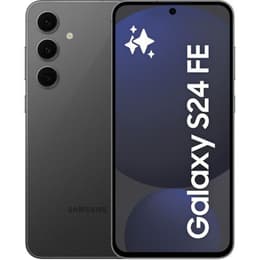


Galaxy S24 FE Vs Google Pixel 9

Galaxy S24 FE
Galaxy S24 FE
Starting at

Refurbished price:328.00

Versus €889.00 new

See options
Google Pixel 9
Google Pixel 9
Starting at

Refurbished price:376.00

Versus €1,066.71 new

See options

Ratings

The Samsung Galaxy S24 FE, released in October 2024, and the Google Pixel 9, launched in August 2024, are both contemporary Android smartphones designed to offer a balanced experience. While both devices run on the latest Android operating system, they approach core functionalities with distinct philosophies, particularly in their camera systems and software integration.

Scores

Durability

When considering the long-term usability of a smartphone, software support and physical resilience are key factors. Both the Galaxy S24 FE and the Pixel 9 are designed with longevity in mind, offering extensive software update policies.

  • Software Longevity: The Samsung Galaxy S24 FE is part of Samsung's commitment to provide seven years of OS and security updates, aligning it with the flagship S24 series and extending its functional lifespan well into the future. Similarly, the Google Pixel 9 also benefits from Google's policy of offering seven years of OS and security updates, ensuring it remains current and secure for an extended period.
  • Physical Durability: The Galaxy S24 FE features Corning Gorilla Glass Victus+ protection on its display, contributing to its resistance against scratches and drops, and boasts an IP68 rating for dust and water resistance. The Pixel 9 incorporates Corning Gorilla Glass Victus 2, and Google states it is twice as durable as its predecessor, enhancing its resilience in daily use.
  • Repairability: While specific repairability scores for the S24 FE are not widely available, Samsung's recent flagship models, such as the Galaxy S25 Ultra and S26, have shown improved repairability scores, indicating a trend towards easier maintenance. The Pixel 9 received a provisional repairability score of 5/10 from iFixit, noting progress in design but still highlighting challenges with battery adhesive.

Year of Release

2024

2024

Compatible with latest Update

Yes

Yes

OS

Android

Android

Foldable

No

No

Performance

The performance of these devices is driven by their respective internal components, influencing how smoothly applications run and how efficiently tasks are handled.

  • Processing Power: The Galaxy S24 FE is powered by an Exynos 2400e processor in most regions, an underclocked variant of the Exynos 2400, which provides robust performance for demanding applications and multitasking. Some markets may see a Snapdragon 8 Gen 4 variant. The Google Pixel 9 utilizes the Google Tensor G4 processor, paired with the Titan M2 security co-processor, designed for efficient handling of AI-centric tasks and overall system responsiveness.
  • Multitasking and Storage: The Galaxy S24 FE typically comes with 8GB or 12GB of RAM, supporting smooth transitions between multiple open applications and intensive usage. Storage options include 128GB and 256GB, with potential for 512GB. The Pixel 9 is equipped with 12GB of RAM, facilitating fluid multitasking, and offers 128GB or 256GB of UFS 3.1 storage.
  • Battery Behavior: The Galaxy S24 FE houses a 4565mAh or 4700mAh battery, supporting proprietary fast charging, and is designed to offer extended usage times, with reported figures of up to 29 hours for video playback. The Pixel 9 features a 4700mAh battery, also with fast charging capabilities, aiming to provide reliable power throughout the day for typical use cases.

Memory (GB)

8 GB

12 GB

Screen quality

The visual experience on a smartphone is largely defined by its display, with differences in technology, resolution, and brightness impacting daily interaction.

  • Display Technology and Size: The Samsung Galaxy S24 FE features a 6.7-inch FHD+ Dynamic AMOLED display, known for its vibrant colors and deep blacks. The Google Pixel 9 comes with a slightly smaller 6.3-inch OLED display, offering a sharp 1080 x 2424 resolution and a pixel density of 422 pixels per inch.
  • Brightness and Clarity: The Galaxy S24 FE's screen can reach a peak brightness of up to 1900 nits, ensuring good visibility even in bright outdoor conditions. The Pixel 9's display is notably bright, achieving a peak brightness of 2700 nits, which is beneficial for outdoor use and HDR content viewing.
  • Refresh Rate and Smoothness: Both devices offer a 120Hz refresh rate, providing a smooth scrolling experience and fluid animations. The Pixel 9's display can adapt its refresh rate from 60Hz to 120Hz, optimizing power consumption based on content.

Resolution

1080 x 2340

1080 x 2424

Screen type

Dynamic AMOLED 2X

OLED

Audiovisual

Both smartphones offer advanced camera systems, but they differ in their configurations and photographic approaches, catering to varying user preferences.

  • Rear Camera Systems: The Samsung Galaxy S24 FE is equipped with a versatile triple-camera setup on the rear, including a 50-megapixel primary camera with optical image stabilization (OIS), a 12-megapixel ultrawide camera with a 123-degree field of view, and an 8-megapixel telephoto lens offering 3x optical zoom with OIS. The Google Pixel 9 features a dual-camera system, comprising a 50-megapixel main sensor and a 50-megapixel ultrawide sensor, focusing on high-quality image capture across different perspectives. The standard Pixel 9 does not include a telephoto lens.
  • Photography Performance: The Galaxy S24 FE's camera system is designed for detailed photos and offers optical zoom capabilities for distant subjects. The Pixel 9 leverages Google's computational photography strengths, aiming for consistent image quality, particularly in challenging lighting conditions, and includes a front camera with autofocus.
  • Video and Audio: The Galaxy S24 FE supports 4K video recording with its rear camera. Both devices offer stereo speakers and Dolby Atmos support for an enhanced media consumption experience. The Pixel 9's microphone quality is optimized for clear calls and recordings.

Main camera

50 megapixels

50 megapixels

Front camera

10 megapixels

10.5 megapixels

Miscellaneous

Beyond the core specifications, several practical elements contribute to the overall user experience and daily convenience of these smartphones.

  • Connectivity and Ports: Both the Galaxy S24 FE and the Pixel 9 support 5G connectivity, ensuring fast mobile data speeds. They also feature modern Wi-Fi standards and Bluetooth for wireless connections. Both devices utilize a USB-C port for charging and data transfer, and neither includes a traditional headphone jack. The Pixel 9 introduces satellite connectivity for emergency services, a notable safety feature.
  • Biometric Security: The Galaxy S24 FE incorporates an in-display fingerprint scanner for secure and convenient unlocking. The Pixel 9 offers both an in-display optical fingerprint sensor and Face Unlock for biometric authentication.
  • Design and Handling: The Galaxy S24 FE has a 6.7-inch display, which translates to a larger device footprint, potentially favoring users who prefer more screen real estate. The Pixel 9, with its 6.3-inch display, offers a more compact form factor that might appeal to users seeking easier one-handed use. Both phones feature modern designs with durable build materials.

Weight

213 g

198 g

Width

7.7 cm

7.198 cm

Height

16.2 cm

15.283 cm

Depth

0.8 cm

8.54 cm

Screen size (in)

6.7

6.3

Network

5G

5G

SIM card

Physical SIM

Physical SIM + eSIM

Carrier compatibility

Unlocked

Unlocked

Connector

USB-C

USB-C

The Samsung Galaxy S24 FE and the Google Pixel 9 both present compelling options in the contemporary smartphone market, each with distinct strengths that cater to different user priorities. Users often praise the Galaxy S24 FE for its vibrant display and versatile camera system, particularly the inclusion of a telephoto lens, which offers greater flexibility for various photographic scenarios. Its integration of Galaxy AI features also receives positive feedback for enhancing productivity and creative tasks. Some users, however, might find the Exynos processor in certain regions to be a point of discussion compared to other chipsets.

On the other hand, the Google Pixel 9 is frequently lauded for its exceptional computational photography, delivering consistent and high-quality images, especially in challenging conditions. Its clean Android experience and the promise of seven years of software updates are significant advantages for users prioritizing long-term support and a streamlined interface. The inclusion of satellite SOS is also a notable safety feature. Some users might note the absence of a dedicated telephoto lens on the standard Pixel 9 as a limitation for specific photography needs.

Users prioritizing a larger, vibrant display and a comprehensive camera setup with optical zoom capabilities may find the Samsung Galaxy S24 FE well-suited to their needs. Conversely, individuals who value a more compact device, cutting-edge computational photography, a pure Android experience, and advanced safety features like satellite connectivity will likely lean towards the Google Pixel 9. Both devices offer robust performance and extended software support, making them suitable for long-term use. For those considering these devices, exploring quality-assured refurbished options can provide an eco-friendly alternative.


See all articles

Our recent comparisons