
Compare models

Galaxy S23 Ultra Vs iPhone Air

  • 1-year minimum warranty
  • Free delivery on all orders
  • Free 30-day returns
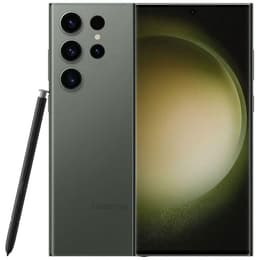
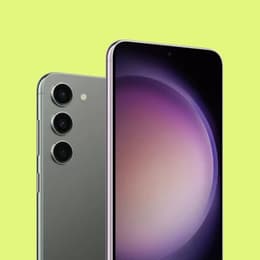
Galaxy S23 Ultra
Starting at

Refurbished price:€423.00

Versus €1,409.00 new

See options
iPhone Air
Starting at

Refurbished price:€717.00

Versus €1,339.00 new

See options

Differences at a glance

The Samsung Galaxy S23 Ultra (2023) and the Apple iPhone Air (2025) represent two distinct philosophies in modern smartphone engineering. While the Galaxy S23 Ultra focuses on maximalist productivity features and versatile multi-lens photography, the iPhone Air prioritizes an ultra-slim physical profile and streamlined everyday capability. Operating on different software ecosystems—Android and iOS respectively—these devices cater to fundamentally different daily workflows and design preferences.

Available Models

Colour

Storage

Scores

Durability

When examining hardware longevity and software support, both devices offer robust frameworks for extended daily use, though they approach support lifecycles through different manufacturer schedules.

  • Software longevity: The iPhone Air benefits from Apple's extended update cadence, receiving regular system upgrades for many years, whereas the Galaxy S23 Ultra follows a structured multi-year Android update path starting from its 2023 launch.
  • Build durability: The Galaxy S23 Ultra features curved glass and durable armor aluminum framing, while the iPhone Air utilizes a rigid titanium frame paired with reinforced scratch-resistant ceramic glass layers.
  • Practical lifespan: Both models maintain high-level operational speed well beyond typical upgrade cycles, ensuring dependable performance for users keeping their devices long-term. Choosing a quality-assured refurbished option provides a sustainable choice that extends device utility while reducing electronic waste.

Year of Release

2023

2025

Performance

System responsiveness and daily multitasking capabilities differ based on internal hardware optimization and memory configuration across both models.

  • App loading and multitasking: Both devices handle demanding applications, heavy browsing, and background tasks smoothly without noticeable stutter or slowdown.
  • Storage capacity: Configurations span generous internal storage tiers starting from baseline options upwards, accommodating large media libraries and document files without expandable card slots.
  • Battery behavior: The Galaxy S23 Ultra incorporates a large-capacity power cell designed for extensive daily tasks, whereas the iPhone Air balances its slender physical dimensions with power-efficient processing to sustain typical daily usage routines.

Screen quality

Display characteristics on both phones deliver sharp visual clarity and vibrant color reproduction suited for media consumption and text reading.

  • Panel technology: The Galaxy S23 Ultra features a large curved OLED screen, while the iPhone Air utilizes a flat OLED panel designed with high pixel density for crisp text.
  • Outdoor visibility: High peak brightness levels on both displays ensure contents remain legible under direct sunlight conditions.
  • Motion smoothness: High refresh rate support enables fluid scrolling through web pages and smooth animations across user interfaces.

Audiovisual

Optics and media playback systems cater to distinct photographic styles and audio-visual preferences.

  • Camera systems: The Galaxy S23 Ultra utilizes a versatile multi-lens array including an ultra-high-resolution primary sensor and dedicated optical zoom lenses, whereas the iPhone Air employs a streamlined single-lens high-resolution arrangement.
  • Low-light capture: Both devices process night scenes effectively, balancing shadows and highlights to retain detail in dim environments.
  • Media and audio output: Speaker configurations deliver clear sound output for casual video viewing, calls, and listening tasks.

Miscellaneous

Physical handling characteristics and connectivity standards shape the everyday ergonomic experience of each device.

  • Dimensions and weight: The iPhone Air emphasizes a remarkably thin and lightweight chassis, while the Galaxy S23 Ultra offers a larger, heavier footprint that accommodates an integrated stylus silo.
  • Input tools: The Galaxy S23 Ultra includes a built-in stylus for precise note-taking and drawing, while the iPhone Air relies entirely on standard touch and gesture controls.
  • Connectivity standards: Both models support rapid wireless networking, modern Bluetooth protocols, and universal USB-C physical interfacing for charging and data transfer.

Screen size (in)

6.8

6.5

Network

5G

5G

SIM card

Dual Physical SIM + eSIM

eSIM

Carrier compatibility

Unlocked

Unlocked

Connector

USB-C

USB-C

What the community thinks

User discussions and community feedback highlight distinct preferences for each device. Owners of the Galaxy S23 Ultra frequently praise its comprehensive toolset, versatile multi-lens camera system, and integrated stylus functionality. Conversely, users often highlight the iPhone Air for its exceptionally lightweight feel and comfortable pocketability resulting from its breakthrough slim profile. Frequent criticisms for the Samsung model focus on its large physical bulk, while discussions surrounding the Apple model occasionally note trade-offs tied to its single-lens camera setup and streamlined hardware layout.

Users prioritizing productivity tools, extensive optical zoom capabilities, and an integrated stylus will find the Galaxy S23 Ultra well-suited to their needs. Meanwhile, users prioritizing a featherlight physical build, minimalist profile, and streamlined daily operation may lean toward the iPhone Air. Evaluating these core differences helps determine the right fit. For those looking toward sustainable consumer habits, exploring a quality-assured refurbished option provides an eco-friendly alternative that maintains high operational standards. Ultimately, aligning personal daily priorities with each device's distinct engineering focus ensures a satisfying long-term choice.