

Compare models
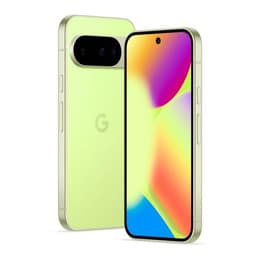
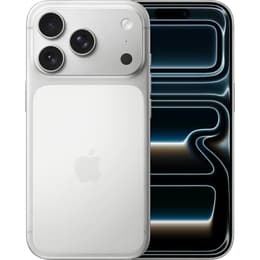
Google Pixel 10 Vs iPhone 17 Pro
- 1-year minimum warranty
- Free delivery on all orders
- Free 30-day returns
Differences at a glance
The Google Pixel 10 and the Apple iPhone 17 Pro represent two distinct approaches to the modern flagship smartphone, both launching in late 2025. While the Google Pixel 10 runs on Android 16 with a focus on accessible daily intelligence, the iPhone 17 Pro operates on iOS with a strong emphasis on professional-grade hardware integration. Choosing between them comes down to personal operating system preference and how you balance everyday efficiency with advanced media tools.
Available Models
Colour
Storage
Scores
Durability
Both smartphones offer robust longevity profiles, though their respective software update commitments and build philosophies cater to different expectations for long-term ownership.
- Software support timelines: The Google Pixel 10 provides long-term stability with up to seven years of major operating system updates, while the iPhone 17 Pro typically receives around five to six years of iOS updates backed by Apple's tightly integrated hardware architecture.
- Repairability and durability: Both devices feature high-grade water and dust resistance alongside sturdy chassis construction, though modular component availability gives the Pixel a slight edge for straightforward component swaps.
- Practical lifespan: Solid battery capacities and efficient internal processing ensure that both models maintain reliable daily functionality across multi-year usage windows.
Year of Release
2025
2025
Compatible with latest Update
Yes
Yes
OS
Android
iOS
Foldable
No
No
Performance
Handling everything from casual browsing to intensive tasks, both devices deliver swift system responsiveness while managing power consumption through different internal architectures.
- Multitasking efficiency: The Google Pixel 10 pairs ample random-access memory with a power-efficient processor to keep background apps active smoothly, while the iPhone 17 Pro utilizes its advanced processing silicon to sustain high frame rates during demanding mobile games and video editing workflows.
- Battery behavior: Both phones comfortably navigate a standard day of mixed usage, supporting rapid wired charging protocols alongside modern wireless charging standards for convenient top-ups.
- Storage configurations: Base storage tiers start at generous capacities, though neither device supports expandable storage via memory cards, requiring users to select their preferred capacity at purchase.
Screen quality
Viewing content outdoors and consuming media are core strengths for both displays, featuring sharp resolutions and high refresh rates for fluid motion.
- Display technology: Both models utilize vibrant organic light-emitting diode panels with deep contrast levels and rich color reproduction, ensuring crisp text and vivid graphics.
- Brightness and outdoor visibility: High peak brightness capabilities on both screens allow for clear legibility even under direct sunlight, automatically adjusting luminance to match ambient lighting conditions.
- Refresh rate smoothness: Adaptive refresh rates scaling up to 120Hz provide fluid scrolling through web pages and responsive feedback during touch interactions.
Resolution
1080x2424
2622x1206
Screen type
OLED
Super Retina XDR
Audiovisual
Equipped with capable multi-lens configurations, both devices excel at capturing detailed everyday moments and high-resolution video clips.
- Photography performance: The Google Pixel 10 relies on advanced computational photography to balance challenging lighting automatically, while the iPhone 17 Pro utilizes a versatile triple-lens array with detailed optical zoom options for distant subjects.
- Video recording: Both smartphones capture stabilized, high-definition footage with clear audio recording, though the iPhone lineup remains a frequent choice for professional mobile videography.
- Media consumption: Built-in stereo speakers deliver balanced sound output for hands-free calls, casual video viewing, and listening to music without external headphones.
Front camera
42 megapixels
18 megapixels
Miscellaneous
Practical physical design choices and modern connectivity standards round out the everyday user experience for each device.
- Connectivity standards: Both models support fast fifth-generation cellular networks, advanced Wi-Fi protocols, and Bluetooth pairing for reliable accessory connections.
- Biometric security: The Google Pixel 10 offers both under-display fingerprint recognition and facial scanning, whereas the iPhone 17 Pro relies exclusively on advanced 3D facial recognition sensors housed within its display cutout.
- Physical dimensions: Form factors are pocket-friendly and ergonomically contoured, though variations in weight and edge curvature influence how each device rests in the hand.
Weight
204 g
206 g
Screen size (in)
6.3
6.3
Network
4G
5G
SIM card
Physical SIM + eSIM
eSIM
Carrier compatibility
Unlocked
Unlocked
Connector
USB-C
USB-C
What the community thinks
User discussions across community forums frequently praise the Google Pixel 10 for its intuitive software clean design, natural photo processing, and long-term update commitment. At the same time, users often highlight the iPhone 17 Pro for its robust build quality, sustained processing power under heavy workloads, and seamless integration within the broader Apple ecosystem. Common criticisms for both models generally point toward high baseline configurations and the absence of expandable storage slots.
Users prioritizing a clean Android interface, versatile daily AI features, and flexible biometric unlock options may prefer the Google Pixel 10. Conversely, users prioritizing a tightly integrated operating system, robust video capture tools, and powerful gaming performance will likely lean toward the iPhone 17 Pro. Exploring a quality-assured refurbished option through Back Market can also provide an eco-friendly alternative for conscious consumers looking to reduce electronic waste without compromising on performance.









