

Galaxy S21+ 5G Vs iPhone 15

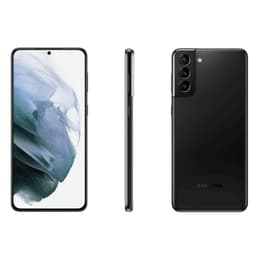
Galaxy S21+ 5G
Galaxy S21+ 5G
Starting at

Refurbished price:185.00

Versus €1,059.00 new

See options
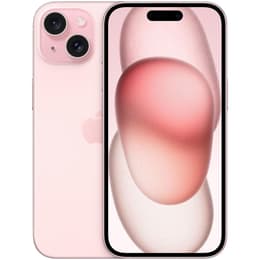
iPhone 15
iPhone 15
Starting at

Refurbished price:399.00

Versus €879.00 new

See options

Ratings

The Samsung Galaxy S21 Plus 5G, released in January 2021, and the Apple iPhone 15, launched in September 2023, represent distinct approaches to the premium smartphone experience from their respective manufacturers. While both devices offer robust performance and advanced camera systems, they differ significantly in their operating systems, display technologies, and overall design philosophy. The Galaxy S21 Plus operates on Android, providing a customizable user interface, whereas the iPhone 15 runs on Apple's iOS, known for its streamlined ecosystem and long-term software support.

Scores

Durability

When considering the longevity of these devices, their release timelines and software support policies are key factors. The Galaxy S21 Plus 5G, being an Android device from early 2021, has received several years of operating system updates and continues to get security patches, though it is nearing the end of its major OS upgrade cycle. The iPhone 15, released in late 2023, benefits from Apple's reputation for extended software support, typically receiving major iOS updates for five to seven years from its launch.

  • Software Longevity: The iPhone 15 is expected to receive major iOS updates for a longer duration compared to the Galaxy S21 Plus 5G, which is now in its later stages of software support.
  • Repairability: The iPhone 15 has seen improvements in repairability, with some sources indicating a higher score compared to previous iPhone models, though challenges with parts pairing can still exist for independent repairs. The Galaxy S21 Plus 5G, while not having a widely published repairability score, generally aligns with older Android flagships in terms of repair complexity.
  • Practical Lifespan: Both devices are built with durable materials and are designed for several years of use. Users prioritizing the latest software features and security updates for the longest possible period may find the newer iPhone 15 more aligned with their needs.

Year of Release

2021

2023

Compatible with latest Update

Yes

Yes

OS

Android

iOS

Foldable

No

No

Performance

The performance capabilities of the Galaxy S21 Plus 5G and the iPhone 15 cater to different user expectations, largely influenced by their respective hardware and software optimizations. The Galaxy S21 Plus 5G, equipped with a powerful processor for its generation, handles demanding applications and multitasking efficiently, supported by 8GB of RAM. The iPhone 15, featuring a more recent and optimized processor, delivers fluid performance across applications, gaming, and system navigation, complemented by 6GB of RAM.

  • Everyday Responsiveness: The iPhone 15 offers a highly responsive user experience, with quick app launches and smooth transitions, benefiting from its newer processor and tight software integration. The Galaxy S21 Plus 5G also provides a capable and smooth experience for daily tasks and moderate gaming.
  • Multitasking and Storage: Both devices offer ample storage options, with the Galaxy S21 Plus 5G available in 128GB and 256GB configurations, and the iPhone 15 offering 128GB, 256GB, and 512GB. The Galaxy S21 Plus 5G's 8GB of RAM provides robust support for running multiple applications simultaneously, while the iPhone 15's optimized 6GB of RAM manages multitasking effectively within the iOS ecosystem.
  • Battery Behavior: The Galaxy S21 Plus 5G features a 4800 mAh battery, generally providing a full day of moderate to heavy use. The iPhone 15, with its 3349 mAh battery, is optimized for efficiency, offering up to 20 hours of video playback and 80 hours of audio playback, indicating strong endurance for typical daily usage.

Memory (GB)

8 GB

6 GB

Screen quality

The visual experience on both the Galaxy S21 Plus 5G and the iPhone 15 is characterized by vibrant displays, though with distinct specifications that influence clarity, brightness, and smoothness. The Galaxy S21 Plus 5G features a larger 6.7-inch Dynamic AMOLED 2X display with a 120Hz adaptive refresh rate, providing fluid scrolling and animations. The iPhone 15 sports a 6.1-inch Super Retina XDR OLED display, notable for its high peak brightness and the integration of the Dynamic Island.

  • Display Technology and Clarity: Both phones utilize OLED technology, delivering deep blacks and excellent contrast. The Galaxy S21 Plus 5G offers a 1080 x 2400 pixel resolution at 394 PPI, while the iPhone 15 provides a sharper 2556 x 1179 pixel resolution at 460 PPI.
  • Brightness and Outdoor Visibility: The iPhone 15 excels in brightness, reaching up to 1000 nits typical, 1600 nits peak for HDR content, and an impressive 2000 nits peak for outdoor visibility, ensuring excellent readability in bright conditions. The Galaxy S21 Plus 5G also offers strong brightness with a peak of 1300 nits.
  • Refresh Rate and Viewing Experience: The Galaxy S21 Plus 5G's 120Hz adaptive refresh rate provides a noticeably smoother visual experience, particularly during scrolling and gaming, compared to the iPhone 15's standard 60Hz refresh rate. The iPhone 15 introduces the Dynamic Island, an interactive area around the front camera that displays alerts and live activities, enhancing the user interface.

Resolution

1080 x 2400

1179 x 2556

Screen type

Dynamic AMOLED 2X

Super Retina XDR OLED

Audiovisual

Both the Galaxy S21 Plus 5G and the iPhone 15 offer advanced camera systems designed to capture high-quality photos and videos, though they approach imaging with different strengths and features. The Galaxy S21 Plus 5G features a versatile triple-camera setup, including a dedicated telephoto lens, while the iPhone 15 relies on a dual-camera system with a high-resolution main sensor and computational photography enhancements.

  • Camera System Capabilities: The Galaxy S21 Plus 5G includes a 12MP wide, 64MP telephoto with 3x hybrid optic zoom, and a 12MP ultrawide lens, offering flexibility for various shooting scenarios. The iPhone 15 features a 48MP main camera that can capture detailed images and offers a 2x telephoto option through sensor cropping, alongside a 12MP ultrawide camera. Both have 10MP/12MP front cameras.
  • Photography Performance: The iPhone 15 leverages its advanced image processing for excellent detail, color accuracy, and improved low-light performance, with next-generation portraits. The Galaxy S21 Plus 5G also delivers strong performance in various lighting conditions, with its dedicated telephoto lens providing optical zoom capabilities.
  • Video Recording and Audio: Both devices are capable of high-quality video recording, with the Galaxy S21 Plus 5G supporting 8K video at 24fps and the iPhone 15 offering 4K Dolby Vision video recording at up to 60fps. Both provide clear audio capture and offer stereo speaker output for media consumption.

Main camera

12 megapixels

48 megapixels

Front camera

10 megapixels

12 megapixels

Miscellaneous

Beyond their core features, the Galaxy S21 Plus 5G and the iPhone 15 present practical differences in connectivity, physical design, and user interaction elements. These aspects contribute to the overall user experience and can influence daily convenience and handling.

  • Connectivity and Ports: Both smartphones support 5G connectivity and Wi-Fi 6 for fast wireless speeds. The iPhone 15 has transitioned to a USB-C port, offering universal charging compatibility, though with USB 2.0 data transfer speeds. The Galaxy S21 Plus 5G also uses a USB-C port, supporting faster USB 3.2 data transfer speeds. Neither device includes a 3.5mm headphone jack.
  • Biometric Security and Sensors: The iPhone 15 utilizes Face ID for secure facial recognition. The Galaxy S21 Plus 5G features an in-display fingerprint sensor and supports face recognition. Both devices include a standard suite of sensors like accelerometers, gyroscopes, and barometers.
  • Design and Durability: The iPhone 15 features an aluminum design with a Ceramic Shield front and color-infused glass back, and is lighter at 171 grams. The Galaxy S21 Plus 5G has a Gorilla Glass Victus front and back with an aluminum frame, weighing around 200-202 grams. Both devices carry an IP68 rating for dust and water resistance. The iPhone 15 also incorporates a significant amount of recycled materials in its construction, aligning with eco-friendly practices.

Weight

200 g

171 g

Screen size (in)

6.7

6.1

Network

5G

5G

SIM card

Physical SIM + eSIM

eSIM

Carrier compatibility

Unlocked

Unlocked

Connector

USB-C

USB-C (USB 2)

User feedback for the Galaxy S21 Plus 5G often praises its vibrant display with a high refresh rate, versatile camera system, and robust Android experience, particularly for those who appreciate customization. Some common criticisms have revolved around its battery life for heavy users compared to some competitors of its era, and the regional variations in processor performance. For the iPhone 15, users frequently commend its enhanced camera capabilities, the intuitive Dynamic Island, and the seamless integration within the Apple ecosystem. Criticisms sometimes point to the standard 60Hz refresh rate display and the USB-C port's data transfer speeds being limited to USB 2.0 on the base model.

Users prioritizing a larger display with a smoother 120Hz refresh rate and the flexibility of the Android operating system may find the Galaxy S21 Plus 5G well-suited to their needs. Its dedicated telephoto lens also appeals to those who frequently use optical zoom. Conversely, users who value a compact design, extended software support, a highly optimized user experience, and advanced computational photography will likely lean towards the iPhone 15. Its superior outdoor display brightness and the innovative Dynamic Island also offer distinct advantages. Both devices offer reliable performance for daily use, and for those considering a more sustainable choice, quality-assured refurbished options for both models are available, providing an eco-friendly alternative.

See all articles

Our recent comparisons