

Compare models
Galaxy S21 FE 5G Vs iPhone 11 Pro
- 1-year minimum warranty
- Free delivery on all orders
- Free 30-day returns
Differences at a glance
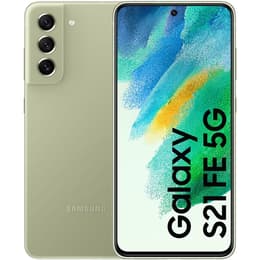
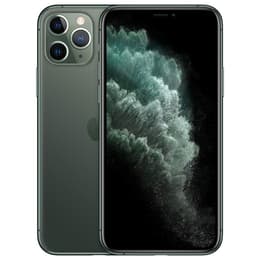
The Samsung Galaxy S21 FE 5G (Fan Edition), released in January 2022, and the Apple iPhone 11 Pro, launched in September 2019, represent different approaches to smartphone design and user experience. While the S21 FE offers a more recent Android experience with a focus on a vibrant display and 5G connectivity, the iPhone 11 Pro provides a compact iOS experience with a strong emphasis on camera performance and a robust ecosystem. These devices cater to users with distinct preferences for operating systems and feature sets.
Available Models
Colour
Storage (GB)
Scores
Durability
When considering the practical lifespan of these devices, their release timelines and software support policies are key factors.
- Release Timeline: The iPhone 11 Pro, released in September 2019, is an older device compared to the Galaxy S21 FE 5G, which launched in January 2022. This age difference directly impacts their remaining software support.
- Software Longevity: The Galaxy S21 FE 5G launched with Android 12 and is expected to receive major OS updates up to Android 16, with security updates extending for at least four years. The iPhone 11 Pro, originally on iOS 13, is anticipated to receive iOS updates until around 2026, with security patches potentially continuing for a year or two beyond that. This means the S21 FE will likely receive major OS updates for a longer period from the current date.
- Practical Lifespan: Both devices feature IP68 ratings for dust and water resistance, contributing to their physical durability. The iPhone 11 Pro's construction includes a stainless steel frame, which some users perceive as contributing to a more robust feel. The S21 FE features Gorilla Glass Victus on the front for screen protection.
Year of Release
2022
2019
Compatible with latest Update
Yes
Yes
OS
Android
iOS
Foldable
No
No
Performance
The performance of a smartphone is crucial for daily tasks, from app usage to multitasking and gaming.
- Processor Capabilities: The Galaxy S21 FE 5G is equipped with a newer generation processor, which allows it to handle demanding applications and multitasking smoothly. The iPhone 11 Pro, while featuring a powerful processor for its release year, may show some signs of aging with the latest software updates, with some users reporting occasional heating during intensive use.
- Storage Options: The Galaxy S21 FE 5G offers storage configurations of 128GB and 256GB. The iPhone 11 Pro was available in 64GB, 256GB, and 512GB options, though the 64GB base model was sometimes noted as being limited for users with extensive media libraries.
- Battery Behavior: The Galaxy S21 FE 5G has a 4500 mAh battery, which generally provides a full day of use for many users, though heavy gaming or streaming can deplete it faster. The iPhone 11 Pro, with a 3046 mAh battery, was noted for its good battery life at its release, often lasting a full day with moderate to heavy use. However, as batteries age, their capacity naturally diminishes.
Screen quality
The display is a primary interface for smartphone interaction, and both devices offer distinct viewing experiences.
- Display Technology and Size: The Galaxy S21 FE 5G features a larger 6.4-inch Dynamic AMOLED 2X display, providing vibrant colors and deep blacks. The iPhone 11 Pro has a more compact 5.8-inch Super Retina XDR OLED display, also known for its excellent color reproduction and contrast.
- Resolution and Clarity: The S21 FE offers a resolution of 1080 x 2400 pixels, resulting in a pixel density of approximately 403 pixels per inch (ppi). The iPhone 11 Pro has a resolution of 1125 x 2436 pixels, with a higher pixel density of 458 ppi, contributing to sharp image and text clarity.
- Refresh Rate and Brightness: A key difference is the refresh rate; the S21 FE supports a 120Hz refresh rate for smoother scrolling and animations, while the iPhone 11 Pro has a standard 60Hz refresh rate. Both displays offer good brightness levels, with the S21 FE having a peak brightness of 800 nits for good outdoor visibility.
Resolution
1080 x 2340
1125 x 2436
Screen type
Dynamic AMOLED 2X
Super Retina XDR OLED
Audiovisual
Both smartphones offer capable camera systems, designed to capture a variety of moments with different strengths.
- Camera System Capabilities: The Galaxy S21 FE 5G features a triple camera setup with a 12MP main lens, a 12MP ultrawide lens, and an 8MP telephoto lens with 3x optical zoom. The iPhone 11 Pro also has a triple 12MP camera system, including a wide, ultrawide, and a telephoto lens with 2x optical zoom.
- Photography Performance: The S21 FE's main camera produces colorful images, especially in well-lit conditions, and its ultrawide lens can sometimes have inconsistent color profiles compared to the main sensor. The iPhone 11 Pro is known for consistently good image quality across its three lenses, with strong performance in various conditions, including a capable Night mode for low-light photography.
- Video Recording Quality: Both devices are capable of recording 4K video at 60 frames per second (fps) from their rear cameras. The S21 FE's front camera can also record 4K video at 60fps. The iPhone 11 Pro offers strong video recording capabilities with good stabilization.
- Audio Experience: The iPhone 11 Pro is noted for its loud and clear stereo speakers, providing a good audio experience for media consumption.
Main camera
12 megapixels
12 megapixels
Front camera
32 megapixels
12 megapixels
Miscellaneous
Beyond core features, several practical elements contribute to the overall user experience of these devices.
- Connectivity Options: The Galaxy S21 FE 5G supports 5G networks, offering faster mobile data speeds where available, along with Wi-Fi 6 and Bluetooth 5.0. The iPhone 11 Pro supports 4G LTE, Wi-Fi 6, and Bluetooth 5.0.
- Port Types and Biometrics: The S21 FE utilizes a USB-C port for charging and data transfer and features an under-display optical fingerprint sensor for secure unlocking. The iPhone 11 Pro uses Apple's proprietary Lightning port and relies on Face ID for biometric authentication.
- Dimensions and Build Materials: The S21 FE measures 155.7 x 74.5 x 7.9 mm and weighs 177g, featuring a plastic back and an aluminum frame. The iPhone 11 Pro is more compact at 144 x 71.4 x 8.1 mm and weighs 188g, with a glass body and a stainless steel frame. The iPhone 11 Pro's smaller size can make it more comfortable for one-handed use.
Weight
177 g
188 g
Screen size (in)
6.4
5.8
Network
5G
4G
SIM card
Dual Physical SIM
Physical SIM + eSIM
Carrier compatibility
Unlocked
Unlocked
Connector
USB-C
Lightning
What the community thinks
The Samsung Galaxy S21 FE 5G and the iPhone 11 Pro cater to different user priorities, reflecting their distinct operating systems and release strategies. Users often praise the S21 FE for its vibrant 120Hz AMOLED display, 5G connectivity, and capable camera system, particularly in well-lit conditions. However, some users have noted concerns regarding its battery life, especially with heavy usage and the 120Hz refresh rate enabled, and occasional heating with the Exynos variant.
The iPhone 11 Pro is frequently lauded for its compact size, premium build quality, and consistent camera performance across its lenses, including its effective Night mode. Its strong processor for its generation and the smooth iOS experience are also common points of praise. Criticisms sometimes revolve around its 60Hz display refresh rate, the proprietary Lightning port, and the base storage option being limited for some users.
Users prioritizing a larger, high-refresh-rate display, 5G connectivity, and the Android ecosystem may find the Galaxy S21 FE 5G well-suited to their needs. Conversely, individuals who prefer a more compact device, the iOS ecosystem, a consistently strong camera, and a perceived premium build may lean towards the iPhone 11 Pro. Both devices offer a quality-assured refurbished option, providing an eco-friendly alternative for consumers.