

Galaxy A50 Vs iPhone 13 Pro Max

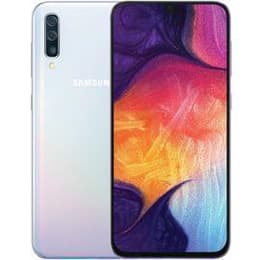
Galaxy A50
Galaxy A50
Starting at

Refurbished price:107.00

Versus €349.00 new

See options
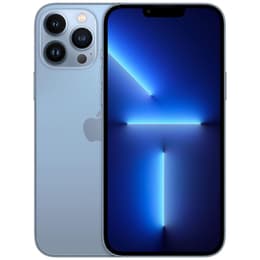
iPhone 13 Pro Max
iPhone 13 Pro Max
Starting at

Refurbished price:372.00

Versus €1,249.00 new

See options

Ratings

The Samsung Galaxy A50, an Android smartphone released in March 2019, and the Apple iPhone 13 Pro Max, an iOS flagship launched in September 2021, represent distinct approaches to mobile technology. While the Galaxy A50 was positioned as a mid-range device, the iPhone 13 Pro Max offered premium features and performance. Key differentiators include their operating systems, release timelines, and the hardware capabilities reflecting their respective market segments.

Scores

Durability

The expected practical lifespan of a smartphone is significantly influenced by its initial release date and subsequent software support.

  • Release Timeline: The Samsung Galaxy A50 was released in March 2019, making it an older device compared to the iPhone 13 Pro Max, which launched in September 2021. This age difference directly impacts their remaining support cycles.
  • Software Longevity: The Galaxy A50 received major Android OS updates up to Android 11, with official software support ending in April 2023, approximately four years after its release. In contrast, the iPhone 13 Pro Max, running on iOS, is expected to receive major iOS updates until at least 2028, and potentially 2029, offering a longer period of software support, typically 6-7 years from its release.
  • Repairability: The Galaxy A50 has a repairability score of 7.0 out of 10, with its battery and screen being relatively accessible, though adhesive is used for the back cover and battery. The iPhone 13 Pro Max received a lower repairability score of 5 out of 10, with some repairs, particularly screen replacements, potentially complicating Face ID functionality due to Apple's hardware-software linking.

Year of Release

2019

2021

Compatible with latest Update

No

Yes

OS

Android

iOS

Foldable

No

No

Performance

Performance varies considerably between these two devices, reflecting their different design philosophies and target users.

  • Processing Power: The Galaxy A50, powered by an Exynos 9610 processor, was considered a solid performer for its segment at launch, capable of handling everyday tasks. However, users reported heating issues and UI lag when running multiple demanding applications, and it was not ideal for intensive gaming. The iPhone 13 Pro Max, featuring an advanced A15 Bionic chip, delivers robust performance, ensuring smooth operation for demanding apps, multitasking, and graphics-intensive games.
  • Multitasking and Storage: The Galaxy A50 offered 4GB or 6GB of RAM and 64GB or 128GB of internal storage, expandable via microSD card up to 512GB. The iPhone 13 Pro Max comes with 6GB of RAM and a wider range of non-expandable storage options, from 128GB up to 1TB, providing ample space and efficient multitasking capabilities for professional use and content creation.
  • Battery Behavior: The Galaxy A50's 4000 mAh battery generally provided good battery life for typical use. The iPhone 13 Pro Max, with its 4352 mAh battery, was noted for its extended battery life, often lasting through a full day of heavy use. However, some iPhone 13 Pro Max users have reported battery drain issues as the device ages or after significant software updates.

Memory (GB)

4 GB

6 GB

Screen quality

The visual experience on both devices is shaped by their display technology and specifications.

  • Display Technology and Clarity: The Samsung Galaxy A50 features a 6.4-inch Super AMOLED display with a 1080x2340 pixel resolution, offering vibrant colors and deep blacks. The iPhone 13 Pro Max boasts a larger 6.7-inch Super Retina XDR display, which is an OLED panel, providing exceptional contrast, brightness, and color accuracy with a resolution of 2778x1284 pixels.
  • Brightness and Refresh Rate: The Galaxy A50 has a standard 60Hz refresh rate. The iPhone 13 Pro Max features a 120Hz ProMotion display, which dynamically adjusts the refresh rate for smoother scrolling and more fluid animations, enhancing the overall user experience, especially during gaming or fast-paced content consumption. The iPhone's display also offers higher peak brightness, improving visibility in bright outdoor conditions.
  • Screen Protection: The Galaxy A50 uses Gorilla Glass 3 for screen protection. The iPhone 13 Pro Max incorporates Apple's Ceramic Shield front cover, which offers enhanced durability against drops and scratches.

Resolution

1080 x 2340

1284 x 2778

Screen type

Super AMOLED

Super Retina XDR OLED

Audiovisual

Both smartphones offer multi-camera systems, but with different capabilities and performance levels.

  • Rear Camera System: The Galaxy A50 features a triple rear camera setup, including a 25MP wide, 8MP ultrawide, and 5MP depth sensor. User feedback on the A50's camera was mixed, with some praising its quality in good lighting but noting issues with blurriness and dullness in low-light conditions. The iPhone 13 Pro Max also has a triple 12MP camera system, comprising wide, ultrawide, and telephoto lenses, offering 3x optical zoom and 15x digital zoom. Its camera system is known for its advanced computational photography, delivering consistent results across various lighting scenarios.
  • Photography Features: The iPhone 13 Pro Max introduced features like Cinematic Mode for video, Photographic Styles, and improved macro photography capabilities, enhancing creative options for users. While the Galaxy A50's chipset supported 4K recording, its default camera app limited video resolution to 1080p. The iPhone 13 Pro Max supports 4K video recording at 24fps.
  • Audio Experience: The iPhone 13 Pro Max provides a rich media consumption experience with its speaker output. The Galaxy A50's speaker was described by some users as tinny by default, though adjustable with EQ settings.

Main camera

25 megapixels

12 megapixels

Front camera

25 megapixels

12 megapixels

Miscellaneous

Beyond core features, several practical elements differentiate these two devices in daily use.

  • Connectivity: The Galaxy A50 supports standard Wi-Fi and Bluetooth 5.0, and 4G LTE networks. The iPhone 13 Pro Max offers more advanced connectivity, including 5G capabilities, newer Wi-Fi standards, and Bluetooth, providing faster data speeds and more reliable connections. However, some iPhone 13 Pro Max users have reported issues with cellular data and Wi-Fi connectivity.
  • Ports and Biometrics: The Galaxy A50 uses a USB Type-C port for charging and data transfer and features an in-display optical fingerprint sensor for security. The iPhone 13 Pro Max utilizes Apple's proprietary Lightning port, which operates at USB 2.0 speeds, and relies on Face ID for biometric authentication. It does not include a fingerprint reader.
  • Design and Build: The Galaxy A50 has a plastic body with a Gorilla Glass 3 front, weighing 166g. It lacks official water resistance. The iPhone 13 Pro Max features a more premium build with a Ceramic Shield front, matte glass back, and stainless steel frame, weighing 240g. It also boasts an IP68 rating for water and dust resistance, allowing submersion up to 6 meters for 30 minutes.

Weight

166 g

238 g

Width

7,47 cm

7,81 cm

Height

15,85 cm

16,08 cm

Depth

0,77 cm

0,76 cm

Screen size (in)

6.4

6.7

Network

4G

5G

SIM card

Dual Physical SIM

Physical SIM + eSIM

Carrier compatibility

Unlocked

Unlocked

Connector

USB-C + Jack 3.5mm

Lightning

User feedback for the Samsung Galaxy A50 often praised its Super AMOLED display and decent battery life for its segment at the time of its release. However, common criticisms included performance limitations with heavy use, occasional software lag, and camera inconsistencies in challenging lighting. Some users also reported manufacturing issues like screen failures or frame bending.

For the iPhone 13 Pro Max, users frequently lauded its powerful performance, exceptional display quality, and extended battery life. Common concerns included battery drain over time or after iOS updates, potential issues with Face ID, and the Lightning port's slower data transfer speeds compared to more modern standards.

Users prioritizing a device for everyday communication, media consumption, and light productivity, who appreciate an expandable storage option and a more accessible repair process, might find the Galaxy A50 suitable. Its Android operating system offers greater customization. Conversely, users who require top-tier performance for demanding applications, advanced photography and videography features, a longer software support lifespan, and a premium build quality will find the iPhone 13 Pro Max better suited to their needs. Its iOS ecosystem provides a streamlined user experience and robust security features.

For those considering either device, exploring quality-assured refurbished options can provide a sustainable choice, extending the life of these electronics and offering an eco-friendly alternative.


See all articles

Our recent comparisons