

Galaxy A13 Vs Galaxy A23 5G

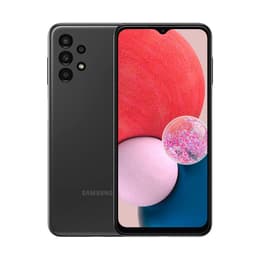
Galaxy A13
Galaxy A13
Starting at

Refurbished price:97.00

Versus €249.00 new

See options
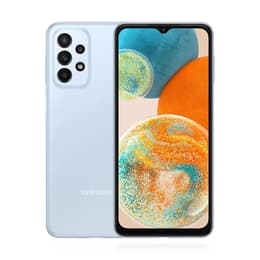
Galaxy A23 5G
Galaxy A23 5G
Starting at

Refurbished price:108.00

Versus €600.00 new

See options

Ratings

The Samsung Galaxy A13, released in March 2022, and the Samsung Galaxy A23 5G, launched in September 2022, are both smartphones designed for everyday use. While they share a similar design philosophy and operate on the Android platform, the Galaxy A23 5G introduces enhancements in connectivity, display fluidity, and overall processing power, setting it apart from its predecessor.

Scores

Durability

When considering the practical lifespan of these devices, several factors come into play, including their release timelines, software support, and physical durability.

  • Release Timeline: The Galaxy A13 was introduced in March 2022, while the Galaxy A23 5G followed a few months later in September 2022. This difference in launch dates means the Galaxy A23 5G inherently benefits from a slightly newer hardware foundation.
  • Software Longevity: Both devices launched with Android 12. The Galaxy A13 has received two major Android OS updates, reaching Android 14, and is no longer eligible for further major OS upgrades as of early 2025. The Galaxy A23 5G is also slated for two major OS upgrades and four years of security updates, having already reached Android 14. This suggests that by early 2026, both devices are likely at the end of their major OS update cycle, though security updates may continue for a period.
  • Physical Durability: Both the Galaxy A13 and Galaxy A23 5G feature Corning Gorilla Glass 5 protection for their displays, offering a similar level of resistance against scratches and drops. The build materials for both are primarily plastic, with the A13 4G having a glossy finish and the A13 5G and A23 5G opting for a matte plastic back.

Year of Release

2022

2022

Compatible with latest Update

No

Yes

OS

Android

Android

Foldable

No

No

Performance

The performance capabilities of these two smartphones show a notable difference, primarily due to their internal components, impacting how smoothly they handle daily tasks and more demanding applications.

  • Processor Capabilities: The Galaxy A13 is equipped with an internal processor that handles everyday tasks. User experiences indicate that this processor can sometimes lead to slower app loading and occasional stutters during navigation or when running multiple applications. In contrast, the Galaxy A23 5G features a more capable current-generation processor, which provides a faster and more efficient experience for multitasking, app usage, and even some mobile gaming.
  • System Responsiveness: The Galaxy A23 5G generally offers a more responsive user experience, with smoother transitions and quicker execution of commands. This is particularly noticeable when switching between apps or engaging with interactive content. The Galaxy A13, while functional, may exhibit delays in similar scenarios.
  • Storage and RAM: Both models offer various configurations for internal storage and RAM, typically ranging from 3GB to 6GB of RAM and 32GB to 128GB of storage for the A13, and 4GB to 8GB of RAM with 64GB or 128GB of storage for the A23 5G. Both also support expandable storage via a microSD card, allowing users to increase their storage capacity significantly.

Memory (GB)

4 GB

4 GB

Screen quality

The visual experience on these devices is shaped by their display technology, resolution, and refresh rates, affecting clarity and smoothness during interaction.

  • Display Technology and Resolution: Both the Galaxy A13 and Galaxy A23 5G feature a 6.6-inch PLS LCD display with Full HD+ resolution (1080 x 2408 pixels). This resolution provides clear and sharp visuals for general content consumption, such as browsing, watching videos, and viewing photos.
  • Refresh Rate: A key difference lies in the refresh rate. The standard Galaxy A13 (4G) has a 60Hz refresh rate, which is typical for many smartphones and provides a standard viewing experience. The Galaxy A23 5G, however, boasts a 120Hz refresh rate, resulting in noticeably smoother scrolling, more fluid animations, and a more responsive feel during interactions. A 5G variant of the A13 also offers a 90Hz refresh rate.
  • Brightness and Clarity: Both displays offer adequate brightness for indoor use, and the FHD+ resolution ensures content appears crisp. For outdoor visibility, the higher refresh rate on the A23 5G can contribute to a perception of better clarity, especially with moving content.

Resolution

1080 x 2408

1080 x 2408

Screen type

PLS LCD

PLS LCD

Audiovisual

Both smartphones are equipped with multi-lens camera systems, but the Galaxy A23 5G introduces a significant enhancement that impacts overall image and video stability.

  • Rear Camera System: The Galaxy A13 (4G) features a quad-camera setup with a 50MP main sensor, a 5MP ultrawide, a 2MP macro, and a 2MP depth sensor. The Galaxy A23 5G also comes with a quad-camera system, including a 50MP main sensor, a 5MP ultrawide, a 2MP macro, and a 2MP depth sensor. A notable advantage for the Galaxy A23 5G is the inclusion of Optical Image Stabilization (OIS) on its main 50MP camera, which helps reduce blur in photos and videos, especially in challenging lighting conditions or when the device is in motion. The A13 does not feature OIS.
  • Photography Performance: Both devices are capable of capturing detailed images in good lighting with their 50MP main sensors, which typically use pixel binning to produce 12.5MP photos. The ultrawide and macro lenses on both offer versatility for different shot types, though their lower resolution means less detail compared to the main sensor. User reviews for the A23 5G often praise its camera capabilities, particularly its performance in various lighting conditions.
  • Video Recording and Audio: Both phones record video at up to 1080p resolution at 30 frames per second from both front and rear cameras. The lack of OIS on the A13 means video footage can be prone to shakiness if not held steady. The A23 5G's OIS provides a more stable video recording experience. Both include a 3.5mm headphone jack for audio output.

Main camera

50 megapixels

50 megapixels

Front camera

8 megapixels

8 megapixels

Miscellaneous

Beyond core performance and display, several practical features contribute to the overall user experience and daily convenience of these smartphones.

  • Connectivity: The most significant difference in connectivity is the support for 5G networks on the Galaxy A23 5G, enabling faster download and upload speeds in areas with 5G coverage. The standard Galaxy A13 is limited to 4G LTE. Both support Wi-Fi 5 (802.11 a/b/g/n/ac) and Bluetooth 5.0 (A13) or 5.1 (A23 5G). Both also include NFC for contactless payments.
  • Ports and Sensors: Both devices feature a USB-C 2.0 port for charging and data transfer, along with a 3.5mm headphone jack. For security, both integrate a side-mounted fingerprint sensor.
  • Physical Characteristics: The Galaxy A13 measures 165.1 x 76.4 x 8.8 mm and weighs 195g. The Galaxy A23 5G is slightly different at 165.4 x 76.9 x 8.4 mm and weighs 197g. These dimensions mean both phones offer a substantial screen size while remaining manageable for single-handed use, though the A23 5G is marginally thinner.

Weight

195 g

197 g

Screen size (in)

6.6

6.6

Network

4G

5G

SIM card

Dual Physical SIM

Dual Physical SIM

Carrier compatibility

Unlocked

Unlocked

The Samsung Galaxy A13 and Galaxy A23 5G cater to users with varying priorities, offering distinct advantages in key areas. User feedback for the Galaxy A23 5G frequently highlights its camera capabilities, particularly its quality and performance in diverse lighting conditions, and its long battery life. The smoother display and faster performance are also commonly praised. For the Galaxy A13, its robust battery life is often a positive point, but criticisms sometimes point to its slower processor impacting overall responsiveness.

Users prioritizing a more fluid visual experience and faster network speeds will find the Galaxy A23 5G well-suited to their needs, especially with its 120Hz display and 5G connectivity. Its main camera with Optical Image Stabilization also makes it a stronger choice for those who frequently capture photos and videos and desire more stable results. The enhanced processing power of the Galaxy A23 5G also benefits users who engage in more demanding applications or extensive multitasking.

Conversely, users who primarily need a reliable smartphone for essential communication, web browsing, and casual media consumption, and who do not require the fastest performance or 5G connectivity, may find the Galaxy A13 to be a practical option. Its battery life remains a strong point for users seeking extended usage between charges. Both devices offer expandable storage, which is beneficial for users with large media libraries or numerous applications.

Ultimately, the decision between these two models hinges on the importance placed on display smoothness, camera stability, and network speed. Both devices are available as quality-assured refurbished options, providing an eco-friendly alternative for consumers.


See all articles

Our recent comparisons