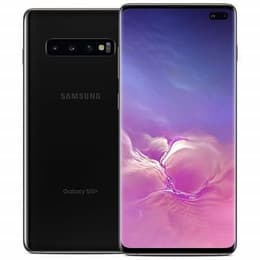
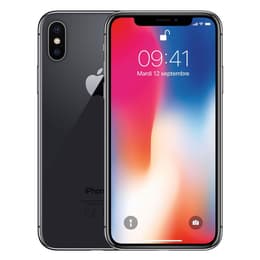


Galaxy S10+ Vs iPhone X

Galaxy S10+
Galaxy S10+
Starting at

Refurbished price:135.00

Versus €1,009.00 new

See options
iPhone X
iPhone X
Starting at

Refurbished price:113.00

Versus €439.00 new

See options

Ratings

The Samsung Galaxy S10 Plus (released March 2019) and the iPhone X (released November 2017) are both prominent smartphones from their respective manufacturers. While the Galaxy S10 Plus runs on the Android operating system, the iPhone X operates on iOS, offering distinct user experiences. Key differentiators between these models include their display technologies, camera systems, and biometric security methods.

Scores

Durability

When considering the practical lifespan of these devices, several factors come into play, including their release timelines, software support, and repairability.

  • Release Timeline: The Galaxy S10 Plus, launched in March 2019, is approximately a year and a half newer than the iPhone X, which was released in November 2017. This difference in age can impact the duration of future software updates.
  • Software Longevity: The iPhone X typically received major iOS updates for about 5-6 years from its release, with security updates potentially extending beyond that. The Galaxy S10 Plus, running Android, generally received 3-4 major OS updates and continued security patches for a few years after that. As of 2026, both devices have likely reached the end of major OS updates, but may still receive critical security patches.
  • Repairability: The iPhone X received a repairability score of 6 out of 10 from iFixit, noting that the display and battery are relatively easy to replace without affecting Face ID components. In contrast, the Galaxy S10 Plus received a lower repairability score of 3 out of 10 from iFixit, largely due to the extensive use of adhesive and the complexity of accessing internal components, particularly the screen and battery.

Year of Release

2019

2017

Compatible with latest Update

No

No

OS

Android

iOS

Foldable

No

No

Performance

The performance of a smartphone is crucial for daily use, influencing app responsiveness, multitasking capabilities, and overall user experience.

  • Processing Power: The Galaxy S10 Plus, with its newer generation processor, generally offers faster CPU and GPU speeds compared to the iPhone X. This translates to smoother operation for demanding applications and more fluid gaming experiences.
  • Multitasking and Storage: The Galaxy S10 Plus typically came with more RAM options (8GB or 12GB) and a wider range of internal storage configurations (128GB up to 1TB) compared to the iPhone X (3GB RAM, 64GB or 256GB storage). The additional RAM in the S10 Plus can lead to more seamless multitasking, allowing users to switch between multiple open applications without significant slowdowns. The S10 Plus also supports expandable storage via a microSD card, a feature not present on the iPhone X.
  • Battery Performance: The Galaxy S10 Plus features a larger battery capacity (4100 mAh) than the iPhone X (2716 mAh). In real-world usage, the Galaxy S10 Plus generally provides longer battery life, often lasting a full day of intense use or more with moderate usage. The iPhone X's battery life was considered decent for its time, often getting users through a day, but heavy users might find themselves needing to recharge before the day ends.

Memory (GB)

8 GB

3 GB

Screen quality

The display is a primary interface for smartphone interaction, and both devices offer distinct visual experiences.

  • Display Technology and Size: The Galaxy S10 Plus features a 6.4-inch Dynamic AMOLED display, while the iPhone X has a 5.8-inch Super Retina OLED display. Both utilize OLED technology, known for deep blacks and vibrant colors. The S10 Plus offers a larger screen-to-body ratio due to its punch-hole camera design, while the iPhone X introduced the notch design.
  • Resolution and Clarity: The Galaxy S10 Plus boasts a higher resolution of 1440 x 3040 pixels, resulting in a pixel density of approximately 522 ppi. The iPhone X has a resolution of 1125 x 2436 pixels, with a pixel density of about 458 ppi. While both offer sharp visuals, the S10 Plus provides a slightly crisper image due to its higher pixel density.
  • Brightness and Features: Both displays support HDR content, offering enhanced contrast and color. The Galaxy S10 Plus's Dynamic AMOLED display is known for its high brightness levels, which can be beneficial for outdoor visibility. The iPhone X's Super Retina display also offers good brightness and features True Tone technology, which adjusts the display's white balance to match ambient light.

Resolution

1440 x 3040

1125 x 2436

Screen type

Dynamic AMOLED

Super Retina OLED

Audiovisual

The camera systems on both the Galaxy S10 Plus and iPhone X were considered advanced for their respective release times, offering various features for photography and videography.

  • Rear Camera System: The Galaxy S10 Plus features a versatile triple-camera setup on the rear, including a 12MP wide-angle lens with variable aperture, a 12MP telephoto lens with 2x optical zoom, and a 16MP ultrawide lens. This ultrawide lens provides a broader field of view, useful for landscapes and group shots. The iPhone X has a dual 12MP rear camera system, consisting of a wide-angle lens and a telephoto lens, both with optical image stabilization and 2x optical zoom.
  • Photography Performance: The Galaxy S10 Plus generally produces vibrant and detailed photos, with its ultrawide lens offering creative flexibility. Its low-light performance was improved with software updates, though some users noted it could be inconsistent. The iPhone X's camera is known for its consistent image quality, good color reproduction, and reliable performance in various conditions. Its Portrait mode, which creates a depth-of-field effect, was a notable feature.
  • Video Recording and Front Camera: Both devices are capable of recording 4K video. The Galaxy S10 Plus can record 4K at 60fps and offers a dual front camera setup (10MP wide and 8MP depth sensor) capable of 4K selfie video. The iPhone X records 4K video at up to 60fps and features a 7MP TrueDepth front camera that enables Face ID and Portrait mode selfies.

Main camera

12 megapixels

12 megapixels

Front camera

10 megapixels

7 megapixels

Miscellaneous

Beyond core features, several other elements contribute to the overall user experience and practical utility of these smartphones.

  • Biometric Security: The Galaxy S10 Plus introduced an ultrasonic in-display fingerprint sensor for secure unlocking and authentication. The iPhone X pioneered Face ID, Apple's facial recognition system, which uses a TrueDepth camera for secure unlocking and payments.
  • Connectivity and Ports: The Galaxy S10 Plus supports Wi-Fi 6 and Bluetooth 5.0, and some variants offered 5G connectivity. It also retains a 3.5mm headphone jack and uses a USB-C port for charging and data transfer. The iPhone X supports Wi-Fi 5 (802.11ac) and Bluetooth 5.0, and uses Apple's proprietary Lightning port. It does not have a headphone jack.
  • Build Materials and Design: Both phones feature a glass front and back with a metal frame. The Galaxy S10 Plus uses Gorilla Glass 6 on the front and Gorilla Glass 5 on the back with an aluminum frame, while the iPhone X has durable glass on both sides and a surgical-grade stainless steel frame. The S10 Plus is also IP68 rated for dust and water resistance, offering slightly better protection than the iPhone X's IP67 rating.

Weight

175 g

174 g

Width

7,41 cm

7,09 cm

Height

15.76 cm

14,36 cm

Depth

0,78 cm

0,77 cm

Screen size (in)

6.4

5.8

Network

4G

4G

SIM card

Physical SIM

Physical SIM

Carrier compatibility

Unlocked

Unlocked

Connector

USB-C + Jack 3.5mm

Lightning

The Samsung Galaxy S10 Plus and iPhone X, while both premium devices from their respective eras, cater to slightly different user preferences and priorities. Users often praised the Galaxy S10 Plus for its expansive and vibrant display, versatile triple-camera system, and the inclusion of a headphone jack and expandable storage. Its longer battery life was also a frequent highlight, making it suitable for users who need their device to last through extended periods of use. Some criticisms occasionally pointed to the complexity of Samsung's software interface for some users, and its lower repairability score compared to the iPhone X.

The iPhone X, on the other hand, was lauded for its innovative Face ID technology, consistent camera performance, and the intuitive and streamlined iOS experience. Its compact form factor for an all-screen device was also a significant draw. Common user concerns sometimes revolved around its battery life, which, while adequate, was not as long-lasting as some Android counterparts, and the absence of a headphone jack and expandable storage.

Users prioritizing a larger, more customizable display, a highly versatile camera with an ultrawide lens, and the convenience of a headphone jack and expandable storage may find the Galaxy S10 Plus better suited to their needs. This could include professionals who require extensive storage for files or students who appreciate the flexibility of Android. Conversely, users who value a highly secure and seamless facial recognition system, a consistent and user-friendly operating system, and a more compact design might lean towards the iPhone X. Both devices, available as quality-assured refurbished options, offer an eco-friendly alternative for consumers seeking reliable technology.


See all articles

Our recent comparisons





