
Compare models

Google Pixel Fold Vs iPhone 16 Plus

  • 1-year minimum warranty
  • Free delivery on all orders
  • Free 30-day returns
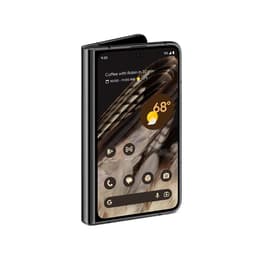
Google Pixel Fold
Starting at

Refurbished price:418.00

Versus €1,750.29 new

See options
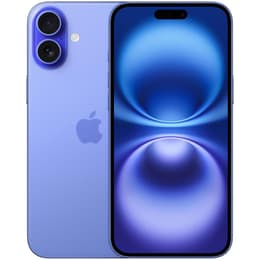
iPhone 16 Plus
Starting at

Refurbished price:530.00

Versus €979.00 new

See options

Differences at a glance

The Google Pixel Fold, released in June 2023, introduced a unique foldable design to the smartphone market, offering a compact outer display that unfolds into a larger tablet-like screen. In contrast, the iPhone 16 Plus, launched in September 2024, represents Apple's latest iteration of its large-screen traditional smartphone, focusing on enhanced performance, camera capabilities, and the iOS ecosystem. These devices cater to different user preferences, with the Pixel Fold emphasizing screen versatility and the iPhone 16 Plus prioritizing a streamlined, powerful slab experience.

Available Models

Colour

Storage (GB)

Scores

Durability

When considering the long-term usability of these devices, their release timelines and software support are key factors.

  • Release Timeline and OS Support: The Google Pixel Fold, released in June 2023, launched with Android 13 and is expected to receive three years of major OS updates and five years of security updates. This means its official software support will likely conclude around mid-2028 for OS updates and mid-2030 for security patches. The iPhone 16 Plus, released in September 2024, benefits from Apple's typically longer software support, often extending to five to seven years of iOS updates, suggesting support well into the early 2030s.
  • Durability and Repairability: The Pixel Fold features an IPX8 water resistance rating, but its inner foldable screen, protected by a plastic layer, is more susceptible to scratches than traditional glass displays. Early reports also indicated concerns about the frame's integrity under pressure. The iPhone 16 Plus, with its Ceramic Shield front and IP68 dust and water resistance, offers a more conventional and generally robust build.
  • Practical Lifespan: Users prioritizing the latest software features and security updates for the longest possible duration may find the iPhone 16 Plus offers a longer practical lifespan. The Pixel Fold's unique form factor introduces specific durability considerations for its folding mechanism and inner display, which users should factor into their long-term expectations.

Year of Release

2023

2024

Compatible with latest Update

Yes

Yes

Foldable

Yes

No

Performance

The performance of a smartphone is crucial for daily tasks, from app usage to demanding multimedia experiences.

  • Processor Capabilities: The Google Pixel Fold is powered by the Google Tensor G2 chip, which provides efficient performance for everyday applications and Google's advanced AI features. The iPhone 16 Plus features Apple's A18 chip, which is designed for significant performance improvements, including faster CPU and GPU speeds, and is optimized for Apple Intelligence features.
  • Multitasking and Responsiveness: With 12GB of RAM, the Pixel Fold handles multitasking smoothly, allowing users to run multiple applications on its larger inner display. The iPhone 16 Plus, equipped with 8GB of RAM, also offers robust multitasking capabilities and overall system responsiveness within the iOS ecosystem, particularly with the integration of Apple Intelligence.
  • Storage Options and Battery Behavior: Both devices offer various storage configurations, with the Pixel Fold available in 256GB and 512GB options, and the iPhone 16 Plus in 128GB, 256GB, and 512GB. The Pixel Fold has a 4821 mAh battery, providing a full day of typical use. The iPhone 16 Plus, while rumored to have a slightly smaller battery capacity than its predecessor, is still expected to deliver excellent battery life, a hallmark of Apple's Plus models.

Screen quality

The display is a primary interaction point, and both devices offer distinct visual experiences.

  • Display Technology and Resolution: The Google Pixel Fold features two OLED displays: a 5.8-inch outer screen with a 1080 x 2092 pixel resolution and a 7.6-inch inner foldable screen with an 1840 x 2208 pixel resolution. Both offer vibrant colors and deep blacks. The iPhone 16 Plus sports a single 6.7-inch Super Retina XDR OLED display with a 2796 x 1290 pixel resolution, known for its clarity and color accuracy.
  • Brightness and Refresh Rate: Both displays on the Pixel Fold support a 120Hz refresh rate, providing smooth scrolling and animations, with peak brightness levels of 1550 nits for the outer screen and 1450 nits for the inner screen. The iPhone 16 Plus maintains a 60Hz refresh rate but offers a high peak outdoor brightness of 2000 nits, ensuring good visibility in bright conditions.
  • Viewing Experience and Form Factor: The Pixel Fold's wider outer screen is comfortable for one-handed use, while its inner screen provides an expansive canvas for multitasking and media consumption, though it may show a visible crease. The iPhone 16 Plus offers a consistent, large-screen experience with its traditional slab design, featuring the Dynamic Island for notifications and interactions.

Resolution

1840 x 2208

1290 x 2796

Screen type

Foldable OLED

Super Retina XDR OLED

Audiovisual

Both smartphones offer advanced camera systems, leveraging computational photography for impressive results.

  • Rear Camera Systems: The Google Pixel Fold includes a triple rear camera setup: a 48MP main sensor with optical image stabilization, a 10.8MP ultrawide lens, and a 10.8MP telephoto lens with 5x optical zoom. The iPhone 16 Plus features a dual-camera system with a 48MP main camera (referred to as Fusion Main) that can achieve a 2x telephoto effect through cropping, and a 12MP ultrawide lens.
  • Photography Performance: The Pixel Fold is known for its strong computational photography, delivering balanced images with good color and detail, especially with its main and telephoto lenses. The iPhone 16 Plus, with its A18 chip, offers enhanced computational photography, improved low-light performance, and a new vertical camera arrangement that enables Spatial Video recording.
  • Video Recording and Audio: Both devices support 4K video recording at 60fps. The Pixel Fold's video performance is robust, offering good detail and smooth movement. The iPhone 16 Plus also excels in video, with features like Cinematic mode and HDR video recording, and is expected to offer high-quality microphone performance for calls and recordings, alongside stereo speaker output for media consumption.

Main camera

48 megapixels

48 megapixels

Front camera

8 megapixels

12 megapixels

Miscellaneous

Beyond core features, several practical elements contribute to the overall user experience.

  • Connectivity and Ports: Both the Google Pixel Fold and the iPhone 16 Plus support 5G connectivity for fast mobile data. The Pixel Fold includes Wi-Fi 6E and Bluetooth 5.2, while the iPhone 16 Plus is expected to feature Wi-Fi 6E and Bluetooth 5.3, offering faster wireless speeds and improved connections. The Pixel Fold uses a USB-C port, as does the iPhone 16 Plus.
  • Biometrics and User Interface: The Pixel Fold incorporates a side-mounted fingerprint sensor for secure unlocking. The iPhone 16 Plus relies on Face ID for biometric authentication. The iPhone 16 Plus also introduces an Action Button, customizable for various functions, and a new Capture Button for camera controls.
  • Physical Design and Handling: The Pixel Fold weighs 283 grams and, when folded, measures 139.7 x 79.5 x 12.1 mm, feeling like two phones stacked. When unfolded, it offers a large, thin display. The iPhone 16 Plus is lighter at 199 grams and measures 160.9 x 77.8 x 7.8 mm, providing a more traditional, single-device feel. The Pixel Fold's design allows for unique usage modes, such as 'tent mode' for media viewing.

Weight

283 g

199 g

Screen size (in)

7.6

6.7

Network

5G

5G

SIM card

Physical SIM + eSIM

eSIM

Carrier compatibility

Unlocked

Unlocked

Connector

USB-C

USB-C (USB 2)

What the community thinks

The Google Pixel Fold and the iPhone 16 Plus cater to distinct user needs, each excelling in different areas. Users often praise the Pixel Fold for its innovative foldable design, which provides a versatile large screen for multitasking and media consumption, making it suitable for those who frequently switch between phone and tablet-like experiences. Its camera system, backed by Google's computational photography, also receives positive remarks for producing consistent and balanced images. However, some users have expressed concerns regarding the durability of the inner display and the overall weight of the device.

The iPhone 16 Plus is frequently lauded for its powerful performance, long-term software support, and robust camera capabilities, particularly its video recording features. Users appreciate the consistent and intuitive iOS experience, along with the device's strong build quality and reliable battery life. Criticisms sometimes point to the lack of a high refresh rate display compared to some competitors.

Users prioritizing a large, expansive screen for productivity and entertainment, coupled with the flexibility of a foldable form factor, may find the Google Pixel Fold well-suited to their needs. Its unique design allows for novel interaction methods and a distinct user experience. Conversely, users who value a powerful, traditional smartphone with a focus on consistent performance, a highly refined operating system, and extended software longevity, along with a robust camera for both photos and videos, may lean towards the iPhone 16 Plus. Both devices offer compelling features, and considering a quality-assured refurbished option can be an eco-friendly alternative for either model.