


Compare models

Galaxy S10e Vs Huawei P30 Pro

  • 1-year minimum warranty
  • Free delivery on all orders
  • Free 30-day returns
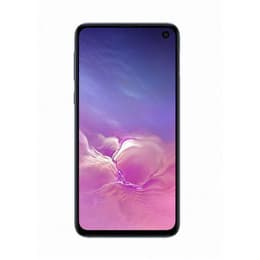
Galaxy S10e
Galaxy S10e
Starting at

Refurbished price:114.00

Versus €759.00 new

See options
Huawei P30 Pro
Huawei P30 Pro
Starting at

Refurbished price:160.00

Versus €849.00 new

See options

Differences at a glance

The Samsung Galaxy S10e and the Huawei P30 Pro, both released in 2019, represent distinct approaches to flagship smartphone design. While the Galaxy S10e offers a compact form factor with a flat display, the Huawei P30 Pro emphasizes a larger screen and advanced camera capabilities. Both devices launched with Android 9.0 Pie, offering a similar software foundation at their release.

Available Models

Colour

Storage (GB)

Scores

Durability

When considering the long-term usability of these devices, several factors contribute to their expected lifespan.

  • Release Timeline: Both the Galaxy S10e and the Huawei P30 Pro were released in early 2019, placing them in a similar generation of smartphone technology.
  • Software Support: The Galaxy S10e typically received major Android updates for a few years post-launch, with security updates extending beyond that. The Huawei P30 Pro's software update trajectory became more complex due to external factors, though it initially ran Android 9.0 Pie with EMUI.
  • Repairability: Both devices present challenges for repair. The Galaxy S10e received a repairability score of 3 out of 10 from iFixit, largely due to extensive adhesive and a soldered charging port. The Huawei P30 Pro scored slightly better at 4 out of 10, also noted for heavy use of adhesive but with some modular components like the USB-C port.

Year of Release

2019

2019

Compatible with latest Update

No

No

OS

Android

Android

Foldable

No

No

Performance

The core performance of a smartphone dictates its responsiveness and ability to handle demanding applications.

  • Processor Capabilities: The Galaxy S10e is powered by a processor designed for flagship performance in 2019, enabling smooth navigation, efficient app loading, and capable handling of graphics-intensive games. The Huawei P30 Pro features a comparable processor from the same era, providing a fluid user experience for daily tasks and maintaining stability during extended gaming sessions.
  • Battery Behavior: The Galaxy S10e houses a 3100 mAh battery, which for heavy users may require more frequent charging throughout the day. In contrast, the Huawei P30 Pro is equipped with a larger 4200 mAh battery, often noted by users for its ability to last through a full day of intensive use and sometimes longer.
  • Storage and Multitasking: Both devices offer 128GB of internal storage as a base option, with the Galaxy S10e also available in 256GB and the P30 Pro in 256GB or 512GB variants. Both typically come with 6GB or 8GB of RAM, allowing for effective multitasking and app switching without significant slowdowns.

Screen quality

The visual experience is a primary interaction point, and both phones offer distinct display characteristics.

  • Display Technology and Size: The Galaxy S10e features a 5.8-inch Dynamic AMOLED flat display, known for its vibrant colors and deep blacks. The Huawei P30 Pro sports a larger 6.47-inch OLED display with curved edges, providing an expansive viewing area.
  • Resolution and Clarity: Both smartphones offer Full HD+ resolutions (2280x1080 for S10e, 2340x1080 for P30 Pro), delivering sharp images and text for everyday viewing. The pixel density is high enough on both for clear visuals without visible pixelation.
  • Brightness and Refresh Rate: Both devices feature a standard 60 Hz refresh rate, providing smooth scrolling and animations typical of their release period. The Dynamic AMOLED panel on the S10e and the OLED on the P30 Pro both offer good brightness levels, contributing to comfortable outdoor visibility.

Resolution

1080 x 2280

1080 x 2340

Screen type

Dynamic AMOLED

OLED

Audiovisual

Photography capabilities are a significant differentiator, with each device offering a distinct camera philosophy.

  • Rear Camera Systems: The Galaxy S10e includes a dual-camera setup with a 12-megapixel wide-angle lens and a 16-megapixel ultra-wide lens, capable of capturing detailed and colorful everyday shots. The Huawei P30 Pro features a more extensive quad-camera system, highlighted by a 40-megapixel main sensor, a 20-megapixel ultra-wide, an 8-megapixel periscope telephoto lens offering 5x optical zoom, and a Time-of-Flight (ToF) sensor for depth sensing.
  • Low-Light and Zoom Performance: The P30 Pro was particularly noted for its exceptional low-light performance, capable of capturing bright and detailed images in very dim conditions. Its periscope zoom also provides significant optical magnification. The S10e performs well in good lighting, but its low-light capabilities are more standard, and it relies on digital zoom.
  • Video and Selfie Cameras: Both phones offer capable video recording, with the S10e supporting up to 4K at 60fps and the P30 Pro at 4K 30fps. For selfies, the S10e has a 10-megapixel front camera, while the P30 Pro features a higher-resolution 32-megapixel front camera.

Main camera

12 megapixels

40 megapixels

Front camera

10 megapixels

32 megapixels

Miscellaneous

Beyond the core specifications, several practical features influence the daily user experience.

  • Connectivity and Ports: Both devices support modern Wi-Fi standards (Wi-Fi 6 for S10e, Wi-Fi 5 for P30 Pro) and Bluetooth 5.0. The Galaxy S10e retains a 3.5mm headphone jack, which is absent on the Huawei P30 Pro. Both utilize a USB-C port for charging and data transfer.
  • Biometrics and Design: The Galaxy S10e features a side-mounted capacitive fingerprint sensor integrated into the power button, which many users find fast and convenient. The Huawei P30 Pro incorporates an optical in-display fingerprint sensor. Both phones are IP68 rated for dust and water resistance.
  • Physical Characteristics: The Galaxy S10e is the more compact device, weighing 150 grams and measuring 142.2 x 69.9 x 7.9 mm, making it suitable for one-handed use. The Huawei P30 Pro is larger and heavier at 192 grams and 158 x 73.4 x 8.4 mm.

Weight

150 g

192 g

Screen size (in)

5.8

6.47

Network

4G

4G

SIM card

Physical SIM

Dual Physical SIM

Carrier compatibility

Unlocked

Unlocked

Connector

USB-C + Jack 3.5mm

USB-C

What the community thinks

User feedback for the Samsung Galaxy S10e often highlights its appealing compact size, the convenience of its flat display, and the responsive side-mounted fingerprint sensor. However, some users noted its battery life as being less robust compared to larger devices. The Huawei P30 Pro consistently receives praise for its exceptional camera system, particularly its low-light performance and impressive optical zoom capabilities. Its extended battery life is another frequently lauded aspect. Criticisms sometimes point to its software experience or the curved display design not suiting all preferences.

Users prioritizing a compact device that is easy to handle with one hand and features a traditional flat screen may find the Galaxy S10e well-suited to their needs. Those who place a high value on advanced photography features, especially in challenging lighting conditions or with significant zoom, and require extended battery life, will likely lean towards the Huawei P30 Pro. Both devices offer solid performance for everyday tasks, making the choice largely dependent on preferences for size, camera capabilities, and battery endurance. For consumers seeking a quality-assured refurbished option, both models are available, providing an eco-friendly alternative to purchasing new.