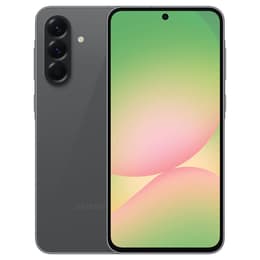
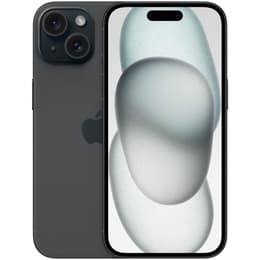

Galaxy A56 Vs iPhone 15

Galaxy A56
Galaxy A56
Starting at

Refurbished price:332.00

Versus €791.10 new

See options
iPhone 15
iPhone 15
Starting at

Refurbished price:397.00

Versus €879.00 new

See options

Ratings

The iPhone 15, released in September 2023, and the Samsung Galaxy A57, announced in March 2026, represent distinct approaches to smartphone design and functionality. While the iPhone 15 offers a premium experience within Apple's ecosystem, the Galaxy A57 aims to deliver a feature-rich Android experience with a focus on long-term support. Key differentiators include their operating systems, core processing power, and display refresh rates.

Scores

Durability

When considering the long-term usability of these devices, both offer substantial software support, though with different timelines and ecosystems.

  • Release Timeline and OS Support: The iPhone 15, launched in September 2023, runs on iOS and typically receives major software updates for five to six years from its release. The Galaxy A57, announced in March 2026, ships with Android 16 and is committed to six generations of Android OS upgrades and six years of security updates, extending its support well into the future. [35, 37]
  • Durability Features: The iPhone 15 features a Ceramic Shield front cover and an aluminum design with a color-infused glass back, offering IP68 water and dust resistance. [3, 6, 12, 32] The Galaxy A57 also boasts an IP68 rating for water and dust resistance, along with a durable build that includes Gorilla Glass Victus+ protection. [35]
  • Battery Longevity: Apple states that iPhone 15 batteries are designed to retain 80% of their original capacity after 1,000 complete charge cycles under ideal conditions, an improvement over previous models. [5, 16] The Galaxy A57's large battery capacity and efficient chipset contribute to its overall lifespan, with optimized charging features also helping to preserve battery health over time.

Year of Release

2025

2023

Compatible with latest Update

Yes

Yes

OS

Android

iOS

Foldable

No

No

Performance

Performance varies significantly between these two devices, reflecting their different market segments and design philosophies.

  • Processing Power: The iPhone 15 is equipped with a powerful current-generation processor, enabling smooth operation for demanding applications, complex multitasking, and graphics-intensive gaming. [2, 6, 11, 14, 31] The Galaxy A57 features an upgraded processor compared to its predecessor, designed to handle everyday tasks, moderate gaming, and multitasking efficiently, with improved thermal management for sustained performance. [35]
  • System Responsiveness: Users of the iPhone 15 generally experience highly fluid navigation and rapid app loading, characteristic of its optimized hardware and software integration. [14] The Galaxy A57 provides a responsive user experience for daily usage, benefiting from its updated operating system and efficient chipset.
  • Storage Options: The iPhone 15 is available with various internal storage capacities, offering ample space for apps, photos, and videos. [3, 6, 11, 12] The Galaxy A57 also comes with multiple storage configurations, providing flexibility for users with different needs. [8, 23]

Memory (GB)

8 GB

6 GB

Screen quality

Both devices offer vibrant displays, but they differ in size, refresh rate, and specific technologies.

  • Display Technology and Size: The iPhone 15 features a 6.1-inch Super Retina XDR OLED display, known for its deep blacks and vibrant colors. [1, 3, 6, 12] The Galaxy A57 sports a larger 6.7-inch Super AMOLED+ display, which is a first for the A series, promising bright and vivid visuals across a more expansive screen. [34, 35]
  • Resolution and Clarity: The iPhone 15 offers a resolution of 2556x1179 pixels at approximately 460 pixels per inch (ppi), providing sharp and detailed images. [1, 3, 6, 12] The Galaxy A57 features an FHD+ resolution, delivering clear visuals suitable for media consumption and daily use. [4, 8, 9, 23]
  • Brightness and Refresh Rate: The iPhone 15 achieves a typical brightness of 1,000 nits and a peak outdoor brightness of up to 2,000 nits, ensuring good visibility in various lighting conditions. [1, 2, 3, 6, 12, 14, 31] Its display operates at a standard 60Hz refresh rate. [1, 2, 6, 11, 14, 32] The Galaxy A57 boasts a 120Hz refresh rate for smoother scrolling and animations, with a peak brightness of up to 1,900 nits, offering strong outdoor visibility. [4, 8, 9, 23, 34]

Resolution

1080x2340

1179 x 2556

Audiovisual

Both smartphones are capable of capturing high-quality images and videos, though with different camera setups and processing strengths.

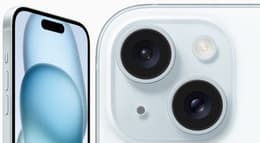
  • Rear Camera Systems: The iPhone 15 features an advanced dual-camera system with a 48MP main sensor that defaults to 24MP photos and offers a 2x optical zoom option through sensor cropping, alongside a 12MP ultra-wide lens. [2, 3, 6, 12, 14, 18, 21] The Galaxy A57 comes with a versatile triple-camera setup, including a 50MP main sensor with optical image stabilization (OIS), a 12MP ultrawide lens, and a 5MP macro camera. [4, 8, 9, 23, 35]
  • Photography Performance: The iPhone 15 excels in capturing detailed images with accurate colors and strong dynamic range, performing well in both bright and challenging low-light conditions. [2, 14, 21] The Galaxy A57's main camera is noted for preserving detail, natural color accuracy, and balanced exposure, with good low-light performance from its primary sensor. [4]
  • Video Recording and Front Camera: Both devices support 4K video recording, with the iPhone 15 offering up to 4K at 60 frames per second (fps) and advanced features like Cinematic mode. [3, 6, 12, 26] The iPhone 15 has a 12MP TrueDepth front camera with autofocus. [3, 12] The Galaxy A57 is capable of shooting 4K videos and features a 12MP front camera for selfies and video calls. [4, 8, 9, 23]

Front camera

32MP (f/2.2)

12 megapixels

Miscellaneous

Beyond core features, several practical elements differentiate these two devices in daily use.

  • Connectivity and Ports: Both the iPhone 15 and Galaxy A57 support 5G connectivity, Wi-Fi 6, and Bluetooth 5.3, ensuring modern wireless capabilities. [3, 6, 8, 12, 23] A notable change for the iPhone 15 is the adoption of a USB-C port, aligning it with many other electronic devices, though it uses USB 2.0 transfer speeds. [1, 6, 27, 31, 32] The Galaxy A57 also features a USB-C port for charging and data transfer. [7, 9]
  • Biometric Security: The iPhone 15 relies on Face ID for secure facial recognition. [6] The Galaxy A57 incorporates an in-display optical fingerprint sensor for convenient unlocking. [9]
  • Design and Handling: The iPhone 15 has dimensions of 147.6 x 71.6 x 7.8mm and weighs 171 grams, featuring an aluminum frame and a matte glass back for a comfortable grip. [3, 6, 12, 32] The Galaxy A57 presents a slimmer design at 6.9mm and weighs 179 grams, offering a larger screen in a relatively lightweight build. [35]

Weight

192 g

171 g

Screen size (in)

6.6

6.1

Network

5G

5G

SIM card

Dual Physical SIM + eSIM

Physical SIM + eSIM

Carrier compatibility

Unlocked

Unlocked

Connector

USB-C (USB 2)

USB-C

The iPhone 15 and Samsung Galaxy A57 cater to different user preferences, each offering a compelling set of features. Users often praise the iPhone 15 for its powerful performance, excellent camera capabilities, and the seamless integration of the iOS ecosystem. [14, 21] Its display, while operating at a 60Hz refresh rate, is noted for its brightness and clarity, and the inclusion of the Dynamic Island enhances user interaction. [2, 26, 32] Some users, however, express a desire for a higher refresh rate display, a feature commonly found in many Android devices. [2, 14]

The Samsung Galaxy A57 is frequently lauded for its large, high-refresh-rate Super AMOLED+ display, providing a smooth visual experience. [4, 8, 9, 23, 34] Its commitment to six years of OS and security updates is a significant advantage for users seeking long-term software support. [35, 37] The versatile camera system and large battery capacity are also common points of praise. [4, 8, 23, 34] Some discussions around A-series phones, including the A57's predecessor, sometimes point to the processor not matching the raw power of flagship devices, though it remains highly capable for most users. [4]

Users prioritizing a highly optimized ecosystem, top-tier processing power, and advanced computational photography will find the iPhone 15 well-suited to their needs. Conversely, those who value a larger, high-refresh-rate display, extensive software update longevity, and the flexibility of the Android operating system may lean toward the Samsung Galaxy A57. Both devices offer robust features, and considering a quality-assured refurbished option for either model can be an eco-friendly alternative for making an informed choice.

See all articles

Our recent comparisons







