

Compare models

Galaxy A53 5G Vs Google Pixel 9

  • 1-year minimum warranty
  • Free delivery on all orders
  • Free 30-day returns
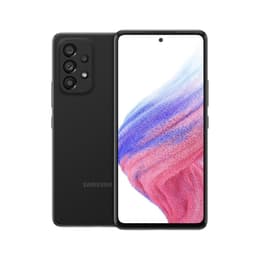
Galaxy A53 5G
Starting at

Refurbished price:130.00

Versus €499.00 new

See options
Google Pixel 9
Starting at

Refurbished price:399.99

Versus €1,066.71 new

See options

Differences at a glance

The Samsung Galaxy A53 5G, released in April 2022, and the Google Pixel 9, launched in August 2024, represent different generations within the Android smartphone landscape. While both devices operate on the Android platform, the Pixel 9 benefits from more recent advancements in processing power, camera technology, and software longevity. This comparison will explore the practical differences between these two smartphones, helping users understand which device might better suit their daily needs.

Available Models

Colour

Storage (GB)

Scores

Durability

The practical lifespan of a smartphone is significantly influenced by its release timeline and the manufacturer's commitment to software updates.

  • Software Support: The Galaxy A53 5G launched with Android 12 and was promised four generations of OS upgrades and five years of security updates from its release. In contrast, the Google Pixel 9, launching with Android 14, offers a more extensive commitment of seven years of both OS and security updates, providing a longer period of current software features and security protections.
  • Repairability: The Galaxy A53 5G is generally considered relatively repairable, with some sources giving it a repairability score around 6.75 to 8.2 out of 10, noting accessible components like the battery and screen. The Pixel 9 has also shown improvements in repairability, with a dual-entry design for easier access to internal components, though some reports indicate challenges with strong battery adhesive and display removal.
  • Physical Durability: The Galaxy A53 5G features Corning Gorilla Glass 5 for screen protection and an IP67 rating for dust and water resistance. The Pixel 9 steps up with Corning Gorilla Glass Victus 2 on both the front and back, alongside an IP68 rating, offering enhanced protection against drops and submersion.

Year of Release

2022

2024

Compatible with latest Update

Yes

Yes

OS

Android

Android

Foldable

No

No

Performance

Performance differences between these two devices largely stem from their generational gap and processor architectures.

  • Processing Power: The Galaxy A53 5G is powered by an octa-core processor designed for efficient mid-range performance, capable of handling everyday applications and moderate multitasking. The Google Pixel 9 features a more advanced, custom-designed processor that emphasizes artificial intelligence and machine learning capabilities, resulting in smoother operation for demanding applications, faster AI-driven features, and more responsive overall system performance.
  • Multitasking and Responsiveness: The Pixel 9 typically comes with a higher base amount of RAM (12GB compared to the A53 5G's 6GB or 8GB options), which contributes to more fluid multitasking and quicker app switching, especially with numerous applications open simultaneously. The A53 5G provides adequate responsiveness for typical user scenarios, but the Pixel 9 offers a more immediate and sustained performance under heavier loads.
  • Battery Behavior: The Galaxy A53 5G is equipped with a 5000 mAh battery, generally providing reliable full-day usage for most users. The Pixel 9, with a 4700 mAh battery, benefits from a more power-efficient processor and adaptive battery technology, often resulting in comparable or even extended real-world battery life, with many users reporting it comfortably lasts a full day or more, even with 5G usage.

Screen quality

Both smartphones offer vibrant displays, but the Pixel 9 incorporates newer display technology for an enhanced visual experience.

  • Display Technology and Clarity: The Galaxy A53 5G features a 6.5-inch Super AMOLED display with a 1080x2400 pixel resolution, delivering crisp and colorful visuals. The Pixel 9 comes with a 6.3-inch Actua OLED display, also with a 1080x2424 pixel resolution, which provides excellent color accuracy and deep blacks.
  • Brightness and Refresh Rate: The A53 5G offers a 120Hz refresh rate for smooth scrolling and a peak brightness of 800 nits, ensuring good visibility in most outdoor conditions. The Pixel 9 also features a 60-120Hz adaptive refresh rate and significantly higher brightness levels, reaching up to 1800 nits for HDR content and a peak of 2700 nits in direct sunlight, making it exceptionally visible outdoors.
  • Viewing Experience: While both displays offer a high-quality viewing experience, the Pixel 9's superior brightness and newer generation OLED panel contribute to a more impactful visual presentation, particularly in bright environments or when consuming HDR content. The slightly smaller screen size of the Pixel 9 might appeal to users preferring a more compact device.

Resolution

1080 x 2400

1080 x 2424

Screen type

Super AMOLED

OLED

Audiovisual

Camera capabilities are a significant differentiator, with the Pixel 9 leveraging advanced computational photography.

  • Rear Camera System: The Galaxy A53 5G features a versatile quad-camera setup, including a 64MP main sensor with optical image stabilization (OIS), a 12MP ultrawide lens, a 5MP macro camera, and a 5MP depth sensor. The Google Pixel 9 opts for a dual-camera system, comprising a 50MP main sensor with OIS and a 48MP ultrawide lens that also supports autofocus for macro shots.
  • Photography Performance: The A53 5G delivers good daylight photos and offers versatility with its multiple lenses, including a dedicated macro. However, its low-light performance is generally considered average. The Pixel 9, known for its computational photography, excels in producing sharp, vibrant images across various lighting conditions, with strong low-light capabilities and consistent color science between its main and ultrawide lenses.
  • Video and Audio: Both devices support 4K video recording at 30 frames per second from their main and front cameras. The Pixel 9 extends this to 4K at 60 frames per second for both front and rear cameras, offering smoother video capture. Both phones feature stereo speakers, with the A53 5G also offering Dolby Atmos support.

Main camera

64 megapixels

50 megapixels

Front camera

32 megapixels

10.5 megapixels

Miscellaneous

Beyond core features, several practical elements contribute to the overall user experience.

  • Connectivity and Ports: Both smartphones support 5G connectivity for faster mobile data speeds. The Galaxy A53 5G includes Wi-Fi 5 (802.11ac) and Bluetooth 5.1, with some models supporting Wi-Fi 6. The Pixel 9 features newer Wi-Fi 7 and Bluetooth 5.3 standards, offering potentially faster and more stable wireless connections. The Pixel 9 also uses a USB-C 3.2 port, while the A53 5G uses USB-C 2.0.
  • Biometrics and Sensors: The A53 5G incorporates an in-display optical fingerprint scanner. The Pixel 9 also uses an in-display fingerprint sensor and benefits from Google's Titan M2 security chip for enhanced security. Both devices include standard sensors like accelerometers, gyroscopes, and compasses.
  • Design and Handling: The Galaxy A53 5G measures 159.6 x 74.8 x 8.1 mm and weighs 189g, featuring a plastic back and frame. The Pixel 9 is slightly more compact at 152.8 x 72.0 x 8.5 mm and weighs 198g, utilizing a recycled aluminum frame and Gorilla Glass Victus 2 for a more premium feel.

Weight

189 g

198 g

Screen size (in)

6.5

6.3

Network

5G

5G

SIM card

Physical SIM

Physical SIM + eSIM

Carrier compatibility

Unlocked

Unlocked

Connector

USB-C

USB-C

What the community thinks

The Samsung Galaxy A53 5G and Google Pixel 9 cater to different user expectations, largely due to their generational difference. Users often praise the Galaxy A53 5G for its vibrant Super AMOLED display, reliable battery life, and versatile camera system, particularly for its inclusion of a macro lens. Some common criticisms include its mid-range processor performance compared to flagships and slower charging speeds. The Pixel 9, on the other hand, receives acclaim for its exceptional computational photography, extended software support, and the integration of advanced AI features. User feedback often highlights its bright Actua OLED display and improved real-world battery efficiency. Some users might note that while its processor is powerful for AI tasks, it may not always match the raw benchmark scores of some competitors.

Users prioritizing a longer software lifespan, cutting-edge AI capabilities, and superior camera performance, especially in challenging lighting, will find the Google Pixel 9 well-suited to their needs. Its enhanced durability and brighter display also make it a strong contender for those seeking a more premium experience. Conversely, users who value a comprehensive multi-lens camera setup, a slightly larger screen, and a device that still offers solid everyday performance at a more accessible entry point may lean towards the Samsung Galaxy A53 5G. Both devices are available as quality-assured refurbished options, providing an eco-friendly alternative for consumers looking to make a sustainable choice.