

Galaxy A53 5G Vs Galaxy S20+ 5G

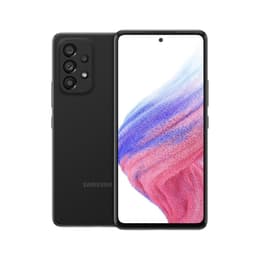
Galaxy A53 5G
Galaxy A53 5G
Starting at
€153.00
€459.00 new
See options
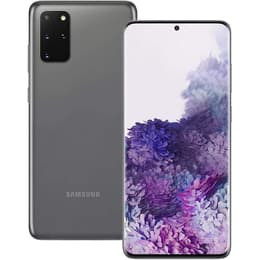
Galaxy S20+ 5G
Galaxy S20+ 5G
Starting at
€218.55
€790.00 new
See options

Ratings

The Samsung Galaxy A53 5G, released in March 2022, is a mid-range smartphone from Samsung's popular A-series. The Samsung Galaxy S20+ 5G, launched in March 2020, was a flagship device from the S-series. Both devices offer 5G connectivity and run on the Android operating system with Samsung's One UI, but they differentiate significantly in terms of their performance capabilities, build quality, and software longevity.

Scores

Durability

The longevity of a smartphone is heavily influenced by its release date and the manufacturer's software support policy.

  • Release Timeline and Age: The Galaxy A53 5G was released in March 2022, making it considerably newer than the Galaxy S20+ 5G, which launched in March 2020. This age difference directly impacts their expected remaining lifespan.
  • OS Support Duration: The Galaxy A53 5G is guaranteed to receive four Android OS upgrades and five years of security updates, meaning it will be updated through Android 16 and receive security patches until March 2027. In contrast, the Galaxy S20+ 5G typically received three Android OS updates, ending its major OS upgrades around Android 13, and its security updates are expected to continue quarterly until 2026.
  • Expected Practical Lifespan: For users prioritizing the latest software features and security, the Galaxy A53 5G offers a longer practical lifespan due to its more extensive update commitment. The Galaxy S20+ 5G, while still receiving security patches for a period, will no longer get major Android version updates, potentially limiting its compatibility with newer applications and features over time.

Year of Release

2022

2020

Compatible with latest Update

Yes

No

OS

Android

Android

Foldable

No

No

Performance

When comparing performance, the internal hardware of each device plays a crucial role in daily responsiveness and handling demanding applications.

  • Processor Capabilities: The Galaxy A53 5G is powered by Samsung's Exynos 1280 processor, a 5nm mid-range chipset that handles everyday tasks smoothly and provides decent gaming performance. The Galaxy S20+ 5G, depending on the region, features either the flagship Snapdragon 865 or Exynos 990 chipset. Despite its age, the S20+ 5G's processor was a high-end chip at its release, offering superior raw processing power and graphics performance for more intensive tasks and advanced gaming.
  • RAM and Multitasking: The Galaxy A53 5G comes with 6GB or 8GB of RAM. The Galaxy S20+ 5G, designed as a flagship, was equipped with a substantial 12GB of RAM. This larger RAM capacity on the S20+ allows for more aggressive multitasking and can keep more applications open in the background without needing to reload them, contributing to a smoother user experience for heavy users.
  • Storage Options: Both devices offer 128GB or 256GB of internal storage, with the Galaxy S20+ 5G also having a 512GB option in some configurations. Both support expandable storage via a microSD card slot, offering flexibility for users who need additional space for photos, videos, and applications.

Memory

4 GB

12 GB

Screen quality

The visual experience on a smartphone is largely defined by its display technology, resolution, and refresh rate.

  • Display Technology and Clarity: The Galaxy A53 5G features a 6.5-inch Super AMOLED display, offering vibrant colors and deep blacks with a Full HD+ resolution (1080 x 2400 pixels). The Galaxy S20+ 5G boasts a larger 6.7-inch Dynamic AMOLED 2X display with a higher Quad HD+ resolution (1440 x 3200 pixels). The S20+ 5G's display provides a noticeably sharper and more detailed viewing experience due to its higher pixel density.
  • Brightness and Outdoor Visibility: Both phones offer excellent brightness levels, making them usable outdoors. The Galaxy A53 5G can reach an impressive 830 nits in auto mode. The S20+ 5G also delivers strong brightness, with around 797 nits in Adaptive mode. Both displays ensure good readability even in bright sunlight.
  • Refresh Rate and Smoothness: Both the Galaxy A53 5G and S20+ 5G feature a 120Hz refresh rate. On the A53 5G, this is a fixed 120Hz mode, which contributes to smooth scrolling and fluid animations. The S20+ 5G also offers a 120Hz refresh rate, though it is limited to Full HD+ resolution, while the higher QHD+ resolution operates at 60Hz.

Resolution

1080 x 2400

1440 x 3200

Screen type

Super AMOLED

Dynamic AMOLED 2X

Audiovisual

The camera systems on these two Galaxy phones reflect their respective positions in Samsung's lineup, with the S20+ 5G having a more advanced setup for its time.

  • Rear Camera Systems: The Galaxy A53 5G includes a versatile quad-camera setup with a 64MP main camera with Optical Image Stabilization (OIS), a 12MP ultrawide, a 5MP macro, and a 5MP depth sensor. The Galaxy S20+ 5G features a 12MP main wide-angle camera with OIS, a 64MP telephoto lens offering 3x hybrid optical zoom, a 12MP ultrawide lens, and a DepthVision camera. The S20+ 5G's telephoto lens provides superior zoom capabilities.
  • Photography Performance: The A53 5G generally produces sharp, colorful photos in good lighting, with decent dynamic range. Its low-light performance is competent for a mid-range device. The S20+ 5G, as a former flagship, excels with excellent exposure, wide dynamic range, and vivid colors in various conditions. It offers strong low-light performance from its main sensor.
  • Video Recording Capabilities: Both devices support 4K video recording at 30fps from their main cameras. The S20+ 5G also supports 8K video recording at 24fps and 4K at 60fps, providing more advanced video capabilities for users who need higher resolution and frame rates. Video stabilization is present on both, with the A53 5G having generally effective stabilization at 1080p.

Main camera

64 megapixels

12 megapixels

Front camera

32 megapixels

10 megapixels

Miscellaneous

Beyond core performance, several practical features and design elements influence the daily user experience of these smartphones.

  • Build Materials and Durability Features: The Galaxy A53 5G features a plastic back and frame with a Gorilla Glass 5 front, offering IP67 dust and water resistance (submersion up to 1 meter for 30 minutes). The Galaxy S20+ 5G presents a more premium build with Gorilla Glass 6 on both the front and back, complemented by an aluminum frame, and an IP68 rating for enhanced dust and water resistance (submersion up to 1.5 meters for 30 minutes).
  • Connectivity and Ports: Both phones support 5G connectivity, Wi-Fi, and Bluetooth. The A53 5G supports Bluetooth 5.1 and Wi-Fi 802.11 a/b/g/n/ac. The S20+ 5G supports Bluetooth 5.0 and Wi-Fi 802.11 a/b/g/n/ac/ax (Wi-Fi 6). Neither device includes a 3.5mm headphone jack. The A53 5G uses a USB Type-C 2.0 port, while the S20+ 5G features a faster USB Type-C 3.2 port.
  • Biometric Security: Both smartphones incorporate in-display optical fingerprint sensors for secure unlocking. The S20+ 5G's in-screen fingerprint sensor was noted by some users to be occasionally picky, while the A53 5G's sensor generally performs well.

Weight

189 g

186 g

Screen size (in)

6.5

6.7

Network

5G

5G

SIM card

Dual Physical SIM

Dual Physical SIM

Carrier compatibility

Unlocked

Unlocked

When considering the Samsung Galaxy A53 5G and Galaxy S20+ 5G, user experiences on forums like Reddit often highlight distinct strengths and weaknesses for each. The Galaxy A53 5G is frequently praised for its impressive battery life, often lasting well over a day even with heavy use, and its commitment to long-term software updates (four OS generations and five years of security patches) is a significant draw for users seeking longevity. Its vibrant AMOLED display and competent camera system for its class are also commonly appreciated. However, some users note its mid-range processor can occasionally lead to minor lag or less fluid performance compared to flagship devices.

Conversely, the Galaxy S20+ 5G, despite being an older flagship, is celebrated for its powerful processor, which still delivers a fast and smooth experience for demanding applications and gaming. Its higher-resolution Dynamic AMOLED 2X display is often considered superior for visual clarity, and its camera system, particularly the telephoto lens and 8K video capabilities, was a highlight at its release. Criticisms often revolve around its battery life, which can be significantly impacted by enabling the 120Hz refresh rate at higher resolutions, leading to more frequent charging for heavy users. Its software support is also nearing its end, meaning fewer future Android version updates.

For users prioritizing the absolute longest software support and a consistently strong battery life for everyday tasks, the Galaxy A53 5G presents a compelling choice. It suits students, general users, or those seeking a reliable device with a modern feature set that will remain updated for years to come. For individuals who value raw processing power, a more premium build, and advanced camera features (especially zoom and higher-resolution video) and are comfortable with a device nearing the end of its major software update cycle, the Galaxy S20+ 5G remains a capable option. Both devices offer a gateway to the Android ecosystem, and choosing a quality-assured refurbished option for either can provide an eco-friendly and practical way to enjoy these features while extending their lifecycle.