

Galaxy A50 Vs Galaxy S20+ 5G

Galaxy A50
Galaxy A50
Starting at

Refurbished price:107.00

Versus €349.00 new

See options
Galaxy S20+ 5G
Galaxy S20+ 5G
Starting at

Refurbished price:191.00

Versus €590.00 new

See options

Ratings

The Samsung Galaxy A50, released in early 2019, and the Samsung Galaxy S20 Plus 5G, launched in early 2020, represent different tiers within Samsung's smartphone lineup. While both devices run on the Android operating system with Samsung's One UI, the Galaxy S20 Plus 5G offers a more advanced feature set and higher performance capabilities, reflecting its flagship status compared to the A50's mid-range positioning. The primary distinctions lie in their processing power, display technology, and camera systems.

Scores

Durability

The practical lifespan of a smartphone is influenced by its initial release, software support, and physical durability. The Galaxy A50 and Galaxy S20 Plus 5G, having been released in consecutive years, offer different expectations in these areas.

  • Release Timeline: The Galaxy A50 was introduced in February 2019, while the Galaxy S20 Plus 5G followed in February 2020. This one-year difference means the S20 Plus 5G inherently benefits from a longer potential support window.
  • Software Longevity: The Galaxy A50 launched with Android 9 Pie and received major OS updates up to Android 11, with official software support ending around April 2023. The Galaxy S20 Plus 5G, starting with Android 10, received updates up to Android 13, with its software support concluding around April 2025. This provides the S20 Plus 5G with an additional two years of official software and security updates.
  • Repairability Considerations: The Galaxy A50 generally has a more favorable repairability assessment, with some sources giving it a score of 7.0 out of 10, noting accessible battery and screen components. In contrast, the Galaxy S20 Plus 5G received a lower repairability score of 3 out of 10 from iFixit, largely due to the extensive use of strong adhesive for the back cover and a glued-down battery, making repairs more challenging.

Year of Release

2019

2020

Compatible with latest Update

No

No

OS

Android

Android

Foldable

No

No

Performance

The performance capabilities of these two devices reflect their respective market segments, with the Galaxy S20 Plus 5G offering a significantly more robust experience for demanding tasks.

  • Processing Power: The Galaxy A50 is equipped with a processor suitable for everyday tasks and moderate multitasking. Users generally report smooth operation for common applications, though some have noted heating and lag when running multiple demanding apps or during extended gaming sessions. The Galaxy S20 Plus 5G features a more powerful processor, designed to handle intensive applications, advanced gaming, and seamless multitasking with greater efficiency and responsiveness.
  • System Responsiveness and Multitasking: The Galaxy A50 comes with 4GB or 6GB of RAM, which is adequate for typical smartphone usage. The Galaxy S20 Plus 5G, with 8GB or 12GB of RAM, provides substantial headroom for keeping numerous applications open simultaneously and switching between them without noticeable slowdowns.
  • Storage Options: Both devices offer internal storage options that can be expanded. The Galaxy A50 is available with 64GB or 128GB of internal storage, while the Galaxy S20 Plus 5G offers 128GB, 256GB, or 512GB, both supporting microSD card expansion for additional space.

Memory (GB)

4 GB

8 GB

Screen quality

Both smartphones feature Super AMOLED displays, but the Galaxy S20 Plus 5G incorporates more advanced technology for a superior visual experience.

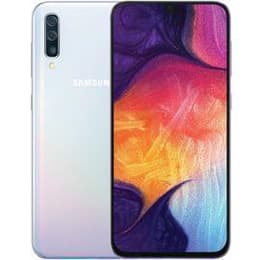
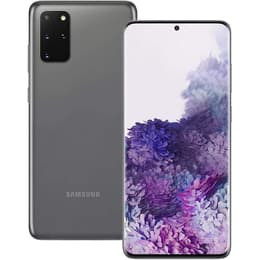
  • Display Technology and Resolution: The Galaxy A50 features a 6.4-inch Super AMOLED display with a 1080x2340 pixel (FHD+) resolution, providing clear and vibrant visuals for daily use. The Galaxy S20 Plus 5G steps up with a larger 6.7-inch Dynamic AMOLED 2X display, offering a higher 1440x3200 pixel (QHD+) resolution for sharper detail and richer colors.
  • Refresh Rate and Smoothness: The Galaxy A50 has a standard 60Hz refresh rate, which is typical for smooth scrolling and video playback. The Galaxy S20 Plus 5G offers a 120Hz refresh rate, providing a noticeably smoother experience when navigating menus, scrolling through content, and playing compatible games, though this higher refresh rate operates at FHD+ resolution.
  • Brightness and Durability: The Galaxy S20 Plus 5G's Dynamic AMOLED 2X panel generally achieves higher peak brightness, improving visibility in bright outdoor conditions. It also benefits from Corning Gorilla Glass 6 for enhanced screen protection, whereas the Galaxy A50 uses Gorilla Glass 3.

Resolution

1080 x 2340

1440 x 3200

Screen type

Super AMOLED

Dynamic AMOLED 2X

Audiovisual

The camera systems on these devices reflect their different market positions, with the Galaxy S20 Plus 5G offering more advanced photographic capabilities.

  • Rear Camera Configuration: The Galaxy A50 features a triple-camera setup on the rear, consisting of a 25MP wide lens, an 8MP ultrawide lens, and a 5MP depth sensor, suitable for general photography. The Galaxy S20 Plus 5G boasts a more versatile quad-camera system, including a 12MP wide lens, a 64MP telephoto lens with 3x hybrid optical zoom, a 12MP ultrawide lens, and a DepthVision sensor, allowing for greater flexibility in various shooting scenarios.
  • Photography Performance: The Galaxy A50 performs well in good lighting conditions, but users have noted that its low-light performance can be less satisfactory. The Galaxy S20 Plus 5G generally delivers higher quality images across a wider range of conditions, including improved low-light performance, thanks to its larger sensors and advanced processing.
  • Video Recording Capabilities: The Galaxy A50 is limited to 1080p video recording. The Galaxy S20 Plus 5G offers significantly more advanced video features, capable of recording up to 8K resolution at 24 frames per second and 4K at 30 or 60 frames per second, along with enhanced stabilization features.

Main camera

25 megapixels

12 megapixels

Front camera

25 megapixels

10 megapixels

Miscellaneous

Beyond core specifications, several practical elements differentiate the user experience between the Galaxy A50 and the Galaxy S20 Plus 5G.

  • Connectivity Standards: The Galaxy A50 supports 4G LTE networks, Wi-Fi, and Bluetooth 5.0. The Galaxy S20 Plus 5G offers more advanced connectivity, including 5G network support for faster mobile data speeds where available, along with Wi-Fi 6 (802.11ax) and Bluetooth 5.0.
  • Physical Design and Ports: The Galaxy A50 features a plastic back and includes a 3.5mm headphone jack, offering traditional audio connectivity. The Galaxy S20 Plus 5G has a more premium build with glass on both the front and back, an aluminum frame, and an IP68 rating for dust and water resistance. It omits the 3.5mm headphone jack, relying on its USB Type-C port for wired audio and charging.
  • Biometric Security and Dimensions: Both devices feature in-display fingerprint sensors for secure unlocking. The Galaxy A50 measures 158.5 x 74.7 x 7.7 mm and weighs 166g, offering a relatively lightweight and manageable form factor. The Galaxy S20 Plus 5G is slightly larger and heavier at 161.9 x 73.7 x 7.8 mm and 186g, reflecting its larger screen and more robust internal components.

Weight

166 g

188 g

Screen size (in)

6.4

6.7

Network

4G

5G

SIM card

Dual Physical SIM

Physical SIM + eSIM

Carrier compatibility

Unlocked

Unlocked

Connector

USB-C + Jack 3.5mm

USB-C

The Samsung Galaxy A50 and Galaxy S20 Plus 5G cater to different user needs and expectations, largely due to their distinct release years and original market positioning. Users of the Galaxy A50 have often praised its vibrant Super AMOLED display and reliable battery life for everyday use. However, common criticisms include occasional performance lag, particularly with demanding applications, and a less consistent in-display fingerprint sensor.

The Galaxy S20 Plus 5G, on the other hand, is frequently lauded for its high-refresh-rate display, powerful camera system with advanced video capabilities, and overall robust performance. Some users have reported concerns regarding potential overheating, especially with the Exynos variant, and issues with software updates leading to screen anomalies or connectivity problems.

Users prioritizing a device for general daily tasks, media consumption, and who appreciate a headphone jack might find the Galaxy A50 suitable. Its more favorable repairability score could also be a consideration for those who prefer easier maintenance. For individuals who require higher processing power for gaming or intensive applications, a more advanced camera system, a smoother display experience, and future-proof 5G connectivity, the Galaxy S20 Plus 5G aligns better with those priorities. When considering either device, exploring quality-assured refurbished options can provide an eco-friendly alternative for extending the life cycle of these smartphones.


See all articles

Our recent comparisons