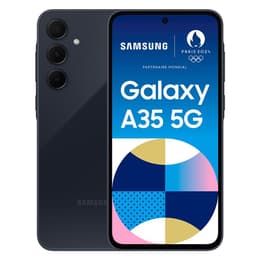
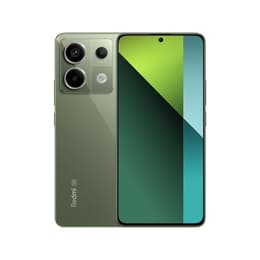


Galaxy A35 Vs Xiaomi Redmi Note 13 Pro

Galaxy A35
Galaxy A35
Starting at

Refurbished price:210.00

Versus €429.00 new

See options
Xiaomi Redmi Note 13 Pro
Starting at

Refurbished price:179.00

Versus €349.00 new

See options

Ratings

The Samsung Galaxy A35 and the Xiaomi Redmi Note 13 Pro are both mid-range smartphones released in early 2024, offering a blend of features designed for everyday use. While both devices aim to provide a comprehensive smartphone experience, they differentiate themselves through their display technologies, camera capabilities, and software support policies. The Galaxy A35 runs on Samsung's One UI based on Android, while the Redmi Note 13 Pro operates on Xiaomi's HyperOS, also based on Android.

Scores

Durability

When considering the long-term usability of a smartphone, factors like software support and physical durability are key. The Samsung Galaxy A35, released in March 2024, benefits from Samsung's commitment to software updates, promising four years of Android OS updates and five years of security patches. This extended support means the device will remain current with the latest features and security enhancements for a considerable period.

The Xiaomi Redmi Note 13 Pro, launched in January 2024, is expected to receive three major Android OS updates and four years of security updates, extending its support until January 2028. This provides a solid, though slightly shorter, software lifespan compared to the Galaxy A35. In terms of physical resilience, the Galaxy A35 features an IP67 rating for dust and water resistance and is protected by Gorilla Glass Victus+ on its display. The Redmi Note 13 Pro comes with an IP54 rating for splash and dust resistance and uses Gorilla Glass Victus for screen protection.

  • Software Longevity: The Galaxy A35 offers a longer commitment to Android OS and security updates, providing an additional year of support compared to the Redmi Note 13 Pro.
  • Physical Durability: The Galaxy A35 boasts a higher IP67 rating, indicating better protection against dust and water immersion, along with a more advanced Gorilla Glass Victus+ display. The Redmi Note 13 Pro has an IP54 rating and Gorilla Glass Victus.
  • Repairability: The Galaxy A35 has a repairability score of 8.4 or 8.5 out of 10, suggesting it is relatively easy to repair with good spare parts availability. The Redmi Note 13 Pro Plus (a closely related model) has an average repairability score of 6.5 out of 10, indicating some components may be more challenging to replace.

Year of Release

2024

2023

Compatible with latest Update

Yes

Yes

OS

Android

Android

Foldable

No

No

Performance

Both the Galaxy A35 and Redmi Note 13 Pro are equipped with processors designed for efficient daily performance, handling common applications and multitasking with ease. Their configurations cater to users who engage in a mix of productivity, media consumption, and moderate gaming.

  • Everyday Responsiveness: The Galaxy A35, powered by its internal processor, offers smooth navigation and app usage, though some users have noted a slight delay when launching the camera application. The Redmi Note 13 Pro, featuring a Qualcomm Snapdragon processor, provides a fluid user experience for daily tasks and can handle moderate gaming without significant slowdowns.
  • Multitasking Capabilities: Both devices typically come with ample RAM options, allowing for efficient switching between multiple open applications. The Redmi Note 13 Pro offers configurations with up to 12GB of RAM and 512GB of storage, potentially providing more headroom for demanding multitasking scenarios compared to the Galaxy A35's typical 8GB RAM and 256GB storage options.
  • Storage Options: The Galaxy A35 is available with 128GB or 256GB of internal storage, expandable via a microSD card. The Redmi Note 13 Pro offers 128GB, 256GB, and 512GB storage variants, with some models supporting expandable storage up to 1TB.

Memory (GB)

6 GB

8 GB

Screen quality

The visual experience on both the Samsung Galaxy A35 and the Xiaomi Redmi Note 13 Pro is a highlight, as both devices feature vibrant AMOLED displays with high refresh rates, contributing to smooth interactions and rich visuals.

  • Display Technology and Clarity: Both smartphones utilize AMOLED display technology, known for its deep blacks and vibrant colors. The Galaxy A35 features a 6.6-inch Super AMOLED display with a Full HD+ resolution (1080 x 2340 pixels). The Redmi Note 13 Pro has a slightly larger 6.67-inch AMOLED display with a higher resolution of 1220 x 2712 pixels, offering a sharper viewing experience.
  • Brightness and Outdoor Visibility: The Galaxy A35's display can reach up to 1,000 nits in High Brightness Mode, ensuring good visibility in bright outdoor conditions. The Redmi Note 13 Pro offers a higher peak brightness of 1800 nits, which can provide even better readability under direct sunlight.
  • Smoothness and Responsiveness: Both devices feature a 120Hz refresh rate, resulting in fluid scrolling, smooth animations, and a more responsive touch experience, particularly noticeable during gaming or fast-paced content consumption.

Resolution

1080 x 2340

1220 x 2712

Screen type

Super AMOLED

AMOLED

Audiovisual

Both the Galaxy A35 and Redmi Note 13 Pro offer versatile camera systems designed to capture a range of photographic and video content, with distinct strengths in their main sensors.

  • Main Camera Performance: The Redmi Note 13 Pro features a high-resolution 200-megapixel main camera with Optical Image Stabilization (OIS), capable of capturing detailed images, especially in good lighting. The Galaxy A35 comes with a 50-megapixel main camera, also with OIS, which produces vibrant and crisp photos with good dynamic range in daylight.
  • Versatility and Auxiliary Lenses: Both phones include an 8-megapixel ultra-wide camera for broader landscape shots. The Galaxy A35 has a 5-megapixel macro camera, while the Redmi Note 13 Pro features a 2-megapixel macro lens. For selfies, the Redmi Note 13 Pro has a 16-megapixel front camera, while the Galaxy A35 uses a 13-megapixel sensor.
  • Video Recording and Audio: Both devices are capable of recording video at 4K resolution at 30 frames per second with their main cameras. The Redmi Note 13 Pro is noted for its loud stereo speakers, enhancing the media consumption experience.

Main camera

50 megapixels

200 megapixels

Front camera

13 megapixels

16 megapixels

Miscellaneous

Beyond core performance and display, several practical features contribute to the overall user experience of these smartphones, from connectivity to physical design elements.

  • Connectivity and Ports: Both the Galaxy A35 and Redmi Note 13 Pro support 5G connectivity, ensuring access to faster mobile networks. They both include USB-C ports for charging and data transfer. The Redmi Note 13 Pro retains a 3.5mm headphone jack, which is absent on the Galaxy A35.
  • Biometric Security: Both smartphones feature in-display fingerprint sensors for secure and convenient unlocking. The Redmi Note 13 Pro also offers AI Face Unlock.
  • Design and Handling: The Galaxy A35 measures 161.7 x 78 x 8.2 mm and weighs 209 grams, featuring a metal body and a glass back. The Redmi Note 13 Pro is slightly lighter and thinner at 161.1mm x 74.95mm x 7.98mm and 188 grams, with a glass front and back, and a plastic frame.

Weight

209 g

187 g

Width

78 cm

7,42 cm

Height

161,7 cm

16,11 cm

Depth

8,2 cm

0,8 cm

Screen size (in)

6.6

6.67

Network

5G

5G

SIM card

Dual Physical SIM

Dual Physical SIM

Carrier compatibility

Unlocked

Unlocked

User feedback for the Samsung Galaxy A35 often highlights its vibrant Super AMOLED display, reliable battery life that can extend beyond a full day of heavy use, and its capable main camera for daylight photography. Some common observations include a slight delay in camera launch and the presence of noticeable bezels around the display.

The Xiaomi Redmi Note 13 Pro receives praise for its high-resolution AMOLED display with impressive brightness, its powerful 200-megapixel main camera that excels in detail, and its significantly faster charging speeds. Users sometimes note that its auxiliary cameras (ultrawide and macro) are less impressive than the main sensor, and some find the software experience to include pre-installed applications.

Users prioritizing extended software support, superior water and dust resistance, and a slightly more robust build may find the Samsung Galaxy A35 to be a suitable choice. Its consistent performance and strong battery life cater well to those seeking a dependable daily driver. For individuals who value a sharper, brighter display, a higher-resolution main camera, and rapid battery charging, the Xiaomi Redmi Note 13 Pro presents a compelling alternative. Its performance is well-suited for moderate gaming and demanding applications. Both devices offer a quality-assured refurbished option, providing an eco-friendly alternative for consumers.


See all articles

Our recent comparisons