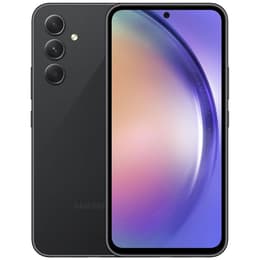



Galaxy A54 Vs Xiaomi Redmi Note 12 Pro

Galaxy A54
Galaxy A54
Starting at

Refurbished price:178.00

Versus €527.33 new

See options
Xiaomi Redmi Note 12 Pro
Starting at

Refurbished price:112.00

Versus €399.00 new

See options

Ratings

The Samsung Galaxy A54 and the Xiaomi Redmi Note 12 Pro are both mid-range Android smartphones released in early 2023. While both devices aim to deliver a balanced user experience, they differentiate themselves through their software support policies, camera capabilities, and charging speeds. Both run on the Android operating system, offering a wide range of applications and customization options.

Scores

Durability

When considering the long-term usability of a smartphone, factors like software support and physical resilience are key.

  • Release Timeline and Software Support: The Samsung Galaxy A54 was released in March 2023 and is notable for Samsung's commitment to providing four major Android OS updates and five years of security updates, extending its software longevity until early 2028. The Xiaomi Redmi Note 12 Pro, released globally in November 2022 and in India in January 2023, typically receives fewer major OS updates, with its final major update expected to be HyperOS 2 (Android 15), ending its software support cycle around late 2025.
  • Physical Durability: The Galaxy A54 features Gorilla Glass 5 on both its front and back, providing a degree of protection against drops and scratches, and boasts an IP67 rating for dust and water resistance. The Redmi Note 12 Pro also includes Gorilla Glass 5 on its display and has an IP53 rating, indicating resistance to dust and splashes.
  • Repairability: The Samsung Galaxy A54 has received repairability scores ranging from 6.25/10 to 8.4, suggesting it is a reasonably repairable device with accessible components like the battery and screen, though some adhesive is used. Specific repairability scores for the Redmi Note 12 Pro are not widely available, but user reports suggest general durability.

Year of Release

2023

2022

Compatible with latest Update

Yes

No

OS

Android

Android

Foldable

No

No

Performance

The responsiveness and efficiency of a smartphone are largely determined by its internal components and how they handle daily tasks.

  • Processor Capabilities: The Samsung Galaxy A54 is powered by an Exynos 1380 processor, which offers smooth performance for everyday tasks, multitasking, and can handle demanding applications with a reported 20% boost in CPU and 26% in GPU compared to its predecessor. The Xiaomi Redmi Note 12 Pro utilizes a MediaTek Dimensity 1080 chipset, which provides strong performance for general use and is capable of handling gaming without significant overheating.
  • Storage and Multitasking: The Galaxy A54 offers storage options of 128GB or 256GB, coupled with 6GB or 8GB of RAM, and supports expandable storage up to 1TB via a microSD card. The Redmi Note 12 Pro comes with 128GB or 256GB of internal storage and 6GB, 8GB, or 12GB of RAM, but its storage is not expandable.
  • Battery Behavior: Both devices are equipped with a 5000 mAh battery capacity. The Galaxy A54 supports 25W fast charging and can last up to 1.5 days or 39 hours on a single charge for typical usage. The Redmi Note 12 Pro supports faster 67W wired charging, capable of reaching a full charge in under 50 minutes, and generally provides a full day of moderate use.

Memory (GB)

8 GB

8 GB

Screen quality

The display is a primary interface for smartphone interaction, and both models offer vibrant viewing experiences.

  • Display Technology and Clarity: The Samsung Galaxy A54 features a 6.4-inch Super AMOLED display with a resolution of 1080x2340 pixels, offering deep blacks and vibrant colors. The Xiaomi Redmi Note 12 Pro sports a slightly larger 6.67-inch Flow AMOLED display with a 1080x2400 pixel resolution, also known for its rich colors and contrast, and includes support for Dolby Vision and HDR10+.
  • Brightness and Refresh Rate: Both phones feature a 120Hz refresh rate for smooth scrolling and animations. The Galaxy A54 can reach a peak brightness of 1000 nits, improving outdoor visibility. The Redmi Note 12 Pro offers a typical brightness of 500 nits, with HBM (High Brightness Mode) up to 900 nits and a peak brightness of 1100 nits.
  • Viewing Experience: Both displays provide a clear and immersive viewing experience suitable for media consumption and daily tasks. The slightly larger screen of the Redmi Note 12 Pro might offer a more expansive canvas for content, while the Galaxy A54's Super AMOLED panel delivers consistent visual quality.

Resolution

1080 x 2340

1080 x 2400

Screen type

Super AMOLED

AMOLED

Audiovisual

Camera performance is a significant consideration for many users, and both devices offer capable multi-lens setups.

  • Rear Camera System: The Samsung Galaxy A54 is equipped with a triple rear camera system, including a 50 MP main sensor with optical image stabilization (OIS), a 12 MP ultrawide lens, and a 5 MP macro lens. The Xiaomi Redmi Note 12 Pro also features a triple rear camera setup, comprising a 50 MP main sensor (Sony IMX766) with OIS, an 8 MP ultrawide lens, and a 2 MP macro lens.
  • Photography Performance: The Galaxy A54's main camera delivers good color reproduction, consistent results, and effective dynamic range, performing well in low-light conditions thanks to OIS. The Redmi Note 12 Pro's main camera also performs well in good lighting, capturing detailed images with accurate colors, and its OIS and night mode contribute to decent low-light performance, though its ultrawide and macro lenses are less impressive.
  • Video and Audio: Both smartphones can record video at up to 4K resolution at 30 frames per second from their main rear cameras. The Galaxy A54's front camera also supports 4K@30fps video recording. The Redmi Note 12 Pro features stereo speakers and Dolby Atmos enhancement for an improved audio experience during media consumption.

Main camera

50 megapixels

50 megapixels

Front camera

32 megapixels

16 megapixels

Miscellaneous

Beyond core features, several practical elements contribute to the overall user experience and device utility.

  • Connectivity and Ports: Both devices support 5G connectivity and modern Wi-Fi standards (Wi-Fi 6 for Redmi Note 12 Pro, Wi-Fi 6/ax for Galaxy A54) and Bluetooth (v5.3 for A54, v5.2 for Note 12 Pro). The Galaxy A54 uses a USB Type-C 2.0 port and notably lacks a 3.5mm headphone jack. The Redmi Note 12 Pro also features a USB Type-C port but includes a 3.5mm headphone jack and an infrared (IR) blaster, offering additional utility.
  • Biometrics and Sensors: Both phones incorporate essential sensors, including NFC for contactless payments. The Galaxy A54 features an in-display fingerprint sensor, while the Redmi Note 12 Pro uses a side-mounted fingerprint reader integrated into the power button.
  • Design and Handling: The Galaxy A54 measures 158.2 x 76.7 x 8.2 mm and weighs 202g, featuring a glass front and back with a plastic frame. The Redmi Note 12 Pro is slightly taller and narrower at 162.9 x 76 x 7.9 mm and lighter at 187g, also with a glass front and back and a plastic frame.

Weight

202 g

187 g

Screen size (in)

6.4

6.67

Network

5G

5G

SIM card

Physical SIM + eSIM

Dual Physical SIM

Carrier compatibility

Unlocked

Unlocked

Users often praise the Samsung Galaxy A54 for its robust software support policy, offering extended Android OS and security updates, which contributes to a longer usable lifespan. Its camera system, particularly the main sensor, is frequently noted for producing good quality photos with vibrant colors and effective low-light performance. Some users, however, have pointed out that its charging speed is not as fast as some competitors. The Xiaomi Redmi Note 12 Pro is often lauded for its fast charging capabilities and its bright, high refresh rate AMOLED display, which enhances the viewing experience. Its main camera also receives positive remarks for its performance in good lighting conditions. A common criticism for the Redmi Note 12 Pro relates to its shorter software update commitment compared to some rivals.

Users prioritizing long-term software support and a slightly more compact design with strong camera performance, especially for video, may find the Samsung Galaxy A54 well-suited to their needs. Conversely, users who value faster charging, a slightly larger display, and the inclusion of a 3.5mm headphone jack and IR blaster might lean towards the Xiaomi Redmi Note 12 Pro. Both devices offer a solid experience in the mid-range segment, and choosing between them often comes down to these specific preferences. For those seeking an eco-friendly alternative, considering a quality-assured refurbished option for either model can provide excellent value while supporting sustainable consumption.


See all articles

Our recent comparisons