
Galaxy A34 Vs Xiaomi Redmi Note 14 Pro

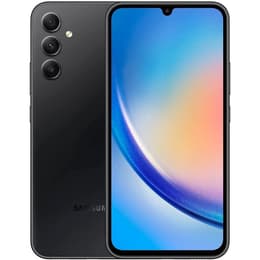
Galaxy A34
Galaxy A34
Starting at

Refurbished price:135.00

Versus €399.00 new

See options
Xiaomi Redmi Note 14 Pro
Starting at

Refurbished price:260.77

Versus €349.99 new

See options

Ratings

The Samsung Galaxy A34 and the Xiaomi Redmi Note 14 Pro are both Android smartphones designed to offer a balanced experience for everyday users. The Galaxy A34, released in March 2023, is a well-established option, while the Redmi Note 14 Pro, launched in early 2025, represents a newer generation of devices. Both run on the Android operating system, but they differ in their approach to display technology, camera capabilities, and overall performance, catering to slightly different user priorities.

Scores

Durability

When considering the long-term usability of a smartphone, software support and physical durability are key factors. The Galaxy A34 and Redmi Note 14 Pro offer distinct timelines for updates and varying levels of physical resilience.

  • Software Longevity: The Samsung Galaxy A34, launched with Android 13, is expected to receive four major Android OS updates, extending its software support up to Android 17, along with five years of security updates. The Redmi Note 14 Pro, which debuted with Android 14 and Xiaomi's HyperOS, is generally promised three major Android OS upgrades (up to Android 17) and four years of security updates for its Pro models. However, some variants, like the 4G model, may offer up to four OS upgrades and six years of security updates.
  • Physical Durability: The Galaxy A34 features an IP67 rating for dust and water resistance, meaning it can withstand immersion in up to 1 meter of fresh water for 30 minutes, and its display is protected by Corning Gorilla Glass 5. The Redmi Note 14 Pro offers varying levels of protection; some variants boast an IP68 rating, providing superior dust and water resistance, while others are rated IP64, offering splash and dust resistance. Its display is protected by the newer Corning Gorilla Glass Victus 2.
  • Repairability: The Samsung Galaxy A34 generally scores well in repairability, with some assessments giving it an 8.0 or 8.3 out of 10, indicating a relatively straightforward process for component replacement. The Redmi Note 14 Pro has an average repairability score, around 6.0 out of 10, with adhesive use for the back cover and battery potentially complicating repairs.

Year of Release

2023

2025

OS

Android

Android

Foldable

No

No

Performance

The performance of these devices impacts how smoothly applications run, how quickly tasks are completed, and the overall responsiveness of the user interface. Both phones are designed for efficient daily use, but they approach processing power differently.

  • Everyday Responsiveness: The Galaxy A34, powered by a MediaTek Dimensity 1080 processor, handles typical daily applications and multitasking with a smooth and responsive experience. Users generally report good performance for its class, with occasional minor stutters in demanding scenarios. The Redmi Note 14 Pro, depending on the variant, may feature a MediaTek Dimensity 7300 Ultra or a Helio G100-Ultra processor. These processors are designed to provide a capable experience for general use, with the Dimensity 7300 Ultra offering a more robust performance profile.
  • Multitasking and Storage: Both devices offer various RAM configurations, typically ranging from 6GB to 8GB for the Galaxy A34 and 8GB to 12GB for the Redmi Note 14 Pro, allowing for efficient app switching and background processes. Storage options for both usually start at 128GB and go up to 256GB, with the Redmi Note 14 Pro also offering a 512GB option in some configurations. The Galaxy A34 supports expandable storage via microSD, while some Redmi Note 14 Pro variants also offer this flexibility.
  • Gaming and Demanding Apps: For more intensive tasks like mobile gaming, the Galaxy A34 can run many titles, though some users note that very demanding games might require lower graphics settings for optimal smoothness. The Redmi Note 14 Pro, particularly variants with the Dimensity 7300 Ultra, offers a capable gaming experience, though some reviews of the 4G variant with the Helio G100-Ultra suggest it's better suited for less graphically intensive games.

Memory (GB)

6 GB

8 GB

Screen quality

The display is a primary interface for smartphone interaction, and both the Galaxy A34 and Redmi Note 14 Pro offer vibrant viewing experiences with some notable differences in technology and brightness.

  • Display Technology and Resolution: Both smartphones feature AMOLED displays, known for their deep blacks and vibrant colors. The Galaxy A34 has a 6.6-inch Super AMOLED display with a Full HD+ resolution (2340x1080 pixels). The Redmi Note 14 Pro typically comes with a 6.67-inch AMOLED panel, often with a higher 1.5K resolution (1220 x 2712 pixels), providing a slightly sharper image.
  • Brightness and Refresh Rate: Both devices offer a smooth 120Hz refresh rate, contributing to fluid scrolling and animations. The Galaxy A34 can reach a peak brightness of 1000 nits, ensuring good visibility outdoors. The Redmi Note 14 Pro, however, boasts a significantly higher peak brightness, often cited at up to 3000 nits, making it exceptionally bright for outdoor use and HDR content.
  • Viewing Experience: The Galaxy A34 provides a clear and engaging viewing experience for media consumption and daily tasks. The Redmi Note 14 Pro's higher resolution and superior peak brightness contribute to an even more immersive and detailed visual experience, particularly in bright environments or when viewing high-dynamic-range content. Some Redmi Note 14 Pro variants also feature a curved display, which can enhance the visual appeal.

Resolution

1080 x 2340

1080x2400

Audiovisual

Camera performance is a significant consideration for many users, and both the Galaxy A34 and Redmi Note 14 Pro offer versatile camera systems for capturing photos and videos.

  • Rear Camera System: The Samsung Galaxy A34 features a triple rear camera setup, including a 48-megapixel main sensor with Optical Image Stabilization (OIS), an 8-megapixel ultrawide lens, and a 5-megapixel macro lens. This configuration is capable of producing detailed everyday photos and decent ultrawide shots. The Redmi Note 14 Pro typically sports a more pixel-dense 200-megapixel main camera with OIS, an 8-megapixel ultrawide, and a 2-megapixel macro lens. The higher megapixel count on the Redmi's main sensor can allow for greater detail and cropping flexibility.
  • Photography Performance: In good lighting, both phones capture respectable images with good color reproduction. The Galaxy A34's main camera performs well for its class, though low-light performance can be grainy without specific modes. The Redmi Note 14 Pro's 200MP sensor, especially with pixel-binning technology, can deliver impressive detail and good low-light results for a mid-range device.
  • Video Recording and Front Camera: The Galaxy A34 supports 4K video recording at 30 frames per second (fps) from its rear camera, and notably, its 13-megapixel front camera also supports 4K@30fps video. The Redmi Note 14 Pro's video capabilities vary by variant; the 5G model supports 4K video recording, while the 4G model is often limited to 1080p at 60fps from the rear camera. The Redmi Note 14 Pro's front camera is either 20-megapixel or 32-megapixel, offering higher resolution selfies, but typically records at 1080p.

Front camera

13 megapixels

32 MP

Miscellaneous

Beyond core specifications, several practical features contribute to the overall user experience and daily convenience of these smartphones.

  • Connectivity and Ports: Both the Galaxy A34 and Redmi Note 14 Pro support 5G connectivity, along with modern Wi-Fi standards (Wi-Fi 5 for A34, Wi-Fi 6 for some Redmi variants) and Bluetooth 5.3 or 5.4. The Galaxy A34 uses a USB-C port for charging and data transfer. The Redmi Note 14 Pro also features a USB-C port, and some variants notably retain a 3.5mm headphone jack, which is absent on the Galaxy A34.
  • Biometric Security and Sensors: Both devices offer reliable biometric authentication. The Galaxy A34 includes an in-display fingerprint sensor. The Redmi Note 14 Pro also features an in-screen fingerprint sensor and AI face unlock. Both phones come equipped with a standard array of sensors, including accelerometers, gyroscopes, and proximity sensors. The Redmi Note 14 Pro also includes an IR blaster, allowing it to function as a universal remote control.
  • Design and Handling: The Galaxy A34 has dimensions of 161.3 x 78.1 x 8.2 mm and weighs 199 grams, featuring a plastic back and frame with a glass front. The Redmi Note 14 Pro has similar dimensions, around 162.3 x 74.4 x 8.24 mm, and weighs approximately 190 grams, often featuring a glass or vegan leather finish on the back and a curved display. The choice of materials and design can influence the in-hand feel and perceived durability.

Weight

199 g

180 g

Screen size (in)

6.6

6.67

Network

5G

4G

SIM card

Dual Physical SIM

Dual Physical SIM

Carrier compatibility

Unlocked

Unlocked

The Samsung Galaxy A34 and Xiaomi Redmi Note 14 Pro each present a compelling package for users seeking a capable Android smartphone, with their strengths aligning with different user priorities. User feedback for the Galaxy A34 often praises its excellent battery life, vibrant AMOLED display, and Samsung's commitment to long-term software updates. Some common criticisms include its charging speed and occasional performance stutters with very demanding applications.

For the Redmi Note 14 Pro, users frequently highlight its exceptionally bright and high-resolution AMOLED display, the high-megapixel main camera, and its fast charging capabilities. Points of concern sometimes revolve around the inconsistencies in processor and IP ratings across different regional variants, and some reviews of the 4G model note limitations in video recording and gaming performance compared to its 5G counterpart.

Users prioritizing extended software support and a highly repairable device may find the Samsung Galaxy A34 well-suited to their needs. Its IP67 rating also offers a good level of water and dust resistance for everyday peace of mind. On the other hand, users who value a cutting-edge display with extreme brightness, a higher-resolution main camera, and faster charging might lean towards the Xiaomi Redmi Note 14 Pro. Its newer release date also means it starts with a more current Android version. Both devices offer a solid foundation for daily smartphone use, and considering a quality-assured refurbished option for either model can be an eco-friendly alternative to purchasing new, providing access to these features sustainably.


See all articles

Our recent comparisons