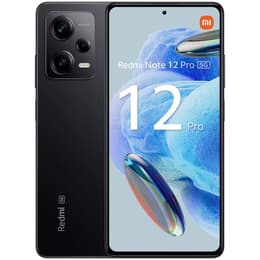


iPhone SE (2020) Vs Xiaomi Redmi Note 12 Pro

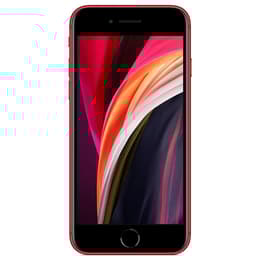
iPhone SE (2020)
iPhone SE (2020)
Starting at

Refurbished price:103.99

Versus €319.00 new

See options
Xiaomi Redmi Note 12 Pro
Starting at

Refurbished price:106.00

Versus €399.00 new

See options

Ratings

The iPhone SE 2020 and the Xiaomi Redmi Note 12 Pro are two distinct smartphones, released in April 2020 and March 2023 respectively, catering to different user preferences and operating system ecosystems. While the iPhone SE 2020 offers a compact design with Apple's iOS, the Redmi Note 12 Pro provides a larger display and a feature-rich Android experience. This comparison will delve into their practical differences to help users make an informed decision.

Scores

Durability

The expected lifespan and software support differ significantly between these two devices, largely due to their release timelines and manufacturer policies.

  • Software Longevity: The iPhone SE 2020, launched in April 2020, benefits from Apple's extended software support, typically receiving major iOS updates for 5 to 7 years. This means it is expected to continue receiving updates, potentially until 2027 or beyond, ensuring access to new features and security enhancements for a considerable period. In contrast, the Xiaomi Redmi Note 12 Pro, released globally in March 2023, generally follows a shorter update cycle, with an expectation of two major Android version updates and three years of security patches. While it launched with Android 12 and has seen updates to Android 15, its security patch support is anticipated to last until 2026.
  • Physical Durability: The iPhone SE 2020 features a glass front and back with an aluminum frame, offering IP67 water and dust resistance, meaning it can withstand immersion in water up to 1 meter for 30 minutes. The Redmi Note 12 Pro has a glass front and back with a plastic frame, providing IP53 dust and splash resistance, which protects against light sprays of water.
  • Repairability: Both devices generally offer moderate repairability, with components being replaceable by skilled technicians. However, the availability and cost of parts can vary depending on the region and manufacturer ecosystem.

Year of Release

2020

2022

Compatible with latest Update

Yes

No

OS

iOS

Android

Foldable

No

No

Performance

When evaluating performance, both devices offer capable experiences for everyday tasks, though their underlying hardware and resulting user experience present distinct characteristics.

  • Everyday Responsiveness: The iPhone SE 2020, despite its earlier release, delivers a very fluid and responsive user experience, handling app launches, multitasking, and general navigation with speed. Users often report that even demanding applications run smoothly. The Redmi Note 12 Pro also provides a smooth experience for daily use, with its hardware capable of managing common applications and browsing efficiently.
  • Demanding Tasks and Gaming: For more intensive tasks like graphic-heavy gaming or video editing, the iPhone SE 2020 maintains strong performance, allowing for a consistent experience without significant slowdowns. The Redmi Note 12 Pro is suitable for moderate gaming and demanding apps, though some users have noted that it might not be ideal for extended heavy gaming sessions and can experience thermal management considerations.
  • Multitasking and Storage: The iPhone SE 2020 typically comes with 3GB of RAM, which is optimized by its operating system for efficient multitasking. Storage options include 64GB, 128GB, and 256GB. The Redmi Note 12 Pro offers more RAM configurations, ranging from 6GB to 12GB, which can be beneficial for keeping many applications open simultaneously, and comes with 128GB or 256GB storage options.

Memory (GB)

3 GB

8 GB

Screen quality

The visual experience on these two smartphones is a key differentiator, primarily due to their display technologies and physical dimensions.

  • Display Technology and Clarity: The iPhone SE 2020 features a 4.7-inch Retina IPS LCD, known for its accurate color reproduction and good viewing angles. The Redmi Note 12 Pro boasts a larger 6.67-inch AMOLED display, which offers deeper blacks, higher contrast, and more vibrant colors. Both provide clear visuals for typical viewing distances.
  • Brightness and Refresh Rate: The iPhone SE 2020's display has a typical brightness of 625 nits, which is adequate for most indoor and outdoor conditions. Its refresh rate is a standard 60Hz. The Redmi Note 12 Pro offers a higher typical brightness of 500 nits, with a peak brightness of 900 nits, improving visibility in bright sunlight. A notable feature of the Redmi Note 12 Pro is its 120Hz refresh rate, which provides a smoother scrolling experience and more fluid animations compared to the 60Hz display of the iPhone SE 2020.
  • Viewing Experience: The compact size of the iPhone SE 2020 makes it easy for one-handed use and pocketability, but its smaller screen might offer a less immersive experience for media consumption. The larger AMOLED screen of the Redmi Note 12 Pro is well-suited for watching videos, browsing, and gaming, providing more screen real estate.

Resolution

750 x 1334

1080 x 2400

Screen type

Retina IPS LCD

AMOLED

Audiovisual

The camera systems on the iPhone SE 2020 and the Xiaomi Redmi Note 12 Pro approach photography with different hardware and software philosophies.

  • Rear Camera Capabilities: The iPhone SE 2020 features a single 12 MP wide-angle camera with optical image stabilization (OIS). It leverages advanced computational photography to enhance image quality, particularly in well-lit conditions, and supports Portrait mode for both front and rear cameras. However, it lacks a dedicated Night mode and can struggle in very low light. The Redmi Note 12 Pro offers a versatile triple-camera setup, including a 50 MP main sensor with OIS, an 8 MP ultrawide lens, and a 2 MP macro lens. Its main camera performs well, especially with good dynamic range and color reproduction, and it includes a Night mode for improved low-light performance.
  • Video Recording and Front Camera: For video, the iPhone SE 2020 can record up to 4K at 60 frames per second, with excellent stabilization and dynamic range, making it a strong contender for video capture. Its front camera is 7 MP and also supports Portrait mode. The Redmi Note 12 Pro records video up to 4K at 30 frames per second with its main camera, and offers a 16 MP front-facing camera that delivers solid selfies with good detail and exposure.
  • Overall Photography Experience: Users generally praise the iPhone SE 2020 for its consistent and natural-looking photos in good lighting, benefiting from Apple's image processing. The Redmi Note 12 Pro's main camera is also well-regarded for its detail and dynamic range, though its ultrawide and macro lenses are considered less capable.

Main camera

12 megapixels

50 megapixels

Front camera

7 megapixels

16 megapixels

Miscellaneous

Beyond core performance and display, several practical features and design elements differentiate these two smartphones.

  • Connectivity and Ports: The iPhone SE 2020 supports 4G LTE and Wi-Fi 6, and uses Apple's proprietary Lightning port for charging and data transfer. It does not feature a 3.5mm headphone jack. The Redmi Note 12 Pro offers more modern connectivity with 5G support and Wi-Fi 6. It uses a universal USB-C port and retains a 3.5mm headphone jack, providing more flexibility for accessories and charging.
  • Biometric Security: The iPhone SE 2020 relies on Touch ID, an integrated fingerprint sensor within its physical home button, for secure unlocking and authentication. The Redmi Note 12 Pro features a side-mounted fingerprint sensor, offering a convenient and quick way to unlock the device.
  • Design and Handling: The iPhone SE 2020 is known for its compact and lightweight design, making it easy to use with one hand and carry in smaller pockets. Its dimensions are 138.4 x 67.3 x 7.3 mm and it weighs 148g. The Redmi Note 12 Pro is a larger device, measuring 162.9 x 76 x 7.9 mm and weighing 187g, offering a more expansive viewing experience but requiring a two-handed grip for many users.

Weight

148 g

187 g

Screen size (in)

4.7

6.67

Network

4G

5G

SIM card

Physical SIM + eSIM

Dual Physical SIM

Carrier compatibility

Unlocked

Unlocked

Connector

Lightning

USB-C

The iPhone SE 2020 and the Xiaomi Redmi Note 12 Pro cater to distinct user needs and preferences, reflecting their different design philosophies and operating systems. User sentiment for the iPhone SE 2020 often highlights its compact form factor, the enduring performance of its processor, and the reliability of the iOS ecosystem. However, common criticisms revolve around its smaller screen size and, notably, its battery life, which many users find requires frequent charging, especially with moderate to heavy use.

Conversely, the Redmi Note 12 Pro is frequently praised for its large, vibrant AMOLED display with a high refresh rate, offering a more immersive visual experience. Its battery life is generally considered robust, often lasting a full day even for active users, and its fast charging capability is a significant advantage. Some users, however, point to the performance for very demanding games and the quality of its secondary cameras (ultrawide and macro) as areas where it could be improved.

Users prioritizing a compact device, long-term software support, and a consistent, streamlined operating system experience may find the iPhone SE 2020 well-suited to their needs. Those who value a large, high-refresh-rate display, extended battery life, faster charging, and the flexibility of the Android ecosystem might lean towards the Xiaomi Redmi Note 12 Pro. Both devices offer compelling features, and considering a quality-assured refurbished option can provide an eco-friendly alternative for either model.


See all articles

Our recent comparisons