

Galaxy A34 Vs Xiaomi 14

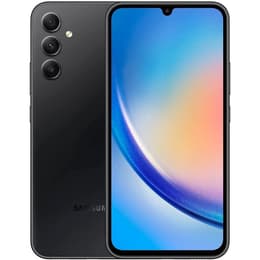
Galaxy A34
Galaxy A34
Starting at

Refurbished price:135.00

Versus €399.00 new

See options
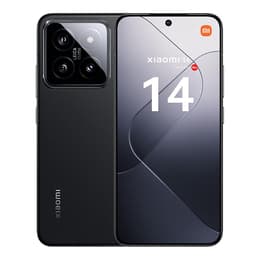
Xiaomi 14
Xiaomi 14
Starting at

Refurbished price:385.00

Versus €1,099.00 new

See options

Ratings

The Samsung Galaxy A34 and the Xiaomi 14 are two distinct smartphones, released in March 2023 and October 2023 (China) / February 2024 (Global) respectively. While both operate on the Android platform, they cater to different user expectations, with the Xiaomi 14 offering advanced performance and camera capabilities, and the Galaxy A34 providing a balanced experience with strong battery life.

Scores

Durability

When considering the long-term usability of these devices, their release timelines and software support policies are key factors. Both manufacturers have committed to providing extended software support, which contributes to a longer practical lifespan for users.

  • Release Timeline: The Galaxy A34 was released in March 2023, making it slightly older than the Xiaomi 14, which saw its global release in February 2024. This difference means the Xiaomi 14 will likely receive software updates for a slightly longer period.
  • OS Support Duration: The Samsung Galaxy A34 is promised four major Android OS upgrades and five years of security updates from its release. The Xiaomi 14 also offers four major Android OS updates and five years of security patches.
  • Repairability: Both devices demonstrate good repairability. The Samsung Galaxy A34 has a repairability score of 8.0 to 8.3 out of 10, indicating it is relatively easy to disassemble and reassemble, with accessible components like the battery and screen. The Xiaomi 14 also scores well, with a repairability rating of 8.0 out of 10, noting that its battery and screen are accessible, though some plastic covers need removal.

Year of Release

2023

2023

Compatible with latest Update

Yes

Yes

OS

Android

Android

Foldable

No

No

Performance

The performance of a smartphone significantly impacts daily usage, from launching applications to handling demanding tasks. The Galaxy A34 and Xiaomi 14 offer different levels of processing power and storage configurations.

  • Processor Capabilities: The Galaxy A34 is equipped with a processor that handles everyday applications and multitasking smoothly. Users report a generally fluid experience, though some minor stutters might occur in graphically intensive games or when using the camera app for extended periods. The Xiaomi 14 features a high-performance processor, enabling blazing-fast operation for all applications and games. It handles demanding tasks like 4K video editing with ease, providing a consistently smooth and responsive user experience.
  • Storage and Multitasking: The Galaxy A34 is available with 6GB or 8GB of RAM and 128GB or 256GB of internal storage, with the added flexibility of a microSD card slot for expandable storage. The Xiaomi 14 offers more generous configurations, including 8GB, 12GB, or 16GB of RAM and 256GB, 512GB, or 1TB of internal storage, though it does not support expandable storage.
  • Battery Behavior: The Galaxy A34 features a 5000 mAh battery, often providing up to two days of use with moderate activity. The Xiaomi 14, with its 4610 mAh battery, typically delivers a full day of usage, even for heavy users, with some reports indicating over six hours of screen-on time.

Memory (GB)

6 GB

16 GB

Screen quality

The display is a primary interface for smartphone interaction, and both devices offer vibrant viewing experiences, albeit with different underlying technologies and specifications.

  • Display Technology and Clarity: The Galaxy A34 features a 6.6-inch Super AMOLED display, providing vibrant colors and deep blacks with a resolution of 2340x1080 pixels. The Xiaomi 14 comes with a slightly smaller 6.36-inch LTPO OLED display, which offers a higher resolution of 2670x1200 pixels, resulting in sharper visuals.
  • Brightness and Refresh Rate: The Galaxy A34's display has a 120Hz refresh rate for smooth scrolling and can reach a peak brightness of 1000 nits, making it visible outdoors. The Xiaomi 14's LTPO OLED panel features an adaptive refresh rate ranging from 1Hz to 120Hz, optimizing power consumption, and boasts an impressive peak brightness of 3000 nits, ensuring excellent visibility even in direct sunlight.
  • Screen Protection: The Galaxy A34 uses Corning Gorilla Glass 5 for screen protection. The Xiaomi 14 is protected by Corning Gorilla Glass Victus, offering enhanced durability.

Resolution

1080 x 2340

1200 x 2670

Screen type

Super AMOLED

LTPO OLED

Audiovisual

Camera capabilities are a significant consideration for many users, and these two phones present different approaches to mobile photography and videography.

  • Rear Camera Systems: The Galaxy A34 features a triple rear camera setup, including a 48MP main sensor with optical image stabilization (OIS), an 8MP ultrawide lens, and a 5MP macro camera. The main camera produces good daylight photos with saturated colors, though some noise can be present. The Xiaomi 14 boasts a more advanced triple 50MP camera system, co-engineered with Leica, featuring a large main sensor with OIS, a 50MP ultrawide, and a 50MP telephoto lens with 3.2x optical zoom and OIS. This system is praised for delivering detailed images with consistent colors.
  • Low-Light and Video Performance: In low-light conditions, the Galaxy A34's main camera performs adequately, but the ultrawide camera struggles with noise. It supports video recording up to 4K at 30 frames per second (fps). The Xiaomi 14 excels in low-light photography and offers excellent video recording quality, including 8K at 24fps from the rear cameras.
  • Front Camera: The Galaxy A34 has a 13MP front-facing camera capable of 4K@30fps video. The Xiaomi 14 features a higher-resolution 32MP front camera, which can record video at up to 4K@60fps.

Main camera

48 megapixels

50 megapixels

Front camera

13 megapixels

32 megapixels

Miscellaneous

Beyond core specifications, several practical elements contribute to the overall user experience and device utility.

  • Connectivity and Ports: The Galaxy A34 supports 5G connectivity, Wi-Fi 5 (802.11ac), and Bluetooth 5.3. The Xiaomi 14 offers more advanced connectivity with 5G, Wi-Fi 7, and Bluetooth 5.4. Both devices feature a USB-C port for charging and data transfer, but neither includes a traditional 3.5mm headphone jack.
  • Biometrics and Design: Both phones incorporate an under-display optical fingerprint sensor for secure unlocking. The Galaxy A34 has a plastic back and a Gorilla Glass 5 front, with an IP67 rating for dust and water resistance. It weighs 199g. The Xiaomi 14 features a more premium build with an aluminum frame, glass or silicone polymer back, and Gorilla Glass Victus on the front, along with an IP68 rating for enhanced dust and water protection. It is slightly lighter and more compact, weighing between 188g and 193g.
  • Audio Experience: Both devices offer stereo speakers. The Galaxy A34's speakers are generally well-balanced and loud, suitable for videos and podcasts. The Xiaomi 14 also provides loud and clear stereo sound, with balanced audio levels.

Weight

199 g

188 g

Screen size (in)

6.6

6.36

Network

5G

5G

SIM card

Dual Physical SIM

Dual Physical SIM

Carrier compatibility

Unlocked

Unlocked

The Samsung Galaxy A34 and Xiaomi 14 offer distinct propositions for smartphone users. The Galaxy A34 is frequently praised for its impressive battery life, often lasting two days on a single charge, and its vibrant Super AMOLED display. Users also appreciate its consistent software support, ensuring longevity. However, some criticisms point to its performance being less robust for demanding applications and its ultrawide camera sometimes producing oversaturated images.

Conversely, the Xiaomi 14 receives significant acclaim for its powerful performance, driven by its advanced processor, making it suitable for intensive gaming and complex tasks. Its camera system, co-engineered with Leica, is a major highlight, consistently delivering high-quality photos and videos, even in challenging conditions. User feedback occasionally mentions that the device can experience some heating during prolonged heavy use, such as extended gaming sessions or video recording.

Users prioritizing extended battery life, a large display for media consumption, and a reliable, well-supported Android experience for everyday tasks may find the Samsung Galaxy A34 well-suited to their needs. Its robust software update policy also makes it a practical choice for those seeking a device with a longer lifespan. For individuals who demand top-tier performance for gaming and demanding applications, a highly versatile and capable camera system, and a more compact, premium build, the Xiaomi 14 presents a compelling option. Both devices are available as quality-assured refurbished options, providing an eco-friendly alternative for consumers.


See all articles

Our recent comparisons