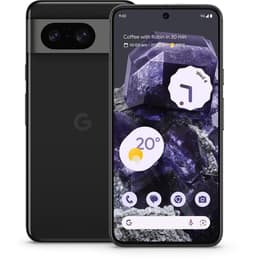
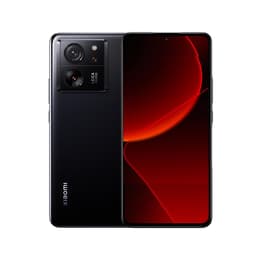


Google Pixel 8a Vs Xiaomi 13T Pro

Google Pixel 8a
Google Pixel 8a
Starting at

Refurbished price:232.00

Versus €549.00 new

See options
Xiaomi 13T Pro
Xiaomi 13T Pro
Starting at

Refurbished price:245.00

Versus €900.00 new

See options

Ratings

The Google Pixel 8A, released in May 2024, and the Xiaomi 13T Pro, launched in September 2023, are both Android smartphones offering distinct user experiences. While the Pixel 8A emphasizes a compact design and advanced computational photography, the Xiaomi 13T Pro focuses on a larger display, rapid charging, and a powerful processor. Both devices run on the Android operating system, but they differ in their software philosophies and hardware priorities.

Scores

Durability

The longevity of a smartphone is influenced by its release timeline, software support, and physical resilience.

  • Release and Software Support: The Google Pixel 8A, released in May 2024, benefits from Google's commitment to providing seven years of operating system and security updates, extending its support until at least May 2031. This offers a prolonged period of up-to-date software and security features. The Xiaomi 13T Pro, launched in September 2023, initially promised four major Android updates and five years of security patches. As of March 2026, it has received HyperOS 3 based on Android 16.
  • Physical Durability: The Pixel 8A features Corning Gorilla Glass 3 for screen protection and carries an IP67 rating for dust and water resistance, indicating it can withstand submersion in up to 1 meter of water for 30 minutes. The Xiaomi 13T Pro offers enhanced protection with Corning Gorilla Glass 5 on its display and an IP68 rating, allowing for submersion in up to 1.5 meters of water for 30 minutes.
  • Repairability: The Pixel 8A has been noted for a repairability score of 4.5 out of 10 in some assessments, citing challenges like strong adhesive and a soldered charging port. However, Google's Pixel series generally aims for higher repairability. Specific repairability scores for the Xiaomi 13T Pro are not widely available, but its construction typically involves standard smartphone assembly practices.

Year of Release

2024

2023

OS

Android

Android

Foldable

No

No

Performance

The performance of these devices is shaped by their internal components, impacting daily usage and demanding applications.

  • Processing Power: The Google Pixel 8A is equipped with a current-generation processor that handles demanding applications and multitasking smoothly. It is designed to integrate Google's advanced AI features efficiently. The Xiaomi 13T Pro features a powerful processor that delivers flagship-grade performance and stability, making it well-suited for intensive tasks and gaming.
  • Memory and Storage: The Pixel 8A typically comes with 8GB of RAM and offers storage options of 128GB or 256GB. The Xiaomi 13T Pro provides more generous configurations, with 12GB or 16GB of RAM and storage options ranging from 256GB to 1TB, utilizing faster UFS 4.0 storage standards. This larger RAM and faster storage can contribute to smoother multitasking and quicker app loading, especially with numerous applications open simultaneously.
  • Battery Behavior: The Pixel 8A houses a 4492 mAh battery, which generally provides sufficient power for a full day of use for many users. The Xiaomi 13T Pro includes a larger 5000 mAh battery, often resulting in very good battery life. Additionally, the Xiaomi 13T Pro supports exceptionally fast 120W wired charging, capable of fully charging its battery in approximately 19 minutes, while the Pixel 8A supports 18W wired charging and 7.5W wireless charging.

Memory (GB)

8 GB

16 GB

Screen quality

The visual experience on both smartphones is delivered through their respective display technologies and specifications.

  • Display Technology and Clarity: Both devices feature OLED displays, known for deep blacks and vibrant colors. The Pixel 8A has a 6.1-inch OLED screen with a 1080x2400 pixel resolution, providing a clear and sharp viewing experience for everyday content. The Xiaomi 13T Pro offers a larger 6.67-inch AMOLED display with a higher resolution of 1220x2712 pixels, resulting in a slightly crisper image.
  • Brightness and Refresh Rate: The Pixel 8A's display supports a 120Hz refresh rate, offering smooth scrolling and responsiveness, and can reach a peak brightness of 2000 nits, which aids visibility in bright outdoor conditions. The Xiaomi 13T Pro also boasts a high 144Hz refresh rate for very fluid visuals and an impressive peak brightness of 2600 nits, along with support for Dolby Vision and HDR10+ for enhanced contrast and color in compatible content.
  • Viewing Experience: The Pixel 8A's smaller screen size makes it more suitable for one-handed use and those who prefer a compact device. The Xiaomi 13T Pro's larger display provides a more expansive canvas for media consumption, gaming, and multitasking, though it may require two hands for comfortable operation.

Resolution

1080 x 2400

1220 x 2712

Audiovisual

Both smartphones offer capable camera systems, though with different approaches to imaging and processing.

  • Rear Camera Systems: The Google Pixel 8A features a dual-camera setup on the rear, including a 64 MP wide-angle main sensor with optical image stabilization (OIS) and a 13 MP ultrawide camera with a 120-degree field of view. The Xiaomi 13T Pro comes with a triple camera system co-engineered with Leica, comprising a 50 MP wide-angle main sensor with OIS, a 50 MP telephoto lens offering 2x optical zoom, and a 12 MP ultrawide lens.
  • Photography Performance: The Pixel 8A is known for its excellent photo and video quality, particularly its computational photography capabilities and AI-powered editing features like Magic Editor. Users often praise its ability to capture vivid, detail-rich images in various conditions. The Xiaomi 13T Pro's Leica-tuned cameras deliver outstanding photo and video quality from its rear sensors, with consistent color reproduction across lenses. Its dedicated telephoto lens provides genuine optical zoom.
  • Video and Front Camera: The Pixel 8A records 4K video at 30fps and has a 13 MP front camera. The Xiaomi 13T Pro supports up to 8K video recording at 24fps and 4K at 60fps, and features a 20 MP front camera. While the Pixel 8A's front camera is generally good, some users have noted that its color science can sometimes produce cooler tones.

Miscellaneous

Beyond core features, several practical elements contribute to the overall user experience of these devices.

  • Connectivity and Ports: Both smartphones support 5G connectivity, ensuring access to the latest mobile network speeds. The Xiaomi 13T Pro also supports Wi-Fi 7 and Bluetooth 5.4, offering advanced wireless capabilities, while the Pixel 8A supports Wi-Fi 6E. The Pixel 8A uses a USB-C port, a common standard, but lacks a headphone jack. The Xiaomi 13T Pro also features a USB-C port and includes an IR blaster, which allows it to function as a universal remote control.
  • Biometric Security: The Pixel 8A incorporates an under-display fingerprint sensor and face recognition for secure unlocking. The Xiaomi 13T Pro also utilizes an under-display optical fingerprint sensor.
  • Design and Handling: The Pixel 8A has a compact form factor, measuring 152.1 x 72.7 x 8.9mm and weighing 188g, with more rounded corners and a matte finish on the back for comfortable one-handed use. The Xiaomi 13T Pro is a larger device at 162.2 x 75.7 x 8.5mm and weighs between 200g and 206g, depending on the back material (glass or vegan leather). Its larger size provides a more immersive viewing experience but may be less convenient for single-handed operation.

Weight

188 g

206 g

Screen size (in)

6.1

6.67

Network

5G

5G

SIM card

Physical SIM + eSIM

Physical SIM + eSIM

Carrier compatibility

Unlocked

Unlocked

User feedback highlights distinct strengths for both the Google Pixel 8A and the Xiaomi 13T Pro. The Pixel 8A is frequently praised for its exceptional camera performance, clean Android software experience, and Google's commitment to seven years of software updates. Users appreciate its compact size and comfortable design for one-handed use. Common criticisms include its slower charging speed, noticeable display bezels, and some reports of chipset throttling under heavy load.

The Xiaomi 13T Pro receives commendation for its vibrant and large AMOLED display with a high refresh rate, very good battery life, and incredibly fast charging capabilities. Its powerful processor and versatile Leica-tuned camera system, especially the main and telephoto lenses, are also frequently highlighted. Some users have expressed disappointment with the selfie camera and the 2x optical zoom, wishing for a 3x option. Early reviews also suggested that its battery, camera, and display did not always represent significant improvements over its predecessor.

Users prioritizing a compact device with a long software support lifespan and advanced computational photography features will find the Google Pixel 8A well-suited to their needs. Those who value a larger, brighter display, superior raw processing power, rapid charging, and a more versatile camera system with optical zoom may lean toward the Xiaomi 13T Pro. Both devices offer compelling features, and considering a quality-assured refurbished option for either model can provide an eco-friendly alternative for consumers.


See all articles

Our recent comparisons






