

Compare models
Galaxy A16 Vs iPhone Air
- 1-year minimum warranty
- Free delivery on all orders
- Free 30-day returns
Differences at a glance
The Samsung Galaxy A16 (2024) and the Apple iPhone Air (2025) represent two distinct approaches to modern smartphone design, targeting very different usage preferences and mobile ecosystems. While the Galaxy A16 focuses on delivering essential daily reliability on the Android platform, the iPhone Air prioritizes an ultra-slim profile and advanced iOS processing capabilities. These models differ significantly in their physical build, target user experience, and hardware ecosystem.
Available Models
Colour
Storage (GB)
Scores
Durability
Evaluating the lifespan and durability of these devices reveals contrasting software ecosystems and physical construction philosophies tailored to different user expectations.
- Release timeline and software support: The Galaxy A16 benefits from an extended software update commitment spanning multiple years, while the iPhone Air launches with modern high-tier iOS support longevity.
- Build materials and protection: The Galaxy A16 utilizes a practical plastic frame and standard water resistance, whereas the iPhone Air employs a rigid titanium frame paired with reinforced glass protection.
- Expected practical lifespan: Both models are built to last several years of daily use, though hardware capability differences influence how smoothly they handle future software demands.
Year of Release
2024
2025
Compatible with latest Update
Yes
Yes
OS
Android
iOS
Foldable
No
No
Performance
Daily performance and efficiency vary substantially, driven by differences in internal processing hardware and multitasking capacity.
- Everyday responsiveness: The Galaxy A16 handles routine messaging, web browsing, and media streaming smoothly, while the iPhone Air executes demanding applications and intensive multitasking with high processing efficiency.
- Battery behavior: The Galaxy A16 incorporates a high-capacity battery designed to easily sustain multi-day light usage, whereas the iPhone Air balances its ultra-thin chassis with an optimized power-efficient cell.
- Storage and memory configurations: Both devices offer ample internal storage tiers to accommodate personal files, applications, and media libraries without frequent cleanups.
Screen quality
Display characteristics differ notably in size, panel technology, and visual fluidity for media consumption.
- Display technology: The Galaxy A16 features a vibrant Super AMOLED screen providing deep contrast, while the iPhone Air utilizes an advanced OLED panel equipped with high peak brightness levels for outdoor readability.
- Refresh rate and motion: The iPhone Air supports a fluid 120Hz adaptive refresh rate for seamless scrolling, compared to the fixed 90Hz refresh rate found on the Galaxy A16.
- Viewing experience: Both screens deliver sharp resolutions suitable for reading, watching videos, and viewing photos comfortably under various lighting conditions.
Resolution
1080 x 2340
2736x1260
Screen type
Super AMOLED
Super Retina XDR
Audiovisual
Audio-visual capabilities reflect each manufacturer's approach to media recording, photography, and sound reproduction.
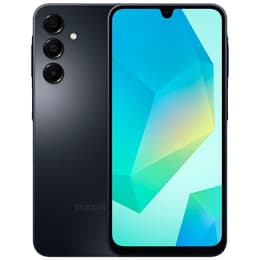
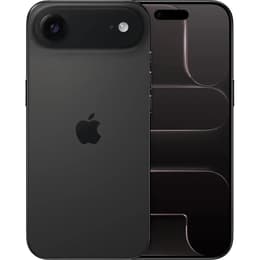
- Camera systems: The Galaxy A16 includes a versatile triple-lens rear setup featuring macro and ultra-wide options, whereas the iPhone Air concentrates its imaging hardware into a single high-resolution primary lens system.
- Video and low-light performance: The iPhone Air excels in challenging lighting conditions and high-end video stabilization, while the Galaxy A16 provides reliable everyday snapshots.
- Audio output: Media playback and call audio differ between the standard stereo or mono speaker configurations integrated into each respective body style.
Main camera
50 megapixels
48 megapixels
Front camera
13 megapixels
18 megapixels
Miscellaneous
Physical dimensions and connectivity standards determine how each smartphone fits into daily travel and accessory ecosystems.
- Port types and connectivity: Both models utilize universal USB-C connectivity for charging and data transfer alongside modern wireless protocols.
- Handling and ergonomics: The Galaxy A16 features a standard smartphone thickness with a secure grip, whereas the iPhone Air stands out with an exceptionally thin and lightweight titanium frame.
- Security sensors: The Galaxy A16 relies on a convenient side-mounted fingerprint sensor, while the iPhone Air utilizes facial recognition technology.
Weight
200 g
165 g
Screen size (in)
6.7
6.5
Network
4G
5G
SIM card
Dual Physical SIM
eSIM
Carrier compatibility
Unlocked
Unlocked
Connector
USB-C
USB-C
What the community thinks
User feedback from online communities highlights distinct preferences for each device. Owners of the Galaxy A16 frequently praise its reliable battery longevity and straightforward daily usability for essential tasks. On the other hand, users of the iPhone Air often emphasize appreciation for its remarkably slim physical build, fluid display responsiveness, and powerful processing performance. Common discussions note that while the Galaxy A16 focuses on core practicality, the iPhone Air prioritizes advanced engineering and high-end portability.
Users prioritizing an ultra-thin form factor and advanced processing power may prefer the iPhone Air, while users focusing on extended battery endurance and everyday simplicity often lean toward the Galaxy A16. Choosing a quality-assured refurbished option provides an eco-friendly alternative that extends device life cycles while supporting sustainable technology habits. Ultimately, the right choice depends on individual software preferences, handling comfort, and specific daily performance needs.