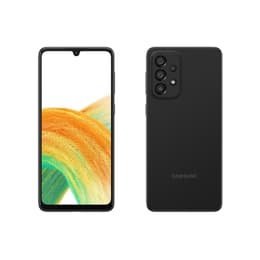
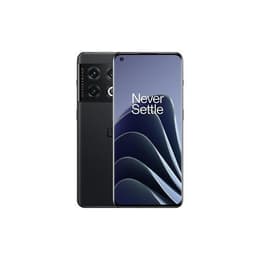


Galaxy A33 5G Vs OnePlus 10 Pro

Galaxy A33 5G
Galaxy A33 5G
Starting at

Refurbished price:100.00

Versus €389.00 new

See options
OnePlus 10 Pro
OnePlus 10 Pro
Starting at

Refurbished price:228.00

Versus €999.00 new

See options

Ratings

The Samsung Galaxy A33 5G, released in April 2022, and the OnePlus 10 Pro, launched globally in March 2022, are both Android smartphones offering distinct user experiences. While the Galaxy A33 5G positions itself as a well-rounded device with strong software support, the OnePlus 10 Pro focuses on high-end performance and a premium display. Both devices run on the Android operating system, with their respective custom user interfaces, One UI for Samsung and OxygenOS for OnePlus.

Scores

Durability

The longevity of a smartphone is significantly influenced by its software support and physical durability.

  • Software Updates: The Samsung Galaxy A33 5G was released with Android 12 and is guaranteed to receive four major Android OS upgrades, extending its support up to Android 16, along with five years of security updates. [11, 18, 33, 37, 43] The OnePlus 10 Pro also launched with Android 12 and was initially promised three major Android updates and four years of security updates. [13, 23, 35] However, it has since received its fourth major OS upgrade to Android 16 in February 2026, which is expected to be its last major update, and it is not anticipated to receive Android 17. [24, 34, 44, 45]
  • Physical Durability: The Galaxy A33 5G features Corning Gorilla Glass 5 on the front and an IP67 rating for dust and water resistance, indicating protection against immersion in up to 1 meter of water for 30 minutes. [18, 36, 42, 49] The OnePlus 10 Pro comes with Gorilla Glass Victus for enhanced screen protection and a ceramic cover for its rear camera module. [7, 8] However, international versions of the OnePlus 10 Pro generally lack an official IP water resistance rating, though some US models (T-Mobile exclusive) do carry an IP68 rating. [7, 28, 30]
  • Repairability: The Samsung Galaxy A33 5G has a reported repairability score of 7.5 to 7.75 out of 10, with components like the battery being relatively accessible. [9, 16] The OnePlus 10 Pro has a lower repairability score, around 6 to 8 out of 10, with some sources noting that while certain components are accessible, adhesive use and plastic covers can complicate repairs. [6, 10, 21] Concerns have also been raised regarding the structural integrity of the OnePlus 10 Pro in bend tests. [41, 48]

Year of Release

2022

2022

Compatible with latest Update

Yes

Yes

OS

Android

Android

Foldable

No

No

Performance

Performance in daily use is a key differentiator, impacting app responsiveness, multitasking, and gaming experiences.

  • Processing Power: The Samsung Galaxy A33 5G is powered by an octa-core processor, which offers a responsive experience for everyday tasks and general app usage. [4, 11, 25, 26] The OnePlus 10 Pro features a more powerful current-generation octa-core processor, designed for demanding applications, intensive multitasking, and high-fidelity gaming. [1, 2, 8, 13, 15]
  • System Responsiveness: Users of the Galaxy A33 5G generally find its performance solid for its class, though some may experience minor delays or stutters when many applications are open simultaneously. [25, 32] The OnePlus 10 Pro is noted for its slick and fast performance, with a smooth user interface and efficient handling of heavy workloads, partly due to its advanced cooling system. [8, 17, 29, 30]
  • Storage and Memory: The Galaxy A33 5G offers 6GB or 8GB of RAM and 128GB or 256GB of internal storage, with the added flexibility of expandable storage via a microSD card up to 1TB. [4, 11, 18, 49] The OnePlus 10 Pro comes with 8GB or 12GB of RAM and 128GB, 256GB, or 512GB of internal storage, but it does not support expandable storage. [1, 13, 15]
  • Battery Behavior: Both devices are equipped with a 5000mAh battery. [4, 11, 15, 24] The Galaxy A33 5G is often reported to offer a two-day battery life with typical usage and supports 25W fast charging. [37, 42, 49] The OnePlus 10 Pro supports significantly faster 80W wired charging (65W in North America) and 50W wireless charging, allowing for quicker power replenishment. [13, 15, 29] User experiences with the OnePlus 10 Pro's battery life vary, with some reporting good endurance and others noting 5-6 hours of screen-on time, sometimes impacted by the processor's thermal characteristics. [17, 19, 29]

Memory (GB)

6 GB

8 GB

Screen quality

The display is a primary interface for smartphone interaction, with differences in technology and specifications affecting the visual experience.

  • Display Technology and Resolution: The Samsung Galaxy A33 5G features a 6.4-inch Super AMOLED display with a resolution of 1080x2400 pixels (FHD+), providing vibrant colors and deep blacks. [4, 11, 22, 25, 27] The OnePlus 10 Pro boasts a larger 6.7-inch Fluid AMOLED display with a higher resolution of 3216x1440 pixels (QHD+), offering a sharper and more detailed visual experience. [1, 7, 12, 15]
  • Refresh Rate and Smoothness: The Galaxy A33 5G has a 90Hz refresh rate, which contributes to smoother scrolling and a more fluid user interface compared to standard 60Hz displays. [4, 22, 25] The OnePlus 10 Pro features an advanced LTPO 2.0 display with an adaptive refresh rate that can dynamically scale from 1Hz to 120Hz. [7, 8, 12, 15, 20] This technology allows for very smooth motion when needed and conserves battery by lowering the refresh rate for static content.
  • Brightness and Clarity: The Galaxy A33 5G's Super AMOLED panel achieves an average luminance of around 695 cd/m² and a peak brightness of 800 nits, ensuring good visibility in various lighting conditions. [14, 25, 42] The OnePlus 10 Pro offers a peak brightness of 1300 nits and includes Dual Color Calibration, which aims to maintain color accuracy across different brightness levels. [7, 8, 15]
  • Screen Protection: Both devices offer robust screen protection. The Galaxy A33 5G is protected by Corning Gorilla Glass 5. [18, 22, 49] The OnePlus 10 Pro features the newer Corning Gorilla Glass Victus for enhanced durability against scratches and drops. [7, 8]

Resolution

1080 x 2400

1440 x 3216

Screen type

Super AMOLED

LTPO2 Fluid AMOLED

Audiovisual

Camera capabilities are a significant factor for many users, encompassing both still photography and video recording.

  • Rear Camera System: The Samsung Galaxy A33 5G is equipped with a quad-camera setup, including a 48MP main sensor with Optical Image Stabilization (OIS), an 8MP ultrawide lens, a 5MP macro lens, and a 2MP depth sensor. [4, 11, 26, 37, 42] The OnePlus 10 Pro features a triple-camera system co-developed with Hasselblad, comprising a 48MP main sensor with OIS, a 50MP ultrawide lens with a wide 150° field of view, and an 8MP telephoto lens offering 3.3x optical zoom with OIS. [1, 6, 7, 13, 15, 28]
  • Photography Performance: The Galaxy A33 5G's main camera, aided by OIS, is capable of capturing surprisingly decent photos in daylight with good color accuracy, though low-light performance benefits from Night mode. [37] The OnePlus 10 Pro's main camera is generally praised for producing very good images with balanced exposure and color, and it handles low-light scenarios well, though its night mode may not always match the best in class. [28, 29, 30] The 150° ultrawide lens offers unique photographic perspectives. [17]
  • Video Recording: Both the Galaxy A33 5G and the OnePlus 10 Pro are capable of recording video at 4K resolution at 30 frames per second (fps). [11, 37, 49] The OnePlus 10 Pro extends its video capabilities further, supporting 8K video recording at 24fps and 4K video at up to 120fps. [15]
  • Front Camera and Audio: The Galaxy A33 5G has a 13MP front-facing camera. [4, 11, 42] The OnePlus 10 Pro features a higher-resolution 32MP front camera, which is noted for producing vibrant and sharp selfies. [1, 28] Both devices offer stereo speakers, with the Galaxy A33 5G supporting Dolby Atmos. [37, 42, 20]

Main camera

48 megapixels

48 megapixels

Front camera

13 megapixels

32 megapixels

Miscellaneous

Beyond core specifications, several practical elements contribute to the overall user experience and device utility.

  • Connectivity: Both smartphones support 5G connectivity, enabling faster mobile data speeds. [4, 13, 15] The Galaxy A33 5G includes Wi-Fi 5 (802.11ac) and Bluetooth 5.1. [49] The OnePlus 10 Pro features newer standards with Wi-Fi 6 (802.11ax) and Bluetooth 5.2, offering potentially faster and more stable wireless connections. [15, 20]
  • Ports and Sensors: Both devices utilize a USB-C port for charging and data transfer. [4, 7, 15] The Galaxy A33 5G does not include a 3.5mm headphone jack. [42] For biometric security, the Galaxy A33 5G features an in-display optical fingerprint sensor. [4, 25, 49] The OnePlus 10 Pro also has an in-display optical fingerprint sensor. [13, 15, 30]
  • Build Materials and Handling: The Galaxy A33 5G has a plastic back and frame, with a glass front. [18, 49] It measures 159.7 x 74 x 8.1 mm and weighs 186g. [4, 11, 42] The OnePlus 10 Pro features a glass back, a metal frame, and a ceramic camera module, giving it a more premium feel. [7, 8, 30] It is slightly larger and heavier at 163 x 73.9 x 8.55 mm and 200.5g. [1, 7, 15]
  • Additional Features: The Galaxy A33 5G offers expandable storage via microSD, a feature not present on the OnePlus 10 Pro. [11, 18] The OnePlus 10 Pro includes an Alert Slider, a physical switch for quickly changing sound profiles. [7]

Weight

186 g

201 g

Screen size (in)

6.4

6.7

Network

5G

5G

SIM card

Dual Physical SIM

Physical SIM

Carrier compatibility

Unlocked

Unlocked

The Samsung Galaxy A33 5G and the OnePlus 10 Pro, both released in 2022, cater to different user priorities, offering distinct strengths in their respective categories.

Users frequently praise the Samsung Galaxy A33 5G for its robust software support, with a commitment to four major Android OS upgrades and five years of security updates, ensuring long-term usability. [33, 37, 43] Its IP67 water and dust resistance and vibrant Super AMOLED display are also commonly highlighted as positive attributes. [22, 36, 37] Criticisms sometimes point to its performance, which, while solid for its segment, may exhibit minor stutters with heavy multitasking compared to higher-end devices. [25, 32]

The OnePlus 10 Pro, on the other hand, receives commendation for its powerful performance, stunning QHD+ AMOLED display with an adaptive 120Hz refresh rate, and exceptionally fast wired and wireless charging capabilities. [8, 19, 29, 30] Its main camera, co-developed with Hasselblad, is generally well-regarded for daytime photography. [17, 28] However, common concerns among users include the lack of an official IP rating for most international versions and some inconsistencies in camera performance, particularly in low-light or zoom scenarios. [7, 28, 30] Early durability tests also raised questions about its structural integrity. [41, 48]

Users prioritizing extended software longevity, reliable water resistance, and expandable storage will find the Samsung Galaxy A33 5G well-suited to their needs. It offers a balanced experience for everyday use and media consumption. Conversely, users who prioritize cutting-edge performance for demanding applications and gaming, a top-tier display, and rapid charging will likely lean towards the OnePlus 10 Pro. Its advanced camera system also appeals to those seeking versatile photographic tools, despite some reported limitations. Both devices represent compelling options, and considering quality-assured refurbished alternatives can provide an eco-friendly choice for either model.


See all articles

Our recent comparisons






