

Galaxy Z Flip3 5G Vs iPhone 13 mini

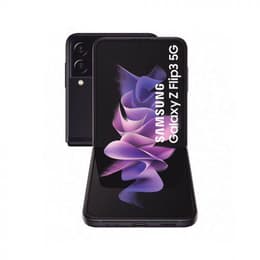
Galaxy Z Flip3 5G
Galaxy Z Flip3 5G
Starting at

Refurbished price:154.00

Versus €999.00 new

See options
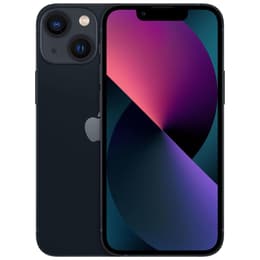
iPhone 13 mini
iPhone 13 mini
Starting at

Refurbished price:228.00

Versus €829.00 new

See options

Ratings

The Samsung Galaxy Z Flip3 5G, released in August 2021, and the iPhone 13 Mini, launched in September 2021, represent distinct approaches to smartphone design from their respective manufacturers. While the Z Flip3 offers a unique foldable form factor that transforms a larger screen into a compact device, the iPhone 13 Mini focuses on delivering a powerful, traditional smartphone experience in a small, pocket-friendly size. Both devices run on their respective flagship operating systems, Android for the Z Flip3 and iOS for the iPhone 13 Mini, offering different ecosystems and user interfaces.

Scores

Durability

When considering the longevity of these devices, several factors come into play, including their release timelines, software support, and physical durability.

  • Release Timeline and Age: Both devices were released in late 2021, making them similar in age. The Galaxy Z Flip3 5G was announced in August 2021 and released on August 27, 2021. The iPhone 13 Mini was unveiled on September 14, 2021, and became available on September 24, 2021.
  • OS Support Duration: Samsung typically provides three years of major Android OS updates and five years of security updates for its flagship devices, including the Z Flip3. This means the Z Flip3 is expected to receive major OS updates until around Android 14 (which it received in late 2023) and security updates until August 2026. The iPhone 13 Mini, running iOS, benefits from Apple's generally longer software support, with devices often receiving updates for five to six years from their release. The iPhone 13 Mini is compatible with iOS 26, the current public release.
  • Repairability: The iPhone 13 Mini initially received a repairability score of 5 out of 10 from iFixit, which was later improved to 6 out of 10 with a software update addressing Face ID repair issues. However, some sources still rate its repairability as fairly low due to adhesive use and specific tools required. Information on the Z Flip3's repairability score is less readily available, but foldable phones generally present more complex repair challenges due to their intricate designs.

Year of Release

2021

2021

Compatible with latest Update

Yes

Yes

OS

Android

iOS

Foldable

Yes

No

Performance

Both the Galaxy Z Flip3 5G and the iPhone 13 Mini offer robust performance for daily tasks, though their underlying architectures differ.

  • Processor Capabilities: The iPhone 13 Mini is equipped with a powerful processor that delivers smooth and speedy performance, even when multitasking or running demanding applications. Users report that it handles everyday tasks, app launches, and fluid scrolling effortlessly, even in 2026. The Galaxy Z Flip3 5G features a current-generation processor that provides strong performance for general use and multitasking.
  • Multitasking and Responsiveness: The iPhone 13 Mini, with 4GB of RAM, can experience app reloads when switching between many demanding applications, which heavy multitaskers might notice. The Galaxy Z Flip3 5G comes with 8GB of RAM, which generally allows for more seamless multitasking and keeping more applications open in the background without needing to reload.
  • Storage Options: Both devices offer various storage configurations. The iPhone 13 Mini is available with 128GB, 256GB, or 512GB of internal storage. The Galaxy Z Flip3 5G is available with 128GB or 256GB of internal storage.

Memory (GB)

8 GB

4 GB

Screen quality

The display experience on these two smartphones presents a notable contrast, primarily due to the Z Flip3's foldable design and differing refresh rates.

  • Display Technology and Size: The iPhone 13 Mini features a 5.4-inch Super Retina XDR OLED display, known for its vibrant colors and deep blacks. The Galaxy Z Flip3 5G boasts a larger 6.7-inch foldable Dynamic AMOLED 2X main display when unfolded. It also includes a 1.9-inch Super AMOLED cover screen for quick notifications and interactions when folded.
  • Resolution and Clarity: The iPhone 13 Mini offers a resolution of 2340 by 1080 pixels at 476 pixels per inch (ppi), providing a sharp and clear viewing experience. The Z Flip3's main display has a resolution of 1080 x 2640 pixels, resulting in approximately 425 ppi, which also offers good clarity.
  • Brightness and Refresh Rate: Both displays offer good brightness, with the iPhone 13 Mini reaching 800 nits typical brightness and 1200 nits for HDR content. The Z Flip3's main display also achieves a high peak brightness of 1200 nits. A key difference is the refresh rate: the Z Flip3's main display features a 120Hz adaptive refresh rate for smoother scrolling and animations, while the iPhone 13 Mini has a standard 60Hz refresh rate.

Resolution

1080 x 2640

1080 x 2340

Screen type

Foldable Dynamic AMOLED 2X

Super Retina XDR OLED

Audiovisual

Both devices offer capable camera systems for everyday photography and video recording, though with some distinctions in features and performance.

  • Rear Camera System: The iPhone 13 Mini features a dual 12MP camera system, including a wide and an ultra-wide lens. The main wide camera has a larger sensor and sensor-shift optical image stabilization, contributing to improved low-light performance and stable videos. The Galaxy Z Flip3 5G also has a dual 12MP rear camera setup, consisting of a wide and an ultra-wide lens, with optical image stabilization on the main sensor.
  • Photography Performance: The iPhone 13 Mini takes clear photos with true-to-life colors and performs well in low-light conditions. However, some users have noted that close-up shots can be challenging. The Z Flip3's cameras are generally considered good, capturing plenty of detail with Samsung's characteristic vibrant color profile, and include a Night mode.
  • Video Recording and Selfie Cameras: Both phones support 4K video recording at up to 60 frames per second. The iPhone 13 Mini includes features like Cinematic mode for video with shallow depth of field. For selfies, the iPhone 13 Mini has a 12MP TrueDepth front camera. The Z Flip3 has a 10MP front-facing camera, but its foldable design allows users to utilize the higher-quality rear cameras for selfies, using the cover screen as a viewfinder.

Main camera

12 megapixels

12 megapixels

Front camera

10 megapixels

12 megapixels

Miscellaneous

Beyond core performance and display, several practical elements differentiate these two smartphones in daily use.

  • Connectivity and Ports: Both the Galaxy Z Flip3 5G and the iPhone 13 Mini support 5G connectivity for faster network speeds. The Z Flip3 uses a USB-C 3.1 port for charging and data transfer, while the iPhone 13 Mini uses Apple's proprietary Lightning connector. Neither device includes a 3.5mm headphone jack.
  • Biometric Security: The iPhone 13 Mini relies on Face ID for secure facial recognition. The Galaxy Z Flip3 5G features a side-mounted fingerprint scanner for biometric authentication, along with face recognition.
  • Dimensions and Handling: The iPhone 13 Mini is a compact device, measuring 131.5 x 64.2 x 7.65 mm and weighing 141 grams. This makes it ideal for one-handed use. The Galaxy Z Flip3 5G has a unique form factor; when unfolded, it measures 166 x 72.2 x 6.9 mm, but folds down to a much smaller 72.2 x 86.4 x 17.1 mm, making it highly portable when closed. It weighs 183 grams.
  • Build Materials and Durability Features: The iPhone 13 Mini features a Ceramic Shield front cover for enhanced durability and an IP68 rating for water resistance. The Galaxy Z Flip3 5G also boasts an IPX8 water resistance rating, meaning it can withstand submersion in water, and uses Gorilla Glass Victus for external protection. However, it is not dust resistant.

Weight

183 g

140 g

Screen size (in)

6.7

5.4

Network

5G

5G

SIM card

Physical SIM + eSIM

Physical SIM + eSIM

Carrier compatibility

Unlocked

Unlocked

The Samsung Galaxy Z Flip3 5G and the iPhone 13 Mini cater to different user preferences, each offering a distinct set of advantages and trade-offs.

Users frequently praise the Galaxy Z Flip3 for its innovative foldable design, which offers a large screen experience in a highly portable form factor. The larger cover screen is also a noted improvement for quick interactions. However, common criticisms often revolve around its battery life, which some users find to be short, and the camera performance, while good, is not always considered on par with other top-tier smartphones.

The iPhone 13 Mini is consistently lauded for its powerful performance in a compact size, making it a favorite for those who prefer smaller phones without compromising on speed. Its camera system is generally well-regarded for producing quality photos and videos. The most frequent concern raised by users is its battery life, which, despite improvements over its predecessor, may still require careful management for heavy users to last a full day.

Users prioritizing a unique, compact design that offers a larger screen when needed, and who value the flexibility of a foldable device, may find the Galaxy Z Flip3 5G well-suited to their needs. Its larger RAM capacity also benefits those who frequently multitask. Conversely, users who prefer a traditional, highly responsive, and consistently performing compact smartphone with a strong camera system, and who are deeply integrated into the iOS ecosystem, will likely lean towards the iPhone 13 Mini. Both devices offer a compelling experience within their respective categories, and choosing between them often comes down to whether a foldable form factor or a traditional compact design aligns better with individual usage patterns. For those looking for an eco-friendly alternative, both models are available as quality-assured refurbished options.

See all articles

Our recent comparisons