

Compare models
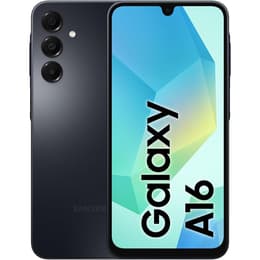
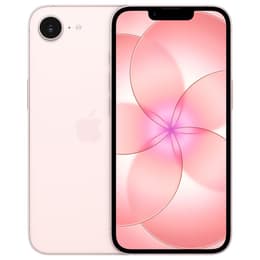
Galaxy A16 Vs iPhone 17e
- 1-year minimum warranty
- Free delivery on all orders
- Free 30-day returns
Differences at a glance
The Samsung Galaxy A16 (2024) and the Apple iPhone 17e (2026) represent two distinct approaches to everyday mobile technology, catering to different user ecosystems and preferences. While both smartphones provide reliable daily connectivity, they diverge significantly in their operating systems, hardware sophistication, and launch timelines. Choosing between them depends on how you value software environments and physical device design.
Available Models
Colour
Storage
Scores
Durability
When evaluating hardware durability and software longevity, these two devices reflect different manufacturer support schedules and build materials designed for extended daily use.
- Software support window: The Galaxy A16 benefits from an extended multi-year update policy typical of modern Android devices, while the iPhone 17e follows Apple's long-standing tradition of multi-year iOS updates and security patches.
- Physical build and protection: The iPhone 17e features reinforced front glass protection and a high water-resistance rating, whereas the Galaxy A16 utilizes a standard dust and moisture resistance classification suitable for everyday handling.
- Expected practical lifespan: Both models are built to remain functional for several years, though differences in internal processing capability influence how smoothly they handle future software demands.
Year of Release
2024
2026
OS
Android
iOS
Foldable
No
No
Performance
Underneath the surface, these devices handle multitasking, application loading, and power management through contrasting hardware configurations.
- Processing capability and responsiveness: The iPhone 17e handles demanding applications, graphic-heavy tasks, and swift multitasking smoothly thanks to its current-generation processor, whereas the Galaxy A16 manages routine messaging, web browsing, and casual apps reliably with its mid-range processor.
- Storage configurations: The iPhone 17e provides high-capacity starting storage options without expandable slots, while the Galaxy A16 offers flexible internal storage choices paired with expandable storage support via memory cards.
- Battery behavior: The Galaxy A16 incorporates a larger capacity power cell designed for extended daily use between charges, while the iPhone 17e relies on optimized power efficiency to sustain a full day of mixed usage.
Screen quality
The viewing experience on each smartphone differs through panel technology, physical dimensions, and visual fluidity.
- Display technology: The Galaxy A16 features a vibrant Super AMOLED screen with deep contrast, while the iPhone 17e utilizes a Super Retina XDR OLED panel known for accurate color reproduction and high peak brightness.
- Refresh rate and fluidity: The Galaxy A16 supports a slightly higher refresh rate for smoother scrolling through menus, whereas the iPhone 17e maintains a standard refresh rate paired with responsive touch recognition.
- Size and ergonomics: The Galaxy A16 offers a larger screen workspace suited for media viewing, while the iPhone 17e presents a more compact footprint that is easier to navigate with one hand.
Resolution
1080x2340
2532 x 1170
Audiovisual
Multimedia capture and audio playback capabilities vary across each device's integrated sensor arrays and speaker systems.
- Camera versatility: The Galaxy A16 features a multi-lens rear setup including a main sensor and an ultra-wide option, whereas the iPhone 17e relies on a single high-resolution fusion main camera that uses sensor cropping for zoom functionality.
- Video and low-light performance: The iPhone 17e records detailed video with advanced stabilization and handles low-light environments effectively, while the Galaxy A16 captures clear everyday photos suitable for social sharing and memories.
- Audio output: Both devices include stereo speaker arrangements that deliver clear sound for hands-free calls, casual video viewing, and music playback.
Miscellaneous
Practical daily features, connectivity standards, and physical handling characteristics define the usability of each smartphone.
- Connectivity and charging: The iPhone 17e supports fast wireless charging standards alongside a reversible wired port, whereas the Galaxy A16 relies on traditional wired charging speeds and standard cellular connectivity.
- Biometric security: The iPhone 17e utilizes facial recognition technology for secure unlocking and authentication, while the Galaxy A16 employs a side-mounted fingerprint sensor integrated into the power button.
- Physical dimensions: The Galaxy A16 has a larger and heavier chassis, whereas the iPhone 17e offers a lighter, more pocket-friendly form factor.
Weight
200 g
169 g
Screen size (in)
6.7
6.1
Network
4G
5G
SIM card
Physical SIM
eSIM
Carrier compatibility
Unlocked
Unlocked
Connector
USB-C
USB-C (USB 2)
What the community thinks
Community discussions and user feedback indicate that buyers appreciate the Galaxy A16 for its dependable battery endurance, expandable storage capability, and clear display, though some users note that its processing speed is best suited for basic tasks rather than heavy gaming. Conversely, users frequently praise the iPhone 17e for its robust processing power, premium build quality, and seamless integration within the iOS ecosystem, while noting that its single-lens camera and higher entry-level storage tiers represent specific trade-offs.
Users who prioritize a larger viewing workspace, expandable storage, and an Android environment may prefer the Galaxy A16. Meanwhile, users who prioritize long-term processing headroom, compact handling, and the iOS ecosystem may lean toward the iPhone 17e. Exploring a quality-assured refurbished option can also provide a sustainable and cost-effective path to acquiring either device while reducing electronic waste.