
Galaxy A15 Vs Xiaomi Redmi Note 14 Pro

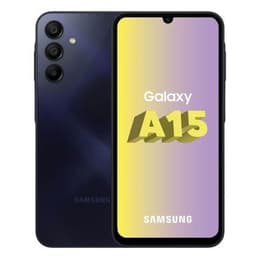
Galaxy A15
Galaxy A15
Starting at

Refurbished price:124.00

Versus €189.00 new

See options
Xiaomi Redmi Note 14 Pro
Starting at

Refurbished price:260.77

Versus €349.99 new

See options

Ratings

The Samsung Galaxy A15 5G, released in late 2023, and the Xiaomi Redmi Note 14 Pro 5G, which became available in early 2025, are both smartphones designed to offer a balanced experience for everyday users. While both devices operate on the Android platform, the Redmi Note 14 Pro 5G generally presents more advanced specifications in areas like display technology and camera capabilities, reflecting its slightly newer release and positioning.

Scores

Durability

When considering the long-term usability of these devices, their release timelines and software support policies are key factors.

  • Release Timeline: The Samsung Galaxy A15 5G was released in December 2023, while the Xiaomi Redmi Note 14 Pro 5G followed in January 2025. This difference means the Redmi Note 14 Pro 5G inherently has a longer potential lifespan for receiving future updates. [2, 3, 4, 7, 9, 14, 18]
  • Software Longevity: Samsung typically provides four major Android OS upgrades and five years of security updates for the Galaxy A15 5G, extending its support until approximately 2029. [14] The Redmi Note 14 Pro 5G is expected to receive three years of OS updates and four years of security updates. [15]
  • Durability Features: The Redmi Note 14 Pro 5G features Corning Gorilla Glass Victus 2 for display protection and an IP68 rating for water and dust resistance, offering a higher level of protection against environmental elements. [8, 12] The Galaxy A15 5G includes AGC Dragontrail Protection for its display and does not specify an official IP rating for water and dust resistance, suggesting a more basic level of protection. [1, 14]

Year of Release

2023

2025

OS

Android

Android

Foldable

No

No

Performance

The performance of a smartphone impacts how smoothly applications run, how quickly tasks are completed, and the overall responsiveness of the user interface.

  • Processor Capabilities: The Galaxy A15 5G is equipped with a processor that handles daily tasks like web browsing, social media, and light gaming efficiently. [11] The Redmi Note 14 Pro 5G features a more capable processor, which translates to smoother multitasking, faster app loading times, and a more fluid experience with demanding applications and graphically intensive games. [8, 16]
  • Memory and Storage: Both devices offer various RAM configurations, with the Galaxy A15 5G available with up to 8GB of RAM and the Redmi Note 14 Pro 5G offering up to 12GB. [1, 8, 14, 15] The Galaxy A15 5G supports expandable storage via a microSD card, providing flexibility for users who need more space. [14] The Redmi Note 14 Pro 5G typically comes with larger internal storage options, up to 512GB, but does not offer expandable storage. [8, 15, 17]
  • Battery Behavior: Both phones are equipped with large batteries, with the Galaxy A15 5G featuring a 5000 mAh battery and the Redmi Note 14 Pro 5G having a 5500 mAh battery. [1, 10, 14, 15] The Redmi Note 14 Pro 5G supports faster charging speeds, allowing for quicker power replenishment. [10, 15]

Memory (GB)

4 GB

8 GB

Screen quality

The display is a primary interface for smartphone interaction, and differences in technology and specifications can significantly affect the viewing experience.

  • Display Technology and Resolution: Both devices feature AMOLED displays, known for their vibrant colors and deep blacks. The Galaxy A15 5G has a 6.5-inch Super AMOLED display with a Full HD+ resolution. [1, 14] The Redmi Note 14 Pro 5G offers a slightly larger 6.67-inch AMOLED display with a higher 1.5K resolution, providing a sharper and more detailed visual experience. [3, 8, 16]
  • Refresh Rate and Brightness: The Galaxy A15 5G features a 90Hz refresh rate, contributing to smoother scrolling and animations. [1, 11] The Redmi Note 14 Pro 5G elevates this with a 120Hz refresh rate, resulting in even more fluid on-screen motion. [3, 8, 16] The Redmi Note 14 Pro 5G also boasts a significantly higher peak brightness, making it more comfortable to view content in bright outdoor conditions. [3, 8, 16]
  • Additional Display Features: The Redmi Note 14 Pro 5G includes features like 1920Hz PWM dimming for reduced eye strain and wet hand touch control for improved usability in various conditions. [8]

Resolution

1080 x 2340

1080x2400

Audiovisual

Camera systems are a crucial aspect for many users, and both smartphones offer versatile setups for capturing photos and videos.

  • Main Camera Capabilities: The Galaxy A15 5G features a 50-megapixel main camera, capable of capturing detailed images in good lighting. [1, 14] The Redmi Note 14 Pro 5G, particularly the global variant, comes with a 200-megapixel main sensor, which can capture a high level of detail and offers flexibility for cropping and digital zoom. [3, 8, 17]
  • Auxiliary Lenses and Photography: Both phones include ultra-wide and macro lenses for diverse shooting scenarios. The Galaxy A15 5G has a 5-megapixel ultrawide and a 2-megapixel macro lens. [1, 14] The Redmi Note 14 Pro 5G typically features an 8-megapixel ultrawide and a 2-megapixel macro lens, providing a slightly higher resolution for wider shots. [8, 17]
  • Video Recording and Front Camera: Both devices can record video at 1080p resolution. The Galaxy A15 5G records at 30 frames per second, while the Redmi Note 14 Pro 5G can record at 60 frames per second, offering smoother video capture. [1, 8, 15] For selfies, the Galaxy A15 5G has a 13-megapixel front camera, while the Redmi Note 14 Pro 5G features a 20-megapixel front camera. [1, 8, 15]

Front camera

13 megapixels

32 MP

Miscellaneous

Beyond the core specifications, several practical elements contribute to the overall user experience and daily convenience.

  • Connectivity and Ports: Both devices support 5G connectivity, ensuring access to faster mobile networks. [2, 8] They both include a USB-C port for charging and data transfer, and a 3.5mm headphone jack, which is convenient for wired audio accessories. [9, 10, 13] The Redmi Note 14 Pro 5G also features an IR Blaster, allowing it to function as a universal remote control for various home appliances. [10]
  • Biometric Security: The Galaxy A15 5G incorporates a side-mounted fingerprint sensor for secure unlocking. [11] The Redmi Note 14 Pro 5G offers an in-screen fingerprint sensor, providing a more integrated and modern aesthetic. [10]
  • Design and Handling: The Galaxy A15 5G has a plastic frame and back with a 'Key Island' design. [14] The Redmi Note 14 Pro 5G features a design with curved edges and panels, and can come with a glass or vegan leather finish, contributing to a different in-hand feel. [8, 16] The Redmi Note 14 Pro 5G is slightly lighter at 190 grams compared to the Galaxy A15 5G's 200 grams. [8, 9]

Weight

200 g

180 g

Screen size (in)

6.5

6.67

Network

4G

4G

SIM card

Dual Physical SIM

Dual Physical SIM

Carrier compatibility

Unlocked

Unlocked

The Samsung Galaxy A15 5G and the Xiaomi Redmi Note 14 Pro 5G cater to users with varying priorities, offering distinct advantages in different areas. User feedback for the Galaxy A15 5G often praises its reliable software support and consistent performance for everyday use. [4, 14] Some common observations include its decent display and battery life for its segment. [4] Criticisms sometimes point to its more modest processor performance for demanding tasks and a less advanced camera system compared to higher-tier devices. [7, 11]

For the Redmi Note 14 Pro 5G, users frequently highlight its vibrant, high-refresh-rate display and its powerful camera system, especially the 200-megapixel main sensor, as significant strengths. [3, 8] Its faster charging and more robust build quality with IP68 rating are also often noted as positive aspects. [8, 10] Potential concerns might revolve around the software update policy being slightly shorter than some competitors and the absence of expandable storage. [15]

Users prioritizing extended software support and a familiar user experience for essential smartphone functions may find the Samsung Galaxy A15 5G well-suited to their needs. Conversely, users who prioritize a more immersive visual experience, higher camera resolution, and faster overall performance for more demanding applications will likely lean toward the Xiaomi Redmi Note 14 Pro 5G. Both devices offer a solid foundation for daily use, and for those seeking an eco-friendly and quality-assured alternative, considering refurbished options for either model can be a sustainable choice.


See all articles

Our recent comparisons