

Galaxy A15 5G Vs Xiaomi Redmi Note 14 4G

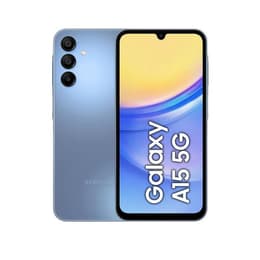
Galaxy A15 5G
Galaxy A15 5G
Starting at

Refurbished price:124.00

Versus €248.54 new

See options
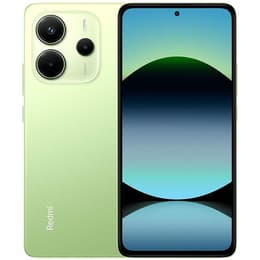
Xiaomi Redmi Note 14 4G
Starting at

Refurbished price:162.00

Versus €229.99 new

See options

Ratings

The Samsung Galaxy A15 5G, released in December 2023, and the Xiaomi Redmi Note 14 4G, launched in January 2025, are both smartphones designed for everyday use. While both devices offer a robust Android experience, they differentiate themselves through their connectivity options, display refresh rates, and camera configurations. Both operate on the Android platform, with each manufacturer applying their custom user interface.

Scores

Durability

The longevity of a smartphone is influenced by its release date, software support, and physical durability features. These two models present different timelines and protective measures.

  • Release Timeline: The Samsung Galaxy A15 5G was released in December 2023, making it a slightly older model compared to the Xiaomi Redmi Note 14 4G, which launched in January 2025. This difference in release dates impacts their respective software support cycles.
  • Software Support: The Galaxy A15 5G is slated to receive four years of Android OS updates and five years of security updates, extending its support until approximately 2029. In contrast, the Redmi Note 14 4G offers an extended commitment with four major Android OS upgrades (up to Android 18) and six years of security updates, projected until 2031.
  • Durability Features: The Redmi Note 14 4G features an IP54 rating for dust and splash resistance and Corning Gorilla Glass 5 for screen protection. The Galaxy A15 5G does not carry an official IP rating, suggesting less protection against dust and water exposure, and uses AGC Dragontrail Protection for its display.

Year of Release

2023

2025

OS

Android

Android

Foldable

No

No

Performance

Performance in daily tasks, app handling, and multitasking varies between these two devices, primarily due to their internal components and software optimization.

  • Processor Capabilities: The Samsung Galaxy A15 5G is equipped with a processor that handles typical smartphone tasks, though some users have reported occasional lag during day-to-day usage and when loading demanding applications. The Xiaomi Redmi Note 14 4G features a capable processor designed for smooth everyday performance and casual gaming.
  • Multitasking and Responsiveness: Both devices offer various RAM configurations, with options up to 8GB, which generally supports smooth app switching and multitasking. However, the Redmi Note 14 4G's processor, combined with HyperOS, aims for an optimized user experience, with user feedback indicating improved responsiveness over its predecessors.
  • Storage Options: Both smartphones provide internal storage options typically starting at 128GB, with variants offering up to 256GB. Both also support expandable storage via a microSD card, allowing users to increase their storage capacity.
  • Battery Performance: The Galaxy A15 5G includes a 5000mAh battery, offering approximately 52 hours of usage on a single charge, and supports 25W wired charging. The Redmi Note 14 4G comes with a larger 5500mAh battery and supports faster 33W wired charging, capable of reaching 50% charge in about 29-30 minutes.

Memory (GB)

4 GB

6 GB

Screen quality

The visual experience on a smartphone is largely defined by its display technology, resolution, and brightness, areas where these two models offer distinct characteristics.

  • Display Technology and Size: The Samsung Galaxy A15 5G features a 6.5-inch Super AMOLED display, known for its deep blacks and vibrant colors. The Xiaomi Redmi Note 14 4G offers a slightly larger 6.67-inch AMOLED display, also providing rich colors and contrast.
  • Resolution and Clarity: Both devices provide a Full HD+ resolution (1080x2340 pixels for the A15 5G and 1080x2400 pixels for the Redmi Note 14 4G), ensuring sharp and clear visuals for typical viewing distances.
  • Brightness and Refresh Rate: The Galaxy A15 5G's display can reach up to 800 nits in High Brightness Mode (HBM) and has a 90Hz refresh rate for smoother scrolling. The Redmi Note 14 4G boasts a higher peak brightness of 1800 nits and a faster 120Hz refresh rate, which contributes to a more fluid visual experience, especially during gaming or fast-paced content.

Resolution

1080 x 2340

1080x2400

Audiovisual

The camera systems on both smartphones are designed to capture everyday moments, with differences in sensor capabilities and additional features.

  • Rear Camera System: The Galaxy A15 5G features a triple-camera setup with a 50MP main sensor, a 5MP ultrawide lens, and a 2MP macro lens. The Redmi Note 14 4G also has a triple-camera system, highlighted by a 108MP main sensor, accompanied by 2MP macro and 2MP depth sensors. Notably, the Redmi Note 14 4G generally lacks an ultrawide camera in its configuration.
  • Photography Performance: The Galaxy A15 5G's main camera delivers decent photos with good color balance in bright conditions, though the ultrawide can show a loss in quality. The Redmi Note 14 4G's 108MP main sensor performs well in daylight, capturing sharp and detailed images, but may struggle in low-light environments due to the absence of optical image stabilization.
  • Video Recording: Both devices are capable of recording video at 1080p resolution at 30 frames per second (fps) with their main cameras. The Redmi Note 14 4G can also record at 1080p at 60fps with its rear camera. The Galaxy A15 5G offers digital video stabilization.
  • Front Camera: For selfies and video calls, the Galaxy A15 5G has a 13MP front camera, while the Redmi Note 14 4G features a higher resolution 20MP front camera.

Miscellaneous

Beyond core performance and display, several practical features contribute to the overall user experience and daily convenience of these smartphones.

  • Connectivity: The Samsung Galaxy A15 offers 5G connectivity, providing access to faster mobile data networks where available, along with Wi-Fi 5 and Bluetooth 5.3. The Xiaomi Redmi Note 14 4G, as its name suggests, is limited to 4G connectivity but also includes Wi-Fi 5 (dual-band) and Bluetooth 5.3.
  • Ports and Sensors: Both devices retain a 3.5mm headphone jack and utilize a USB Type-C port for charging and data transfer. The Galaxy A15 5G features a side-mounted fingerprint sensor for biometric authentication. The Redmi Note 14 4G incorporates an in-display fingerprint reader and also includes an IR blaster, which can be used to control compatible home appliances.
  • Design and Handling: The Galaxy A15 5G has dimensions of 160.1 x 76.8 x 8.4 mm and weighs 200g. The Redmi Note 14 4G is slightly larger and lighter at 163.25 x 76.55 x 8.16 mm and 196.5g. Both devices feature a plastic build.

Weight

200 g

196 g

Screen size (in)

6.5

6.67

Network

5G

4G

SIM card

Dual Physical SIM

Physical SIM + eSIM

Carrier compatibility

Unlocked

Unlocked

The Samsung Galaxy A15 5G and the Xiaomi Redmi Note 14 4G cater to users with slightly different priorities, offering distinct advantages in key areas. User feedback often highlights the Galaxy A15 5G's reliable performance, good battery life, and Samsung's commitment to software updates as strong points. However, some users have noted that its performance can feel sluggish at times.

For the Redmi Note 14 4G, common praise points include its excellent AMOLED display with a high refresh rate, very strong battery life, and smooth everyday performance. Criticisms often revolve around the absence of an ultrawide camera and average low-light camera performance.

Users prioritizing long-term software support and a balanced camera system with an ultrawide lens may prefer the Samsung Galaxy A15 5G. Its 5G connectivity also offers a future-proof advantage for mobile data speeds. On the other hand, users who value a larger, brighter, and smoother display, along with a larger battery and faster charging, might lean towards the Xiaomi Redmi Note 14 4G. Its in-display fingerprint sensor and IR blaster also add to its appeal for those seeking additional features.

Ultimately, the choice between these two devices depends on individual needs and preferences. Both represent solid options in their segment, and considering a quality-assured refurbished option for either model can be an eco-friendly alternative to extend their lifecycle.


See all articles

Our recent comparisons