


Compare models

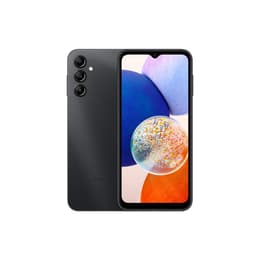
Galaxy A14 Vs Google Pixel 9a

  • 1-year minimum warranty
  • Free delivery on all orders
  • Free 30-day returns
Galaxy A14
Starting at

Refurbished price:€133.00

Versus €269.00 new

See options
Google Pixel 9a
Starting at

Refurbished price:€361.00

Versus €586.09 new

See options

Differences at a glance

The Samsung Galaxy A14 (2023) and the Google Pixel 9a (2025) represent two distinct approaches to everyday smartphones, bridging different release years and market tiers. While the Galaxy A14 focuses on providing essential features for daily tasks, the Google Pixel 9a introduces a more advanced hardware suite and modern software capabilities. Both devices run on the Android operating system, yet they offer divergent experiences in processing power, design, and feature sets that cater to varied consumer preferences.

Available Models

Colour

Storage

Scores

Durability

When examining longevity and maintenance, the two devices differ significantly due to their respective release timelines and manufacturer support windows.

  • Software Support Window: The Google Pixel 9a benefits from an extended multi-year update commitment typical of recent releases, whereas the Galaxy A14 operates on a more standard software update lifecycle.
  • Repairability and Build: Both handsets are constructed with durability in mind, utilizing sturdy outer frames and straightforward internal layouts that facilitate standard component replacements when necessary.
  • Expected Practical Lifespan: Users selecting the quality-assured refurbished option of the Pixel 9a will likely experience prolonged software viability, while the Galaxy A14 serves steady short-to-medium-term requirements efficiently.

Year of Release

2023

2025

Compatible with latest Update

No

Yes

OS

Android

Android

Foldable

No

No

Performance

Processing capability and day-to-day operation vary notably, dictating how each smartphone handles multi-tasking, apps, and sustained power usage.

  • Everyday Responsiveness: The Google Pixel 9a manages demanding applications, fluid multi-tasking, and rapid app loading smoothly, while the Galaxy A14 handles standard messaging, web browsing, and casual tasks reliably.
  • Battery Behavior: Both devices are equipped to comfortably navigate a full day of standard use, though power users running resource-heavy tasks continuously will notice different drainage rates reflecting their distinct hardware classes.
  • Storage Management: Each model offers dependable internal storage capacities paired with distinct memory configurations to accommodate varied user file loads and media storage preferences.

Screen quality

Visual output and display responsiveness differ between the two models, impacting media consumption, outdoor legibility, and general navigation.

  • Display Technology: The Google Pixel 9a utilizes an advanced OLED panel delivering deep contrast and vivid clarity, while the Galaxy A14 employs a standard high-definition screen suitable for everyday viewing.
  • Refresh Rate and Smoothness: The Pixel 9a features a higher refresh rate for fluid scrolling and animations, contrasting with the standard refresh rate found on the Galaxy A14 display.
  • Outdoor Brightness: Maximum brightness capabilities vary, with the Pixel 9a offering enhanced legibility under direct sunlight conditions compared to its counterpart.

Resolution

1080 x 2408

2424 x 1080

Audiovisual

Multimedia capabilities and hardware output for capturing daily moments vary across both devices, affecting photography and audio reproduction.

  • Camera System Capabilities: The Google Pixel 9a features sophisticated computational photography algorithms paired with capable multi-lens setups, whereas the Galaxy A14 relies on a simpler multi-sensor configuration for standard snapshots.
  • Low-Light and Video: The Pixel 9a captures detailed low-light imagery and stable video recordings effectively, while the Galaxy A14 performs adequately in well-lit environments.
  • Audio and Media Output: Built-in speaker configurations on both handsets deliver clear voice calls and adequate sound levels for casual media playback.

Front camera

13 megapixels

13 megapixels

Miscellaneous

Practical physical attributes and connectivity standards define how these smartphones integrate into daily travel and accessory ecosystems.

  • Connectivity Standards: Both models support modern network bands, Wi-Fi connectivity protocols, and Bluetooth standards for reliable peripheral pairing.
  • Physical Dimensions and Weight: The handsets feature distinct physical footprints, with weight and ergonomic proportions tailored to comfortable one-handed operation or pocket storage.
  • Security Sensors: Each device incorporates modern biometric authentication methods, including secure facial recognition and integrated fingerprint sensors for rapid unlocking.

Weight

201 g

186 g

Screen size (in)

6.6

6.3

Network

4G

5G

SIM card

Dual Physical SIM

Physical SIM + eSIM

Carrier compatibility

Unlocked

Unlocked

What the community thinks

User feedback from online communities highlights distinct praise points for both devices. Owners of the Galaxy A14 frequently note satisfaction with its reliable daily calling, messaging performance, and straightforward interface. Conversely, users of the Google Pixel 9a often praise its advanced camera processing, fluid display response, and modern software integration. Common criticisms for the Galaxy A14 center on occasional stutter during heavy multitasking, while Pixel 9a discussions sometimes mention a desire for even greater battery endurance under sustained heavy usage.

Users prioritizing high-end photography, fluid screen transitions, and extended software support may prefer the Google Pixel 9a. Meanwhile, users prioritizing a straightforward communication tool for standard daily tasks may lean toward the Galaxy A14. Choosing a sustainable choice like a certified pre-owned model allows consumers to access these capabilities while reducing electronic waste. Ultimately, the right choice depends on aligning individual daily usage habits with each device's specific strengths.









